
Bulgaria Travel Guide 2026: Regions, Costs and Routes
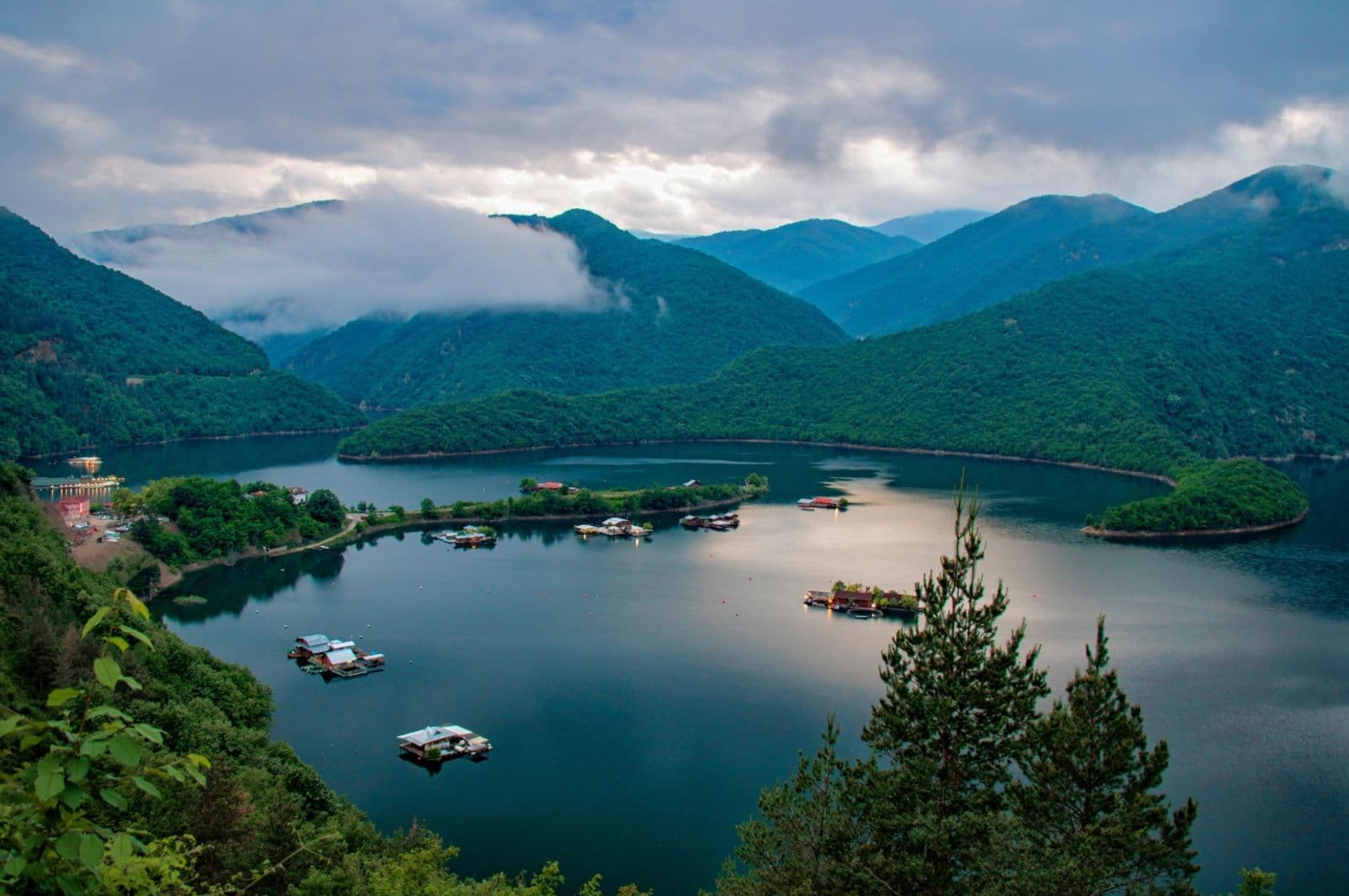
A trip to Bulgaria is one of the best-value holidays you can take from Israel: a direct flight of about 2 hours 45 minutes to Sofia, no time difference, the euro in your wallet, and a mid-range day for a couple costs about €170 to €250 including accommodation, food and local transport (as of September 2026). In one week you can combine Sofia, mountains close to 3,000 meters, Plovdiv's old town and hot springs, and with a few extra days in summer, the Black Sea coast too.
We at MakeYourTravel live in Sofia and help travelers plan Bulgaria all year round, and this is the Bulgaria trip-planning guide we wish we had before our first trip: which regions deserve your time, when to come, how to get there and get around, what a day in Bulgaria costs, and three sample routes. Every topic links to our in-depth guide.
Contents
- Why Bulgaria works so well for Israelis
- The regions: where to go in Bulgaria
- When to go to Bulgaria
- Getting there: flights and the airport
- Getting around: transfers, car rental, trains and buses
- Currency in Bulgaria: euro, cards and cash
- Kosher food and Jewish Bulgaria
- How much a trip to Bulgaria costs per day
- Safety and practical tips
- Bulgaria itinerary ideas: three sample routes
- How we help
- Frequently asked questions
- What to do next
Why Bulgaria works so well for Israelis
Here is what you need to know before comparing it with other European destinations: five reasons Bulgaria works so well for Israelis.
- It is genuinely close. A direct flight from Tel Aviv to Sofia takes about 2 hours 45 minutes, and there are direct flights to Varna on the Black Sea coast too, plus Burgas in summer. The clock matches Israel almost all year, so there is no time difference and no lost day.
- Noticeably cheaper than Israel. According to price-comparison data from September 2026, restaurant prices in Sofia are about 44 percent lower than in Tel Aviv, and supermarket shopping is cheaper by a similar margin. A meal at a simple restaurant costs around €15 and a cappuccino around €3.
- Real mountains, close to the city. Musala in the Rila range is the highest peak on the Balkan Peninsula (2,925 m), and the country has glacial lakes, pine forests, gorges and caves, hot springs and a long coastline. Most of the mountains, lakes and hot springs are within two or three hours' drive of Sofia; the coast is 4 to 5 hours away.
- Easy paperwork. Bulgaria has been a full Schengen member since January 2025 and part of the eurozone since January 2026, and Israeli passport holders need no visa for stays of up to 90 days.
- Israeli-friendly. Sofia has a Jewish community with one of the largest synagogues in Europe, kosher options exist, and on our site you can book day trips, transfers and attractions in Hebrew, while some hosts run the experience itself in Hebrew.
And honestly: intercity roads are not always in good shape, signs are in Cyrillic, little English is spoken in villages, and in peak season the famous spots get crowded (the Seven Lakes on August weekends, the Bansko gondola on holiday mornings). That is the price of a destination that has not gone fully touristy yet, and a little planning takes care of most of it.
The regions: where to go in Bulgaria
Bulgaria is fairly small, but each region offers a different kind of holiday. The table sums it up, followed by a paragraph on each region with a link to the full guide. For a longer list of places worth seeing, read Bulgaria's attractions: the places worth seeing.
| Region | Why go | Drive from Sofia | Time to spend |
|---|---|---|---|
| Sofia | City life, food, culture and a base for day trips | Starting point | 2 to 4 days |
| Rila and the Seven Lakes | Hiking, Rila Monastery and hot springs | About 1.5 to 2 hours | A day for the lakes, a day for the monastery |
| Bansko and the Pirin Mountains | Skiing in winter, hiking in summer, an old town | About 2.5 hours | 2 to 7 nights |
| Borovets | Close, easy skiing, families | About 1.5 hours | From a snow day to a ski week |
| Plovdiv | History, art, wine and roses | About 1 hour 40 minutes | A day to two nights |
| The Rhodope Mountains | Villages, caves and gorges | About 3 hours | 2 to 4 nights |
| Veliko Tarnovo | A medieval fortress and city | About 2 hours 40 minutes | One night |
| The Black Sea coast | Sea, beaches and ancient towns | 4 to 5 hours, or fly | 3 nights or more |
Sofia: the capital and your base
Sofia, home to about 1.3 million people, sits at roughly 550 meters at the foot of Vitosha mountain and is the natural base for most trips in Bulgaria. The center is compact and walkable: the gold-domed Alexander Nevsky Cathedral, Vitosha Boulevard and the Sofia Synagogue, opened in 1909 and the third largest in Europe. The UNESCO-listed Boyana Church sits on the city's outskirts at the foot of Vitosha, a taxi or bus ride away. Add good food, cafés, nightlife and live music at prices you will not find in Tel Aviv, and museums worth a visit.
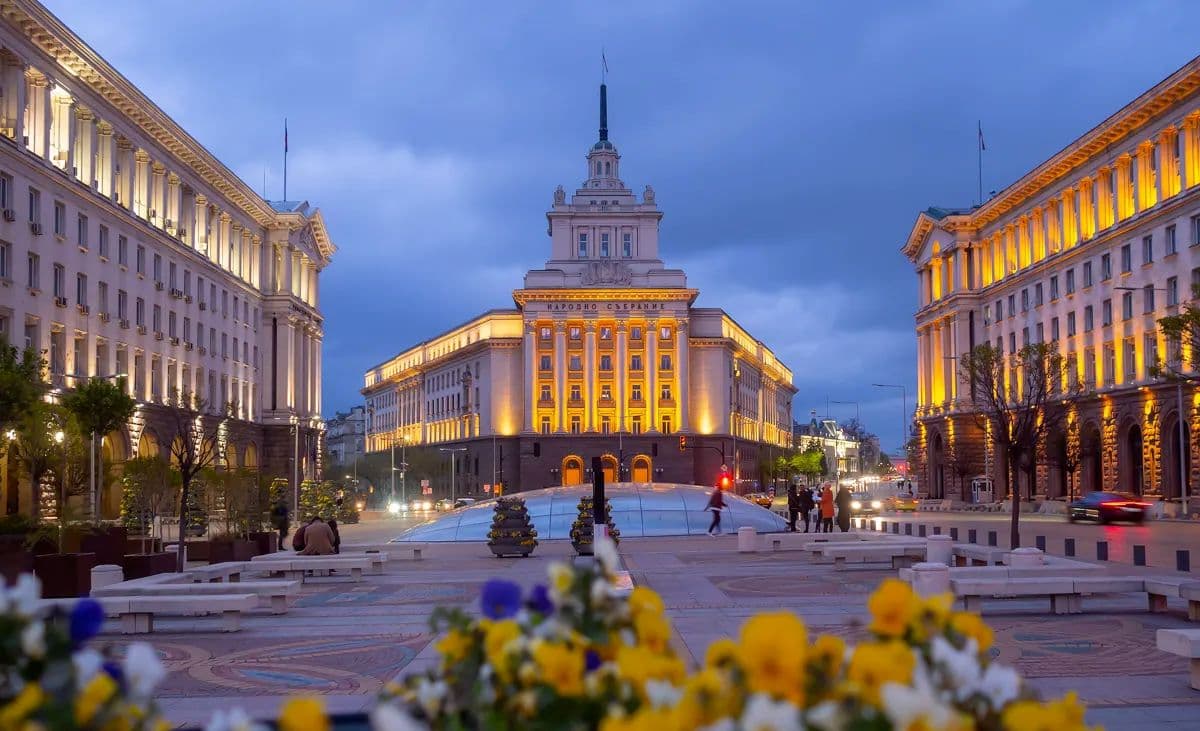
Everything about the city is in our complete Sofia guide, and before you book, read our honest guide to Sofia hotels and where to eat in Sofia. Prefer a guided walk? A small-group walking tour of Sofia (in English) starts at €18 per person, and a historic Sofia tour in Hebrew starts at €40 per person. Most of the country's day trips leave from Sofia, and we have gathered them all in day trips from Sofia.
Rila: the Seven Lakes, the monastery and hot springs
The Rila range, south of Sofia, is home to Musala and to the two most famous day trips in Bulgaria. The Seven Rila Lakes are seven glacial lakes lying between 2,095 and 2,535 meters. From Sofia you drive about an hour and a half to the chairlift at Panichishte, ride up and continue on foot between the lakes. The usual season is summer, roughly July to September, and August weekends are very busy, so come on a weekday if you can.
About two hours from Sofia stands Rila Monastery, the largest and most famous Eastern Orthodox monastery in Bulgaria, founded in the 10th century and a UNESCO World Heritage Site since 1983. A lakes day or a monastery day can end with a soak in Sapareva Banya, a town where a 103°C hot spring bursts out in the center. The full guides: the Seven Rila Lakes and hot springs in Bulgaria. To book: a guided Seven Lakes trek from Sofia from €100 per person (the chairlift and the hot springs are paid separately on site), or a day trip to Rila Monastery from €95.
Bansko and the Pirin Mountains
Bansko is a town at 925 meters at the foot of the Pirin range, about 160 km from Sofia, which means roughly two and a half hours on the road, and sometimes three in winter. In winter it is Bulgaria's largest ski resort, with about 75 km of runs and an eight-seat gondola that starts right in town. The season usually runs from mid-December into April; official 2026/27 dates had not been announced as of September 2026. In summer Bansko becomes a hiking base for Pirin National Park, itself a UNESCO World Heritage Site, with glacial lakes and Vihren (2,914 m), Bulgaria's second-highest peak.
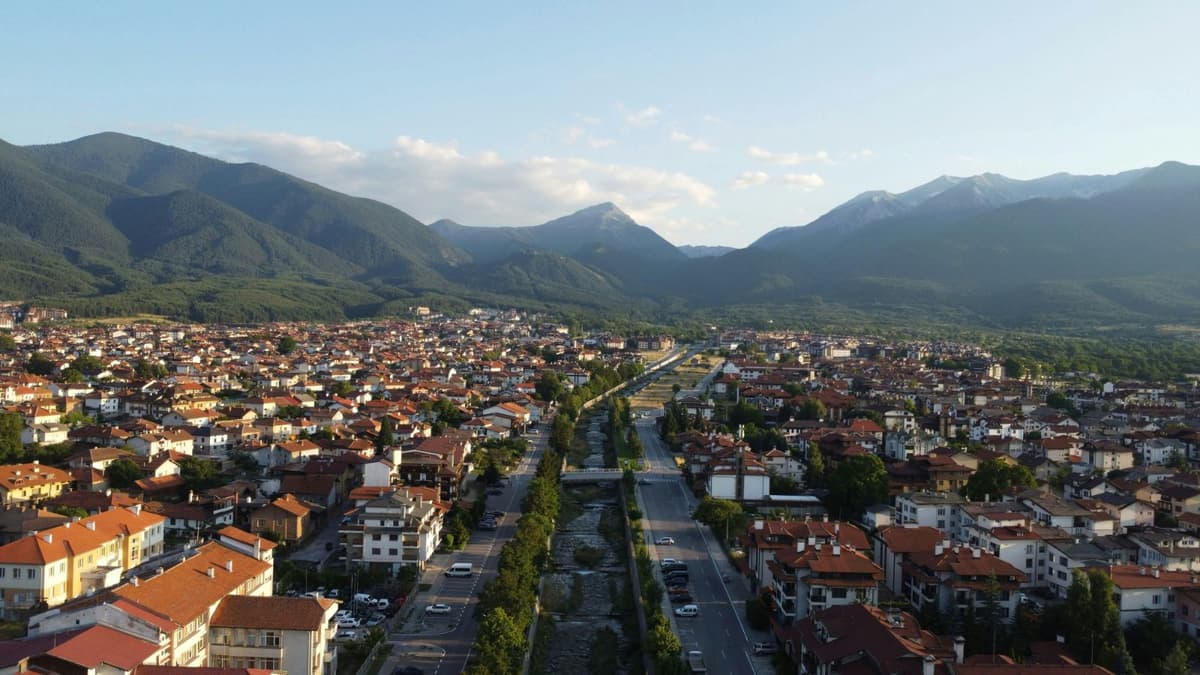
The full guide: Bansko: skiing, hiking and attractions. In summer you can book the Pirin Three Lakes hike from €45 per person, or head out from Bansko on a day trip to Melnik and Rozhen Monastery with wine tasting, from €60.
Borovets: the closest major ski resort to Sofia
Borovets is Bulgaria's oldest winter resort: it began in 1896 as a hunting retreat for the country's rulers, under the name Chamkoria. It sits at 1,350 meters, about 70 km from Sofia or roughly an hour and a half by road, which makes it ideal for a short ski break or for families with kids. It has about 58 km of runs, and in summer it is the starting point for climbing Musala, with horse riding and ATV rides in the forests. The hot springs of Sapareva Banya are about 40 minutes' drive away. Just want one day in the snow? The Borovets snow and thermal springs day leaves from Sofia and starts at €85 per person.
Plovdiv: old town, wine and roses
Plovdiv, Bulgaria's second-largest city, is considered the oldest continuously inhabited city in Europe, with settlement going back about 8,000 years. Its Roman theater was only uncovered in the 1970s after a landslide, and it still hosts performances in summer. Around it lie the Old Town, with its colorful Bulgarian Revival houses, and the Kapana district, full of galleries, bars and cafés. In 2019 Plovdiv was a European Capital of Culture. The drive from Sofia takes about an hour and 40 minutes, so it works as a day trip, but with one or two nights there you can enjoy it without rushing.
The area also offers the wineries of the Thracian Valley and the Rose Valley around Kazanlak, where roses are picked in May and June. Details in Plovdiv: the complete guide and Bulgaria's best wineries. From Sofia we offer a Plovdiv trip with the vintage car museum, with full Hebrew support, from €95 per person.
The Rhodope Mountains: villages, caves and gorges
The Rhodopes cover a large part of southern Bulgaria and are the country's rural, wild side: the Trigrad Gorge, Devil's Throat Cave with a waterfall inside it, Yagodina Cave, the Wonderful Bridges (huge natural rock arches), and stone villages such as Shiroka Laka, Kovachevitsa and Leshten. In winter there is Pamporovo, a family-friendly ski resort suited to beginners and intermediates, about 85 km south of Plovdiv.
It is about three hours from Sofia, so the Rhodopes deserve at least two nights, ideally with a car or a driver, because public transport there is sparse. The full guide: the Rhodope Mountains: villages, caves and nature. If you are staying in Bansko, you can join a day trip to the stone villages of Kovachevitsa and Leshten, from €45 per person.
Veliko Tarnovo: the medieval capital
Veliko Tarnovo was the capital of the Second Bulgarian Empire from the 12th to the 14th century, and the Tsarevets fortress on its hill held both the royal palace and the patriarch's seat. Today you can climb among the fortress walls, wander the old town and pop over to the neighboring village of Arbanasi. The city is about 220 km from Sofia, roughly two hours and 40 minutes by car, so it works better as an overnight stop, for example on the way to the Black Sea, than squeezed into a day trip.
The Black Sea coast
In the north of the coast lies Varna, Bulgaria's third-largest city, in the south lies Burgas, and in between are resorts such as Sunny Beach, the best known and liveliest of them. Nessebar's old town sits on a peninsula joined to the mainland by a narrow strip and has been a UNESCO World Heritage Site since 1983, while Sozopol, 35 km south of Burgas, was founded in the 7th century BC as a Greek colony and was known in antiquity as Apollonia. The season runs from June to September, and in August the sea off Varna averages about 25°C.
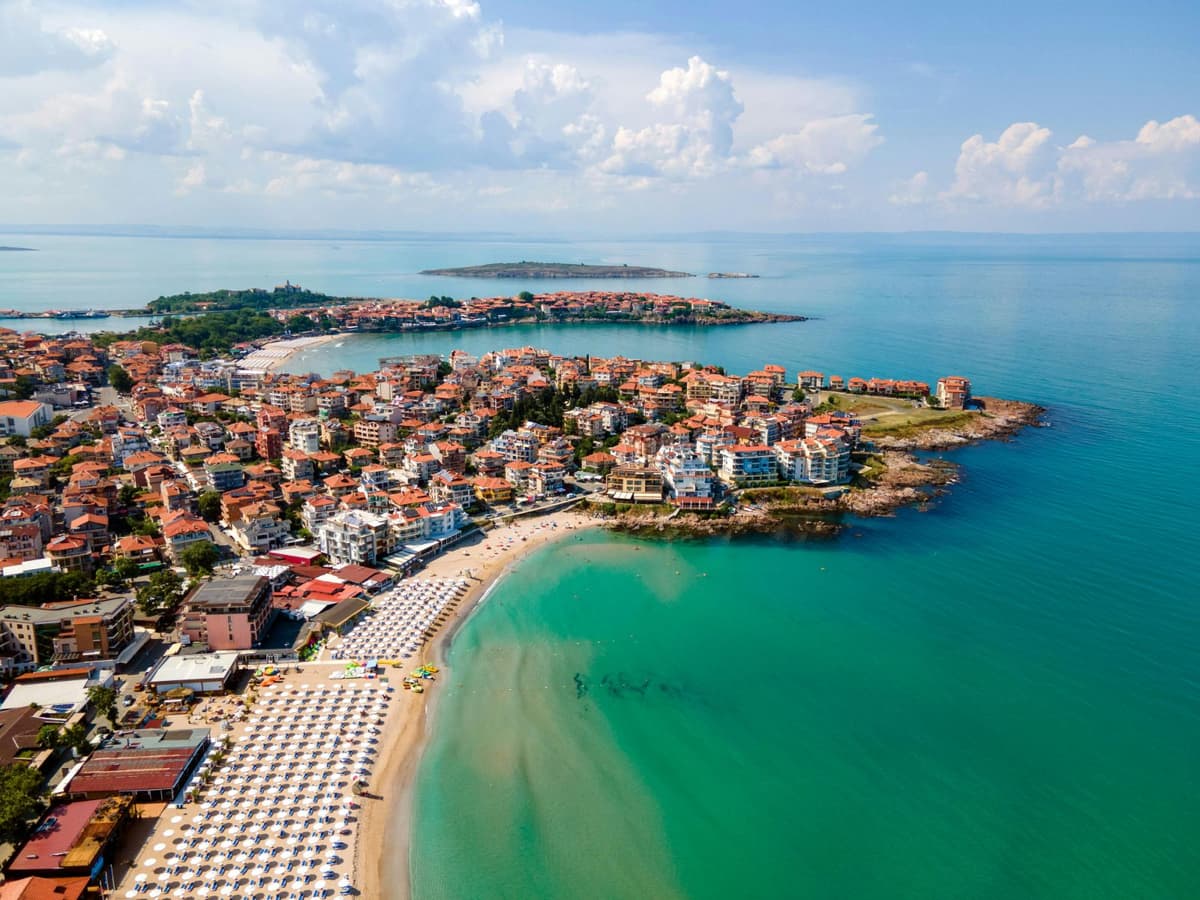
Good to know: the drive from Sofia to the coast takes about 4 to 5 hours, so it is not a day trip. Either fly directly to Varna (or, in summer, Burgas), or give the coast at least three nights. It is all in the Black Sea coast guide: Sunny Beach, Nessebar, Sozopol and Burgas. And for an evening on the water: a sunset cruise from Nessebar from €78 per person.
When to go to Bulgaria
In short: there is no bad season, only the season that fits what you are after.
- Summer (June to August): mountain and beach season. In Sofia the average daily high in July and August is about 28°C, far more pleasant than an Israeli summer, and it is cooler still in the mountains. From July the Seven Lakes and the high Pirin trails are open (in June there can still be ice and snow up high), and the sea is warm.
- Autumn (September to November): fall colors and comfortable weather for cities and day trips, and September still works for the mountains. Note that, according to hotel search data, September is actually the most expensive month for hotels in Sofia.
- Winter (December to March): skiing in Bansko, Borovets and Pamporovo, and hot springs in the cold air. In January the average daily high in Sofia is about 3°C, and nights drop below freezing.
- Spring (April and May): green and blooming, and in May the rose season begins in the Rose Valley. April is the cheapest month for hotels in Sofia, but there is still snow in the high mountains.
The month-by-month breakdown is in the best time to visit Bulgaria. The cold season has its own guide, Bulgaria in winter: what to do from December to March, and if you are heading to the capital in the heat, read Sofia in July and August.
Getting there: flights and the airport
Sofia has direct flights from Tel Aviv all year round, including Wizz Air, El Al, Israir and Bulgaria Air (Arkia flies the route only in some seasons), and the flight takes about 2 hours 45 minutes. Varna has direct flights for most of the year, and in summer Burgas is added, which saves you the long drive to the coast. Schedules shifted a lot in 2026 (foreign airlines stopped flying to Israel at the end of February, and Wizz Air only returned at the end of May), so check who is flying on your dates before you fall for a fare. Every airline, route and tip for finding a good price is in flights to Bulgaria: flight times, airlines and routes, and you can search fares in our flight search.
From the airport to the city
Sofia Airport is about 10 km from the city center, and there are three good ways to reach your hotel:
- Metro: Line 4 runs from Terminal 2 to the center, at Serdika station, in about 20 minutes. A ticket costs €0.80, and trains run roughly from 5:30 a.m. to midnight. A free shuttle connects Terminal 1 with Terminal 2.
- Licensed taxi: around €10 to €15 to the center with the meter running. Take a taxi only from the official rank and ignore drivers who approach you in the arrivals hall; the UK Foreign Office also warns about unlicensed airport taxis that overcharge.
- Private transfer: a driver waits for you with a sign, and the price is fixed and paid in advance, from about €30 per vehicle, not per person, and you can book it with us. Especially handy for late arrivals or when you travel with kids and luggage.
All the prices and the drivers' tricks are covered in the Sofia airport transfer guide and on Sofia Airport to the city center.
Getting around: transfers, car rental, trains and buses
This is the decision that shapes your trip the most, and there is no single answer that suits everyone. Here is an honest comparison, with prices as of September 2026:
| Option | Best for | Sample price | Downside |
|---|---|---|---|
| Private transfer | Families, ski trips, late arrivals, anyone who would rather not drive | Sofia to Borovets from €77 per vehicle, to Plovdiv from €157, to Bansko from €168 | Expensive for a couple moving between many places |
| Rental car | The Rhodopes, villages, a route across several regions | An average of about €16 a day in May and about €45 in August (all car classes), fuel about €1.70 a liter for petrol and about €1.95 for diesel | Average secondary roads, parking in Sofia, snow in the mountains |
| Train | Sofia to Plovdiv | About €5 to €8 | Slow: about 2 hours 40 minutes to 3 hours to Plovdiv, and a thin network |
| Bus | Between the big cities and to Bansko | Sofia to Bansko about €10 to €12, around three hours | Does not reach most nature sites |
| City taxi | Short rides within Sofia | Cheap on the meter, starting fare about €1.50 | Watch out for unlicensed cabs |
What we recommend: for a Sofia-based holiday with day trips you do not need a car. Walk and take the metro in the city, and reach nature on organized tours or by transfer. For a ski holiday, a private transfer from the airport to your hotel spares you driving snowy mountain roads and hauling gear onto a bus. For a route that combines several regions, especially the Rhodopes and the villages, a rental car gives you the most freedom.
The train to Plovdiv suits couples without much luggage; just pick a direct train, because those with a change take roughly five to six hours. Several buses a day run to Bansko from Sofia's Central Bus Station, right next to the main train station, and even more from Ovcha Kupel bus station. Renting a car? Film it before you leave the lot, pay by credit card and make sure it has a valid e-vignette, which is mandatory on the toll road network. The UK Foreign Office notes that some roads are in poor repair and that roadworks are not always marked at night, so drive in daylight when you can.
Everything to check before you sign the rental contract is in our honest car rental guide, and you can book on our car rental page. Transfer prices for all the popular destinations are collected in our guide to transfers in Bulgaria, and you book them on fixed-price private transfers.
Currency in Bulgaria: euro, cards and cash
Bulgaria has used the euro since 1 January 2026, and since 1 February the lev is no longer legal tender. The fixed conversion rate was 1.95583 lev to the euro, and since 9 August 2026 prices are shown in euro only (the lev may still be added for information). Still holding lev banknotes? The Bulgarian National Bank exchanges them for euro with no fee, no limit and no deadline, and commercial banks do so until the end of 2026, some of them for a fee.
- Cards: accepted almost everywhere in cities, hotels and ski resorts. Keep your card in sight while you pay, and if the terminal offers to charge you in your home currency or in euro, choose euro, so your own bank sets the rate rather than the terminal.
- Cash: keep €50 to €100 on hand for villages, mountain huts, markets and small lifts.
- ATMs: withdraw from bank ATMs. Euronet machines are known for high fees and poor exchange rates.
All the details, including how much cash to bring and which card works best, are in money in Bulgaria: euro, cards and cash, and background on the switch itself is in Bulgaria's transition to the euro.
Kosher food and Jewish Bulgaria
Sofia has the most kosher options, since it is home to the country's main Jewish community alongside the great synagogue. Outside the capital, what is available changes with the season, so before heading to Bansko or the coast, check exactly what is open on your dates. Large supermarkets carry products with international kosher certification, and an apartment with a kitchenette usually solves half the problem. Restaurants, supermarkets, products to look for and Shabbat meals are covered in our kosher food guide to Bulgaria.
Beyond food: in 1943, after protests by members of parliament and by the church, the deportation of the Jews of Bulgaria proper to the death camps was halted, although Jews from the territories under Bulgarian control in Macedonia and Thrace were deported. It is a complex and moving story, worth hearing in the streets where it happened. A tour of Jewish Sofia and the rescue story starts at €45 per person.
How much a trip to Bulgaria costs per day
Prices in Bulgaria have risen in recent years, especially in Sofia, but compared with Israel and Western Europe it is still an inexpensive destination. Here are the building blocks, as of September 2026:
- Meal at a simple restaurant: about €15 per person. Three-course dinner for two at a good restaurant: about €60.
- Cappuccino: about €3. Half a liter of local draft beer at a bar: about €3.
- 3-star hotel in Sofia: about €72 a night on average, about €83 at weekends. 4-star hotel: about €97 on average, about €140 at weekends.
- A ride on Sofia public transport: €0.80. Day pass: €2.
- Rental car: an average of about €16 a day in May and about €45 in August (all car classes). Fuel: about €1.70 a liter for petrol and about €1.95 for diesel.
- Adult one-day ski pass in the 2025/26 high season: €59 in Bansko and about €54 in Borovets (2026/27 prices not yet published).
- Organized day trip from Sofia: usually €85 to €110 per person.
The table below covers accommodation, food, local transport and an entrance fee or two, and excludes flights, organized tours, skiing and car rental:
| Style | Couple, per day | Family (2 adults and 2 children), per day |
|---|---|---|
| Budget: apartment or guesthouse, simple food | €100 to €140 | €160 to €220 |
| Mid-range: 3 to 4 star hotel, restaurants | €170 to €250 | €260 to €360 |
| Comfort: 5 stars, chef restaurants, private driver | €300 and up | €450 and up |
A rental car adds roughly €30 to €60 a day including fuel. Prices jump in peak season: car rental, for example, costs almost three times as much in August as in May. In practice, a mid-range week for a couple with two organized day trips comes to about €1,500 to €2,200 before flights. Money-saving tips for traveling with kids, and routes for every age, are in our guide to a family vacation in Bulgaria.
Safety and practical tips
Most visits to Bulgaria go without a hitch, and the common problems are the kind you know from any tourist destination:
- Pickpockets: mainly in tourist areas, on public transport and at stations. Keep your bag in front of you in crowds.
- Taxis: only licensed taxis with a meter, or a transfer booked in advance.
- Clubs and bars: strip ("gentlemen's") clubs in Sofia and in resorts such as Bansko, Borovets and Sunny Beach have overcharged tourists. In any bar, ask to see a menu with prices before you order.
- Stray dogs: common, especially on the edges of towns and villages. Keep away from packs, and if you are bitten, see a doctor right away.
- Insurance: for skiing and hiking, make sure your policy covers mountain rescue and helicopter evacuation.
- Emergencies: 112 for all emergency services.
A few more small things that save confusion:
- Visa and passport: Israeli passport holders need no visa for stays of up to 90 days within any 180 days in the Schengen Area. Since 10 April 2026 the EU's biometric Entry/Exit System has been fully running across the Schengen Area: on your first entry your face is photographed and fingerprints are taken (children under 12 are exempt from fingerprints). ETIAS, the EU's online travel authorization, was not yet in operation as of September 2026, so check again before you fly.
- Electricity: 230 volts and European round-pin sockets. A plug with two round pins, like most chargers, fits, while an Israeli three-pin plug needs an adapter.
- Yes and no: for many Bulgarians a small upward nod means "no" and a side-to-side head shake means "yes". When it matters, ask for an answer in words.
Answers to all the small pre-flight questions, from the time difference to plugs, are in before you fly to Bulgaria: all the answers.
Bulgaria itinerary ideas: three sample routes
Three templates that work well. You will find the day-by-day details in the full guides.
A long weekend in Sofia: 3 to 4 days
Stay every night in the same Sofia hotel and head into nature on day trips, without repacking every morning. Day 1: a walking tour of the center, Alexander Nevsky Cathedral, Vitosha Boulevard and a good dinner. Day 2: a day trip to Rila Monastery, or to the Seven Lakes in summer, or a snow day in Borovets in winter. Day 3: Plovdiv, by train or on an organized tour. Day 4, if you have it: Vitosha mountain, museums or a spa. Great for couples and first-timers. The full itinerary: Sofia in 3 days: the complete itinerary.
The classic week: 7 days
Two nights in Sofia, then south with a stop at Rila Monastery on the way to Bansko for two nights (hiking in Pirin in summer, skiing in winter). Then two or three nights in Plovdiv or the Rhodopes, and the drive back from Plovdiv to Sofia Airport takes under two hours. In one week you get a city, mountains, history and villages, and it works best with a rental car or a driver for the travel days. Want the sea as well? Add a few days: a night in Veliko Tarnovo on the way and three or four nights on the coast, and you can fly home direct from Varna, or in summer from Burgas. The full plan: a 7-day Bulgaria itinerary.
A ski holiday in Bulgaria: 5 to 7 days
Pick one resort and stay put: Bansko if you want the biggest and most varied, Borovets if you want to be on the snow about an hour and a half after leaving Sofia, and Pamporovo for beginners and families. What works: a private transfer from the airport to the hotel (Sofia to Bansko or to Borovets), a first lesson for the kids or the beginners, and one rest day at the local hot springs. In Bansko we offer ski and snowboard lessons in Hebrew and English from €145 per person for a lesson of up to two hours. To compare the resorts, read skiing in Bulgaria: Bansko, Borovets or Pamporovo, and if you have already chosen, skiing in Bansko: the practical winter guide.
How we help
MakeYourTravel is backed by our Hebrew-language Facebook community of about 47,000 Israeli travelers. We are a small team living in Sofia, and the site is built around exactly the questions that come up there every day:
- Hebrew support: the site works in Hebrew, English and Bulgarian, and our support is in Hebrew. Some experiences are offered in Hebrew too, such as the ski lessons in Bansko and the Plovdiv trip.
- Local hosts who work with us directly: guides, drivers and operators, each with a clear starting price in euro.
- Bookable day trips and attractions: from Sofia, Bansko, Borovets and the coast, on our day trips page and our attractions page.
- Fixed-price transfers: from the airport to the city, to the ski resorts and anywhere else, paid in advance with no haggling with drivers.
- An information center: dozens of practical guides, from everything mentioned here to all our articles about Bulgaria.
Frequently asked questions
How long is the flight to Bulgaria?
A direct flight from Tel Aviv to Sofia takes about 2 hours 45 minutes. Varna, on the Black Sea coast, has direct flights outside the summer too, and in summer there are also flights to Burgas.
Do Israelis need a visa for Bulgaria?
No. Israelis with a valid passport can stay up to 90 days in any 180-day period in the Schengen Area, of which Bulgaria is a full member. On your first entry you are registered in the EU's new biometric system.
What currency does Bulgaria use?
The euro, since 1 January 2026. The lev is no longer in use, but the Bulgarian National Bank exchanges lev banknotes for euro with no fee and no time limit.
How many days do you need in Bulgaria?
Three to four days are enough for Sofia with day trips, a week lets you add Bansko, Plovdiv or the Rhodopes, and with 10 days or more you can add the Black Sea coast.
How much does a trip to Bulgaria cost?
At a mid-range level, a couple spends about €170 to €250 a day and a family of four about €260 to €360, including accommodation, food and local transport. A week for a couple with two day trips comes to about €1,500 to €2,200 before flights (as of September 2026).
Do you need to rent a car in Bulgaria?
Not necessarily. For Sofia and day trips, the metro, walking and organized tours are enough, and for a ski holiday a private transfer is more convenient. A rental car pays off mainly for a route across several regions, especially the Rhodopes and the villages.
Is Bulgaria safe for travelers?
Most visits go smoothly. The common problems are pickpocketing in crowded areas, unlicensed taxis at the airport and inflated bills at strip clubs, and before you fly it is worth checking your government's latest travel advice (for Israelis, the National Security Council).
Is there a time difference between Israel and Bulgaria?
Almost never. Both countries are in the same time zone, and the only difference is a few days at the end of March, when Israel switches to summer time before Europe and is an hour ahead.
What to do next
Already have dates? Start with the flight, then book an airport transfer so your holiday does not begin with a taxi argument, and pick two or three day trips that suit the season. Still deciding where to go? Browse Bulgaria's attractions and day trips from Sofia, and if you still have a question, write to us. We look forward to welcoming you in Sofia.
Share this article with your friends: