Best Museums in Sofia: A Complete Guide for Travelers and Families
Planning a culture day in Sofia? The complete guide to the best museums: Thracian gold, socialist sculptures, interactive kids' centers. Hours and prices.
Sofia is a city where a few thousand years of history are packed into ten city blocks. Thracian gold treasures from 2,500 years ago, Roman ruins beneath the streets, Lenin statues torn down from the square in 1989 and dumped in a park: it's all in the city's museums, and most of it is cheap. A museum entry in Sofia costs about what you'd pay for a coffee in Paris. Here's the full guide to the museums that are actually worth your time, for families, art lovers, and anyone planning a solid culture day in Bulgaria's capital.
In this guide7 sections
Good news for travelers: since 1 January 2026, Bulgaria officially switched to the euro. Prices are now in euro, but remember they're still significantly lower than comparable museums in Western Europe. If a specific museum isn't covered here, check its official website before heading out, because opening hours and prices do change.
Table of Contents
- The Major Historical Museums
- Art and the Socialist Legacy
- Interactive Museums for Families
- Practical Tips for Visitors
- Frequently Asked Questions
The Major Historical Museums
If you have one day for museums in Sofia and history is your thing, these two are the non-negotiables.
National Museum of History
Located in the Boyana district on the outskirts of the city, in what was once the private residence of Bulgaria's last communist dictator, Todor Zhivkov. This is one of the first things that sets Sofia apart from other European capitals: its most important museum is housed in a 1970s communist villa, with panoramic views of Mount Vitosha through the windows.
The collection: over 650,000 items, of which only about 10% are on display at any given time. The headline piece is the Panagyurishte Treasure, a set of solid gold vessels from the ancient Thracian civilization, dating back around 2,300 years. It is the most famous Thracian gold treasure, though not the oldest gold in Europe: the gold from the Varna Necropolis is more than 6,000 years old.
Important: the museum is about 10 km from the city center. A private transfer is the most convenient way to get there, especially if you combine the visit with nearby Boyana Church (a UNESCO World Heritage Site).
Sofia History Museum
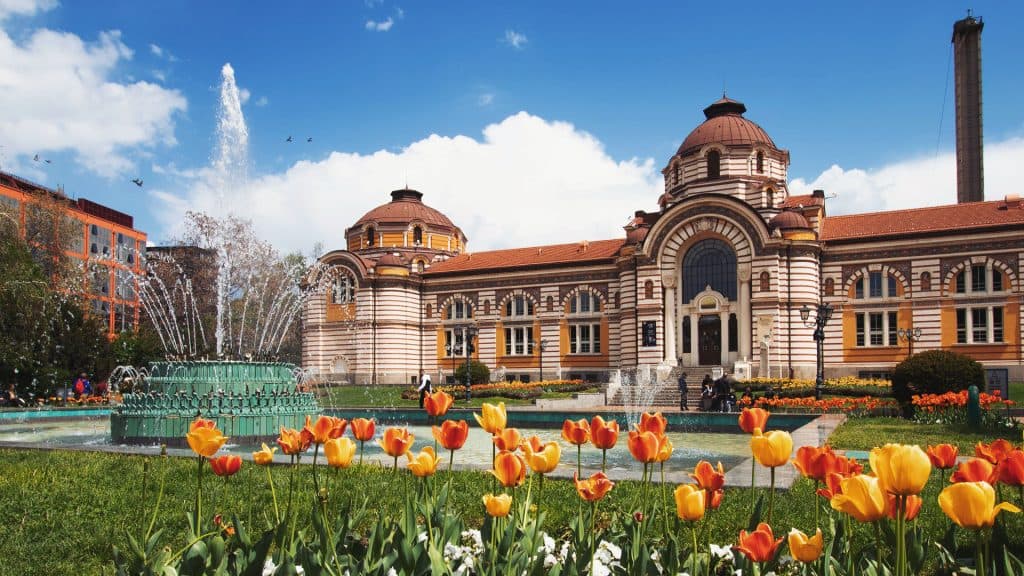
In the city center, housed in a building that's an attraction in its own right: the former Central Mineral Baths, a stunning 1913 Neo-Byzantine building with a striped red-and-yellow facade and ornate ceramic decoration. Until 1986 it was a working public bathhouse; after about 25 years of abandonment, the building was restored and converted into the city museum.
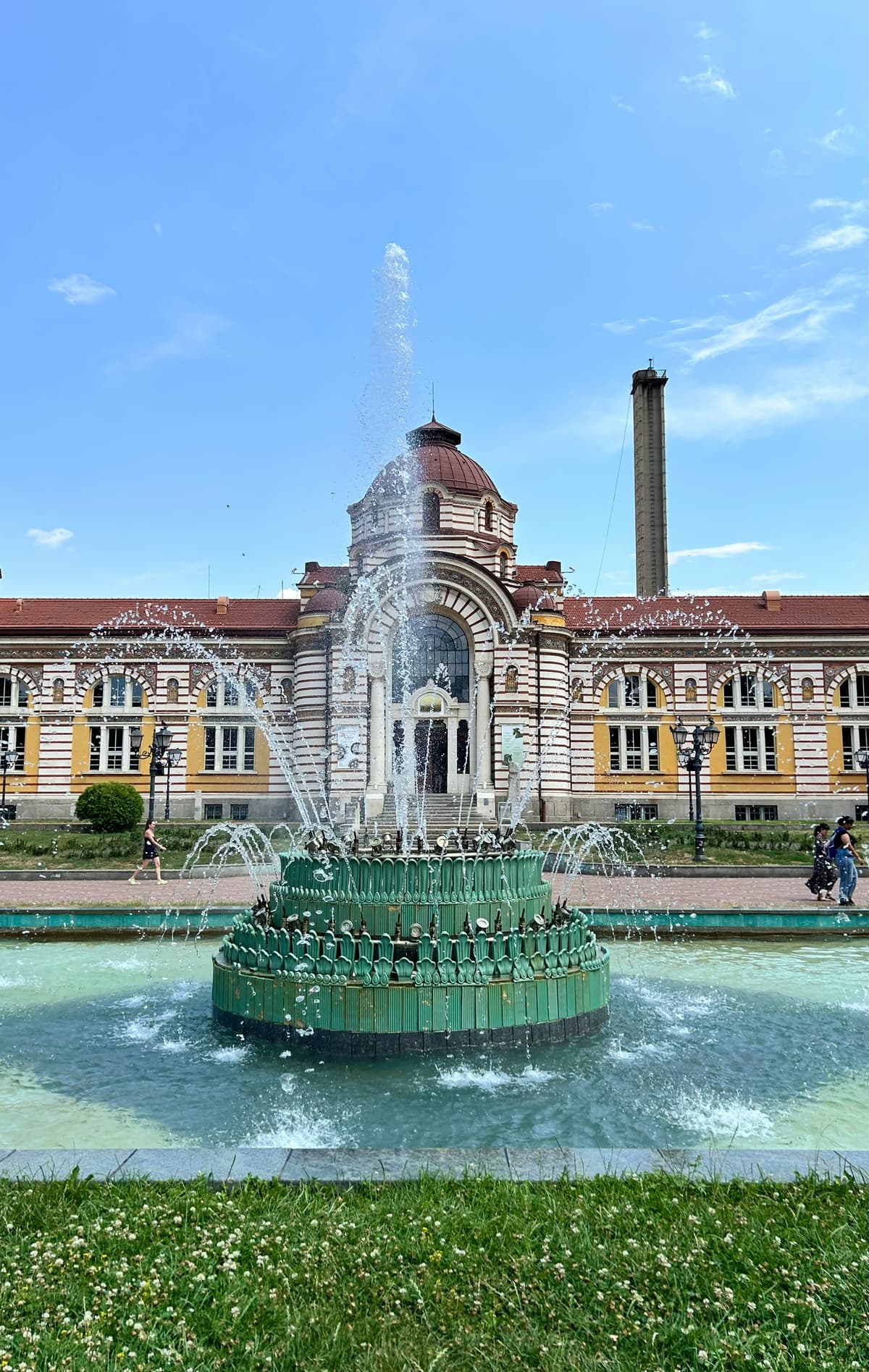
The collection focuses on the story of Sofia itself, from Roman occupation through the 20th century, with a strong emphasis on the Bulgarian royal period (1878 to 1944). Less grandiose than the National Museum, but central and accessible, and the building is worth visiting even if you don't go inside. Worth knowing: the fountain in front of the building is a public drinking point for hot mineral water, a free taste of Sofia's geothermal heritage.
Art and the Socialist Legacy
Kvadrat 500: The National Gallery
This is the main branch of Bulgaria's National Gallery, with over 40,000 works in the collection and about 1,700 on display at any given time, across 28 rooms on four floors. Half the works are by Bulgarian artists from the 19th century onward, and the other half is art from Europe, Asia, Africa, and the Americas. If you're an art person, this is your central stop in Sofia.
The building is next to the Vasil Levski Monument, behind the Alexander Nevsky Cathedral, within walking distance from most central hotels.
Museum of Socialist Art
This is the most distinctly "Bulgarian" museum you'll encounter: an outdoor sculpture park under open sky, filled with statues of Lenin, anonymous workers, and the giant red star that once sat on top of the Communist Party Headquarters building in central Sofia. These sculptures were torn down from the city's streets after 1989 and collected in this park. There's no attempt to soften or explain, just a presentation of the art of the 1944 to 1989 period exactly as it was.
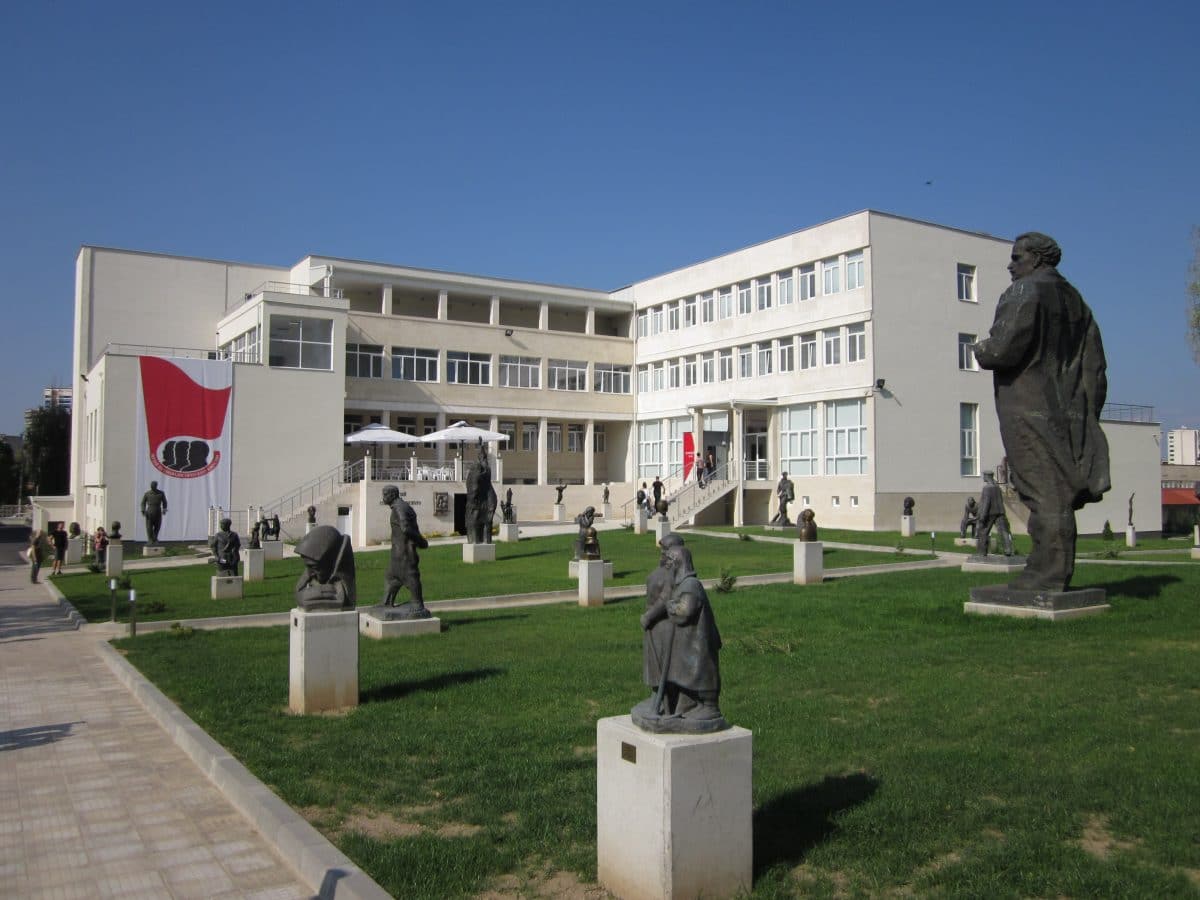
Recommended mainly for anyone interested in the history of the Eastern Bloc, or the design and aesthetics of the period. This is a one-of-a-kind experience: there's no other place quite like it in Europe.
 Book it with us · AttractionStella's Sofia - A Journey in the CapitalFrom€40€40$45£34Book
Interactive Museums for Families
Sofia is a more important destination for families with children than most people realize. There are two museums here built specifically for kids, and both are at full European quality.
Muzeiko: The Children's Science Center
The largest of its kind in Eastern Europe. Opened in 2015, funded by the America for Bulgaria Foundation, and designed by a US architecture firm that specializes in children's museums. The concept: a journey through time across three floors: past (archaeology and geology), present (nature and ecology), and future (space and technology). Over 130 interactive games, a planetarium, an outdoor courtyard with a climbing wall.
Ideal age range: 4 to 12. You can easily spend three to five hours there without the kids getting bored.
Museum of Illusions
A branch of the international chain, located in central Sofia. Optical illusion rooms, distorted perspectives, upside-down rooms, a tunnel that messes with your sense of direction. More "entertainment" than "museum," but it works great with school-age kids and holds attention for about 90 minutes.
If you're traveling to Sofia with kids, our family-friendly attractions in Sofia can connect museum visits with nature outings on Mount Vitosha or in Borisova Gradina park.
Practical Tips for Visitors
- Most museums are closed on Mondays. Notable exceptions: the National Museum of History (open daily) and The Red Flat.
- Free days and discounts. The Sofia History Museum is free on the first Thursday of every month. At the National Gallery branches, including Kvadrat 500 and the Museum of Socialist Art, tickets cost €2 every Thursday. The National Museum of History is free on 18 May, International Museum Day.
- English signage: Major museums (National Museum of History, Kvadrat 500, Sofia History Museum, Muzeiko) provide English explanations. Smaller museums, not always. Download a translation app.
- Combined tickets: The National Museum of History sometimes offers a combined ticket with nearby Boyana Church. Worth checking their website before buying.
- Realistic scheduling: Two museums in a day is a reasonable pace. Three is only possible if they're all centrally located. The National Museum of History needs a half-day on its own because of the distance.
Frequently Asked Questions
Which museum in Sofia is worth visiting if I only have one day?
If you're into history: the National Museum of History in Boyana. If you love art: Kvadrat 500 in the center. If you're with kids: Muzeiko. Any one of the three will fill a full day.
How much does a museum entry in Sofia cost?
At the main museums an adult ticket costs about €5 to €14: the Sofia History Museum €5, the National Museum of History €9, Kvadrat 500 €10 and the Museum of Illusions €14. Muzeiko is around €6. A fraction of what you'd pay for a comparable museum in Paris or Berlin.
Are Sofia's museums suitable for children?
Muzeiko and the Museum of Illusions are built specifically for children. The National Museum of History is interesting for kids over 10 who like history. The Socialist sculptures in the outdoor park are a particular adventure for older kids.
How do I get to Sofia's museums?
Most central museums are walkable or accessible by metro. The National Museum of History in Boyana is further out, so we recommend a private transfer or a licensed taxi booked through a local company app such as Yellow!, OK Supertrans or TaxiMe (Bolt does not offer rides in Sofia).
The Bottom Line
The thing about Sofia's museums is that they don't pretend. The National Museum of History is in a dictator's old villa. The city museum is in a bathhouse that sat abandoned for 25 years. Lenin statues are scattered around a park with no explanation. It's not "curation". It's simply what was there, and the Bulgarians opened the door and said take a look. For travelers tired of the polished displays of Paris or Vienna, Sofia is a breath of fresh air.
At MakeYourTravel, we help plan culture days in Sofia: full attractions, private transfers to the more distant museums, hotels in central locations that save time and walking. Get in touch and we'll put together a Sofia day you won't forget.
Asked in our group
What members of our Facebook group ask about this, with our answer.
What is there to do in Sofia with kids?
Plenty. Muzeiko, a children's museum where they can touch everything, with more than 130 games (closed on Mondays). Bells Park, where kids can ring some of the bells. The Golden Bridges on Vitosha, where they jump between giant boulders (keep an eye on them, wet rock is slippery). And the Sofia Zoo, which has a family ticket.
Share this guide