
Skiing in Bansko: The Practical 2026/27 Winter Guide
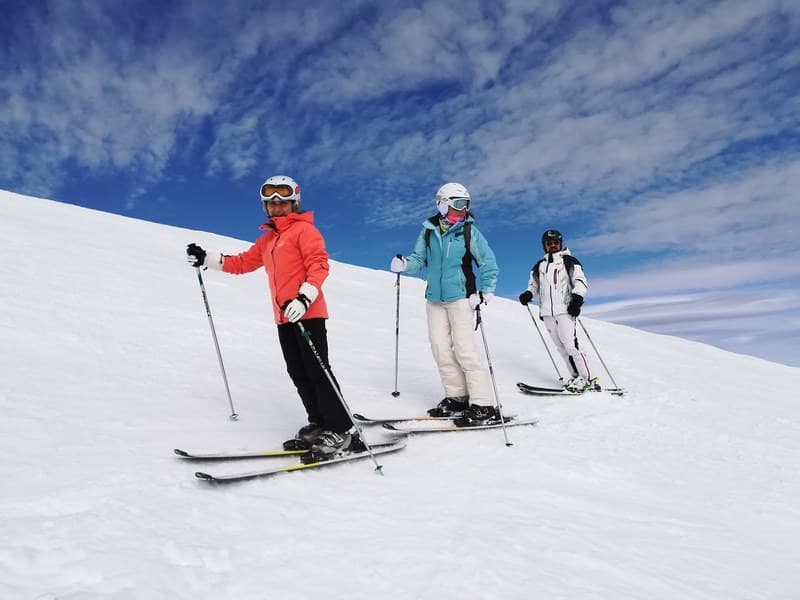
Skiing in Bansko is still one of the best-value ski trips in Europe for Israeli travelers: about 70 to 75 km of pistes above a mountain town in southwest Bulgaria, a season that usually opens in December and runs until early April, and an adult day pass that cost €59 at the peak of last season. What can really spoil the trip is the gondola queue: on a busy morning it can eat two hours or more of your ski day.
We live in Sofia, and the Bansko questions come in again every winter. Here are the answers, including what skiing over Hanukkah 2026 looks like, what a ski day really costs and how to beat the gondola queue.
Contents
- The Bansko ski season: when it's open and when to go
- The ski area in numbers: pistes, lifts and Todorka
- The gondola queue: why it happens and how to beat it
- Bansko ski prices: what a lift pass costs
- Ski school, private instructors and equipment rental
- Where to stay: near the gondola or in the old town
- Skiing in Bansko with kids
- Bansko in winter off the slopes: après-ski, the old town and hot springs
- Getting from Sofia Airport to Bansko
- Driving to Bansko in winter: tyres, chains and the Predel pass
- Frequently asked questions
- Next steps
The Bansko ski season: when it's open and when to go
The Bansko season opens between early and mid-December, depending on the snow, and closes in early or mid-April. Over the last three seasons the resort opened on 16 December 2023, on 6 December 2024 (earlier than planned, with almost every run open) and on 13 December 2025 (with only three runs, in the Plato and Banderitsa areas). No official opening date for 2026/27 had been published as of September 2026. International ski sites such as OnTheSnow project an opening on 12 December 2026 and a close on 11 April 2027, but that is their estimate, not an announcement from the resort, and the actual opening depends on snow and cold.
Bansko in December and over Hanukkah
Worth knowing: Hanukkah 2026 runs from 4 to 12 December, mostly before the usual opening date. The resort has not announced an opening date yet. In 2024 it was running from 6 December, and in 2025 only from 13 December and with three runs, so skiing over Hanukkah is a bet on the snow: in a year with early snow you may well ski, and in a normal year you will find the resort closed or only a handful of runs open. If your holiday falls over Hanukkah, book a hotel you can cancel and keep a plan B of spa days and trips. The week between Christmas and New Year already counts as peak season, with prices and queues to match.
The best time to go
- January, after the holidays: from the second week of January to the end of the month the crowds thin out and conditions are usually good. This is the time we recommend most, if you can choose.
- February: peak season. School holidays in several European countries overlap, and the gondola queue is at its worst.
- March: a good compromise. Fewer crowds than February, longer days, and usually still good snow higher up.
- April: the lift pass is cheaper (€45 a day last season instead of €59), but towards the end of the season the snow on the lower sections is less reliable.
The ski area in numbers: pistes, lifts and Todorka
The Bansko ski area spreads across the slopes of Mount Todorka (2,746 m) in the Pirin range. It has about 70 to 75 km of pistes and 15 lifts, including drag lifts, and the highest point you reach by lift is around 2,500 to 2,600 m. The town itself sits at about 925 m, so every ski day starts with a long ride up.
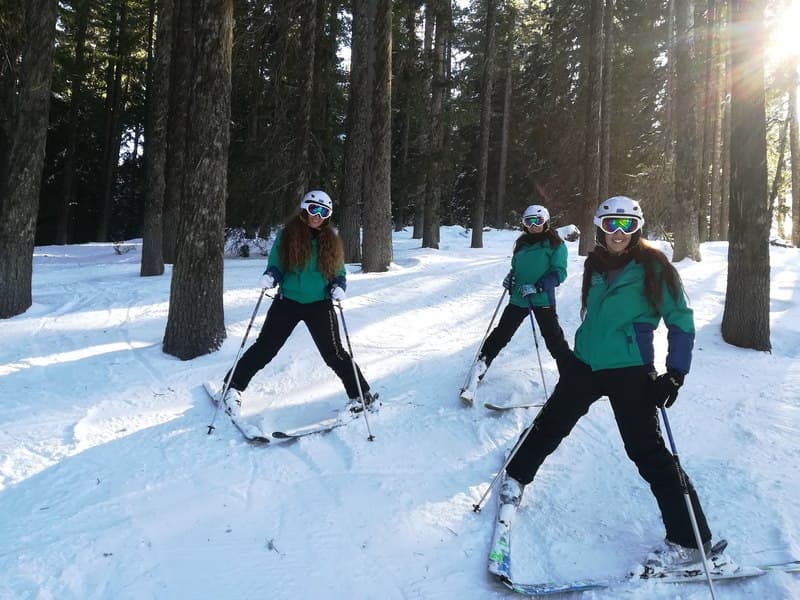
- The gondola: 8-seat cabins on a line about 6.2 km long that climbs from town, stops at the Chalin Valog mid-station and reaches Banderishka Polyana, at about 1,600 m, after roughly 25 minutes. In season it runs from 8:30 to 17:00, and the other lifts from 8:45 to 16:15.
- Banderishka Polyana: the heart of the ski area. The ski schools meet here, the easy beginner runs are here, and the lifts continue up from here.
- The blue runs: Kolarski, Plato 1, Shiligarnik 1 and Shiligarnik 2 are the next step, once you can stop and turn without panicking.
- Todorka: the Todorka chairlift takes you to the upper part of the ski area, where red runs come down. There are black runs too, such as the Tomba run, but only a few.
- The ski road: an easy run of about 7 km from Banderishka Polyana down to town. At the end of the day everyone is on it, so if you are not yet steady on your skis, simply ride the gondola down.
Honestly, Bansko is excellent for beginners and intermediates. According to the international ski sites, only about 7 to 8 percent of the pistes are rated difficult, so experienced skiers looking for a week of black runs will feel they have done the mountain quickly. Torn between Bansko, Borovets and Pamporovo? We have a full comparison of Bulgaria's ski resorts.
The gondola queue: why it happens and how to beat it
Here is what you need to know: most people staying in town go up on the same gondola, and it carries about 2,000 people an hour. On a busy week's morning that is simply not enough. Over the late-December holidays, and above all in February, the queue starts building before the 8:30 opening, and if you arrive after the gondola has opened you may wait an hour, two hours or more. Around 11:30 to 12:00 the queue starts to shrink, though in busy weeks it is still long. Here is how to plan around it:
- Be in line 15 to 30 minutes before opening. Official opening is 8:30; there are reports it sometimes opens earlier in the busiest weeks, so being in line by 7:45 wins you the morning.
- Buy your lift pass the evening before. In season there is a sales desk at the Kempinski hotel open until 20:00, self-service kiosks at the gondola and in the car parks, and you can also buy online through the Ski Point platform on the official resort website or in the official Bansko Ski app.
- Get your equipment fitted the day before. Some rental shops let you try on and collect your gear the afternoon before, and in the morning you walk straight to the queue.
- Ski the afternoon. A half-day pass, valid from 12:30, cost €46 last season instead of €59. With small kids, or if early mornings are not your thing, go up once the morning queue has eased and ski until the lifts close at 16:15.
- Choose lessons that start late. Some schools run groups starting at 14:00, so you ride up after the morning queue has already eased.
- Go up by road. A road also climbs to Banderishka Polyana. Some hotels and gear shops run shuttles and there are taxis, but the road is busy in the morning too, parking at the top is limited, and on busy days the police sometimes restrict private cars from going up.
- Stay close to the gondola. If you can walk out of your hotel at 7:45, you have already solved half the problem. More on that below.
Bansko ski prices: what a lift pass costs
Lift pass prices for 2026/27 had not been published as of September 2026. To give you a sense of scale, these are the official high-season prices for 2025/26, valid from 27 December 2025 to 31 March 2026. Prices include VAT and mountain insurance.
| Category | 1 day | 6 days | Half day (from 12:30) |
|---|---|---|---|
| Adults | €59 | €341 | €46 |
| Teens 12 to 18, students and pensioners up to 74 | €53 | €303 | €40 |
| Children aged 7 to 11 | €30 | €164 | €24 |
| Children under 7, and over-75s | €0.60 | €3.20 | €0.60 |
What the table tells you:
- A multi-day pass barely saves anything. Six adult days cost €341, against €354 for six single-day passes. And since unused days are not refunded, with small kids or an uncertain forecast it is sometimes better to buy day by day.
- Children under 7 ski almost free, but only with an accompanying adult and a document proving their age, and one adult can accompany up to two small children. Bring the kids' passports to the ticket desk.
- The start of the season and April are cheaper. Last season, from 14 December, when only a few runs were open, an adult day cost 65 leva (about €33), and from 1 April 2026 the price dropped to €45. But the early-season price changes from year to year: in December 2024 it was 96 leva (about €49). The catch: fewer runs open at the start, and less reliable snow at the end.
- Everything is in euros. Bulgaria adopted the euro on 1 January 2026, and since February 2026 the lev is no longer legal tender. For cards, cash and ATMs, see our guide to money in Bulgaria.
What a beginner's ski day costs
A rough sum for an adult beginner in peak season, at last season's prices: lift pass (€59), a basic equipment set (about €18) and a two-hour group lesson (about €43 to €55). That is roughly €120 to €135 a day before food and drinks.
What a ski week in Bansko costs
At last season's prices, six ski days for an adult beginner come to about €690 to €770: a six-day lift pass (€341), a six-day equipment set (about €94) and six two-hour group lessons (about €43 to €55 each). On top of that come flights, accommodation, food and the transfer from Sofia.
Ski school, private instructors and equipment rental
Bansko has plenty of ski schools and rental shops, and the meeting point for lessons is usually up at Banderishka Polyana. How to choose:
Group lesson or private instructor
A two-hour group lesson costs about €42 to €55 a day per person, depending on the school and the period, and some schools offer a full day of 4 hours in groups of up to 8 people for about €95 to €105. A private lesson costs about €51 to €53 an hour, and two private hours at a local school cost about €105 to €120. Lessons are usually taught in English or other European languages, not Hebrew.
A Hebrew-speaking ski instructor in Bansko
For a five-year-old, or an adult on skis for the first time, being taught in your own language makes a big difference. Through us you can book a two-hour ski or snowboard lesson in Bansko, in Hebrew or English, for beginners and advanced riders of all ages, from €145 per participant. That is more than a group lesson in English, and more than two private hours in English at a local school (about €105 to €120), and for a whole family the price adds up. So it is worth it mainly for young kids and beginners who struggle in English.
Renting equipment: what to check
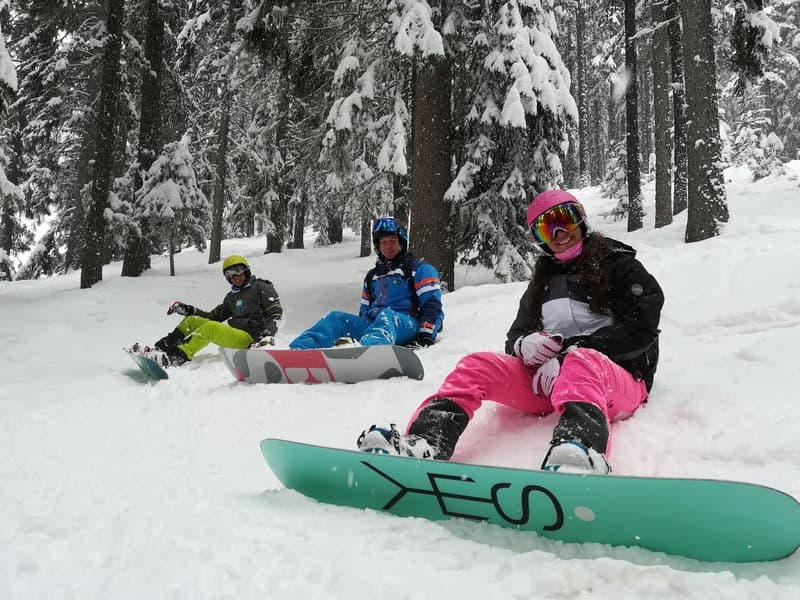
- Price: as an example, on the price list of one of the town's ski schools and rental shops, a basic adult ski set (skis, poles and boots) costs €18 a day and €94 for six days, a children's set €13 a day and a helmet €5 a day. Higher-grade equipment goes up to about €44 a day.
- Boots first. A boot that pinches ruins a whole ski day. Ask for another size while you are still in the shop, without embarrassment.
- Helmets for kids, even if they complain.
- Equipment cover: ask what happens if skis break or get stolen. Some shops include basic cover in the package, so check what is included.
- Travel insurance: the lift pass includes mountain insurance, but it does not replace travel insurance. Make sure your policy covers winter sports.
Where to stay: near the gondola or in the old town
Bansko is really two towns. Around the gondola station and along Pirin Street you will find modern hotels, gear shops and bars. The old town, with its stone houses, cobbled streets and mehanas, the traditional taverns, is the part with character. Which one suits you:
- Near the gondola: you walk to the queue before 8:00, pop back to the hotel at lunchtime with the kids, and the après-ski is on your doorstep. The downside: less charm, and in the evening the bars around there are loud until late.
- In the old town: atmosphere, traditional restaurants and pleasant evenings. The downside: mornings are harder. The walk to the gondola in ski boots with skis on your shoulder is not short, so check before booking whether the hotel runs a gondola shuttle.
- In Banya: spa hotels with thermal water, about 5 km from Bansko. Good if you are also there to rest, but only with a car or a shuttle, because every morning you need to get to the gondola.
Our rule of thumb: families with young kids, and anyone coming in February, near the gondola. Couples who come for the atmosphere too, the old town or Banya.
Kosher food in Bansko
During the ski season the Chabad in Bansko runs kosher services together with hotels and caterers, and some hotels host kosher-keeping groups on half or full board. Things change from season to season, so check with Chabad before you book a hotel. The details, including how to arrange Shabbat meals, are in our kosher food guide to Bulgaria.
Skiing in Bansko with kids
Bansko suits families very well, thanks to plenty of easy runs and schools that take young children. What to sort out in advance:
- From what age: at most schools children's group lessons start at age 6 or 7, and a first one-hour group lesson for ages 7 to 12 starts at about €31. For younger kids there are private lessons from age 3 or 4, at about €51 to €53 an hour, and some schools run a ski kindergarten for ages 3 to 5 that mixes play and learning on the snow.
- Where they learn: usually at Banderishka Polyana, at the top of the gondola. So even a four-year-old has to ride the gondola, with everything that means on a busy morning. Pick a lesson time that suits the queue, not the alarm clock.
- Lift pass: under 7 it is almost free (€0.60 a day), with a document proving age.
- Food on the mountain: much pricier than in town. Snacks, hot chocolate in a flask and sandwiches in the bag save money and nerves.
- A rest day midweek: by day three or four kids get tired. A morning in the pool of a Banya spa hotel that takes children (check in advance, because the Pulse thermal spa only admits guests over 14) or a stroll through the old town gets their energy back.
Bansko in winter off the slopes: après-ski, the old town and hot springs
Après-ski starts around 16:00, when skiers come down the mountain, in the bars by the gondola station and along Pirin Street. From there the evening moves on to live music and clubs that stay open late, and prices are far lower than what you know from ski resorts in Western Europe.
The old town is worth at least one evening: cobbled streets, stone houses, the Holy Trinity Church built in 1835, and mehanas with hearty mountain food that is just right for a cold night. For food, sights and Bansko in summer, see our complete guide to Bansko.
Banya, a small village about 5 km from Bansko, sits on hot mineral springs (the water comes out of the ground at 37 to 57°C) and has spa hotels and thermal pools. After a day on the slopes, an hour in the hot water is exactly what your legs need. We list where to soak in our guide to Bulgaria's hot springs.
And for days without skiing:
- Day trip from Bansko to Melnik and Rozhen Monastery: an old monastery in the Pirin mountains, a tour of a historic winery with local wine tasting (included), a traditional meal (paid separately) and free time among Melnik's stone houses. A full day, from €60 per person with a minimum of 3 participants (smaller groups pay a supplement).
- Staying in Sofia and just want a taste of Bansko? A day from Sofia to Bansko's old town and the Pulse Banya thermal spa: a guided walk through the old streets, lunch at a mehana and time at the spa, from €110 per person (spa entry and lunch are not included and are paid on site). Note: the Pulse thermal spa only admits guests over 14, and in winter this is a long day, with two and a half to three hours on the road each way.
Check winter availability for both trips with us before you plan around them.
Getting from Sofia Airport to Bansko
Bansko is about 160 km from central Sofia and about 175 km from the airport. On a normal day the drive takes about two and a half hours, and on snowy days up to three. You have three options:
- Private transfer: the simplest option with ski gear and kids, because a family of four with ski bags and boots does not fit into a regular taxi. Our fixed-price private transfer from Sofia to Bansko starts at €168 per car (as of September 2026). Landing and want a pickup straight from the terminal? Write to us and we will agree the pickup and its price in advance. Tell us how many sets of gear you have and we will match the size of the car. All the details are in our Sofia to Bansko transfer guide.
- Bus: there are buses from Sofia to Bansko, about 3 hours and around €10 per person. But from the airport you first need to get to the bus station in town, which is awkward with suitcases and skis.
- Rental car: it works, as long as you understand what winter driving in the mountains means. Details in the next section.
Driving to Bansko in winter: tyres, chains and the Predel pass
The first part of the drive from Sofia is a motorway heading south, but the last stretch climbs from Simitli over the Predel pass (1,140 m) to Razlog and Bansko. In January and February this stretch can be snowbound, and that is exactly where an unprepared car gets stuck. What you need to know:
- Tyres: in winter Bulgarian law requires tyres with a tread depth of at least 4 mm. Ask the rental company, in writing, for a car with winter tyres.
- Snow chains: depending on road conditions and signs they can be compulsory, and with chains on the speed limit is 50 km/h. Make sure there are chains in the car, and practise fitting them in the car park, not at the roadside in the snow.
- Lights: in Bulgaria you drive with your lights on, even during the day.
- Vignette: motorways and main roads need a valid digital vignette. With a rental car, check that it is included.
- Drive in daylight: if your flight lands in the evening, consider a night in Sofia and driving in the morning.
If you have never driven in snow, honestly, take a transfer. And if you rent anyway, you can arrange car rental through us, and either way ask for winter tyres in writing. Before you book, read our guide to renting a car in Bulgaria.
Frequently asked questions
When does the 2026/27 ski season open in Bansko?
As of September 2026 the resort had not published an official opening date, and international ski sites project an opening on 12 December 2026. Over the last three seasons the resort opened between 6 and 16 December, depending on the snow. The season usually runs until early or mid-April.
How much does a ski day in Bansko cost?
In 2025/26 an adult day pass cost €59 in high season (27 December to 31 March), €46 for a half day from 12:30 and €45 from April. With equipment and a group lesson, a day for an adult beginner comes to about €120 to €135. Prices for 2026/27 have not been published yet.
Can you ski in Bansko over Hanukkah?
In 2026 it is a gamble: Hanukkah runs from 4 to 12 December, mostly before the usual opening date. In 2024 the resort opened as early as 6 December, but you cannot count on that, so book with a cancellation option and keep a plan B of spa days and trips. If you are flexible, January is much safer.
How do you avoid the gondola queue in Bansko?
Be in line 15 to 30 minutes before the 8:30 opening, buy your lift pass and get your gear fitted the evening before, or skip the morning and go up at midday with a half-day pass, valid from 12:30 (€46 in last season's high season). It matters most in February.
Are there Hebrew-speaking ski instructors in Bansko?
Yes. Through us you can book a two-hour ski or snowboard lesson in Hebrew or English, from €145 per participant. Lessons at the local schools, private ones included, are cheaper, but they are usually taught in English.
From what age can children learn to ski in Bansko?
Children's group lessons usually start at age 6 or 7. From age 3 or 4 there are private lessons and ski kindergartens for ages 3 to 5, and a lift pass for a child under 7 costs €0.60 a day, with a document proving age.
How long is the drive from Sofia Airport to Bansko?
It is about 175 km from the airport to Bansko, roughly two and a half hours on a normal day and up to three in snow. Our private transfer from Sofia to Bansko starts at €168 per car, and we agree the pickup from the terminal and its price with you in advance.
Next steps
Dates set? This is the order we recommend: first the hotel (near the gondola if you are coming in February or with kids), then the transfer from the airport, then lessons and gear. If Hebrew matters to you, book the Hebrew ski lesson in advance.
And if you are coming for the snow and not only the skiing, our guide to Bulgaria in winter has ideas for every month from December to March.
Share this article with your friends: