
Bulgaria Attractions: 26 Places Worth Seeing in 2026

The best attractions in Bulgaria are Rila Monastery, the Seven Rila Lakes, the Old Town of Plovdiv, the caves of the north (Prohodna with its Eyes of God, and Saeva Dupka), Veliko Tarnovo, the medieval capital, and Nessebar on the Black Sea coast. Most of them are within two and a half hours of Sofia, so you can cover a big part of this list on day trips from the capital. Only the Rhodopes, Veliko Tarnovo and Belogradchik in the north, the Rose Valley and the coast need an overnight stay.
We live in Sofia, so this is the list of Bulgaria attractions we would send to friends coming to visit: 26 places grouped by region, each with how long you need, how far it is, when to go and how to get there. Entrance prices are correct as of September 2026, and wherever we have a bookable day trip, you will find a link.
Contents
- The 10 must-see attractions in Bulgaria
- Attractions for kids, free and in winter
- Attractions in and around Sofia
- The Rila and Pirin mountains
- Plovdiv and the Thracian Valley
- The Rhodope Mountains
- The north: caves, rocks and an old capital
- The Black Sea
- Day trip or overnight: how to plan
- Frequently asked questions
- What next
The 10 must-see attractions in Bulgaria
If you only have time for ten places, make it these. Distances and times are by car from Sofia.
| Place | Region | From Sofia | Time needed | When |
|---|---|---|---|---|
| Rila Monastery | Rila Mountains | 120 km, about 2 hours | 1 day | All year |
| Seven Rila Lakes | Rila Mountains | About 90 km, 1.5 to 2 hours | 1 day | July to mid-September |
| Plovdiv Old Town | Thracian Valley | 145 km, 1.5 to 2 hours | 1 day | All year |
| Prohodna and Saeva Dupka | The north | 100 to 110 km, about 1.5 hours | 1 day | All year |
| Boyana Church and Vitosha | Sofia | 9 to 20 km | Half a day | All year |
| Bansko and the Pirin lakes | Pirin Mountains | 160 km, about 2.5 hours | 1 to 3 days | July to September, ski in winter |
| Melnik and its sand pyramids | Southwest | 175 km, about 2.5 hours | 1 day | Spring and autumn |
| Veliko Tarnovo and Tsarevets | The north | 220 km, about 3 hours | 1.5 days with a night | All year |
| Belogradchik Rocks | Northwest | About 3 hours | 1 day with a night | April to October |
| Nessebar Old Town | Black Sea | About 400 km | Half a day from a coast base | May to September |
Attractions for kids, free and in winter
For kids
- The Bells Park in Sofia: about a hundred bells from countries around the world, and some of them are there to be rung.
- The Golden Bridges on Vitosha: a river of giant boulders to hop across, half an hour from the city.
- Saeva Dupka Cave: a short, easy visit; under 7s go free and under 18s pay 3 euros.
- Yagodinska Cave: a 1.1 km lit path at a constant 6 degrees, so pack jackets even in August.
- Belogradchik Fortress: walls and giant rocks between the viewpoints, with a family ticket at 15.50 euros.
Free
- Alexander Nevsky Cathedral in Sofia.
- The grounds and church of Rila Monastery (you only pay for the museums).
- Prohodna Cave, open to everyone in every season.
- The Bells Park and the Golden Bridges on Vitosha.
- The Roman stadium of Plovdiv, which you see from the square on the main pedestrian street.
In winter
- Rila Monastery: open all year, and in snow it looks like a postcard.
- Sapareva Banya: water at 103 degrees and thermal pools in the cold air.
- Caves: Yagodinska, the Devil's Throat and Saeva Dupka stay open in winter, with shorter hours.
- Skiing: in Bansko and Borovets, plus snow on Vitosha right above Sofia.
Attractions in and around Sofia
Sofia is the easiest base for the whole trip: there is a day or two of sightseeing in the city, and most places on this list are a day trip away.
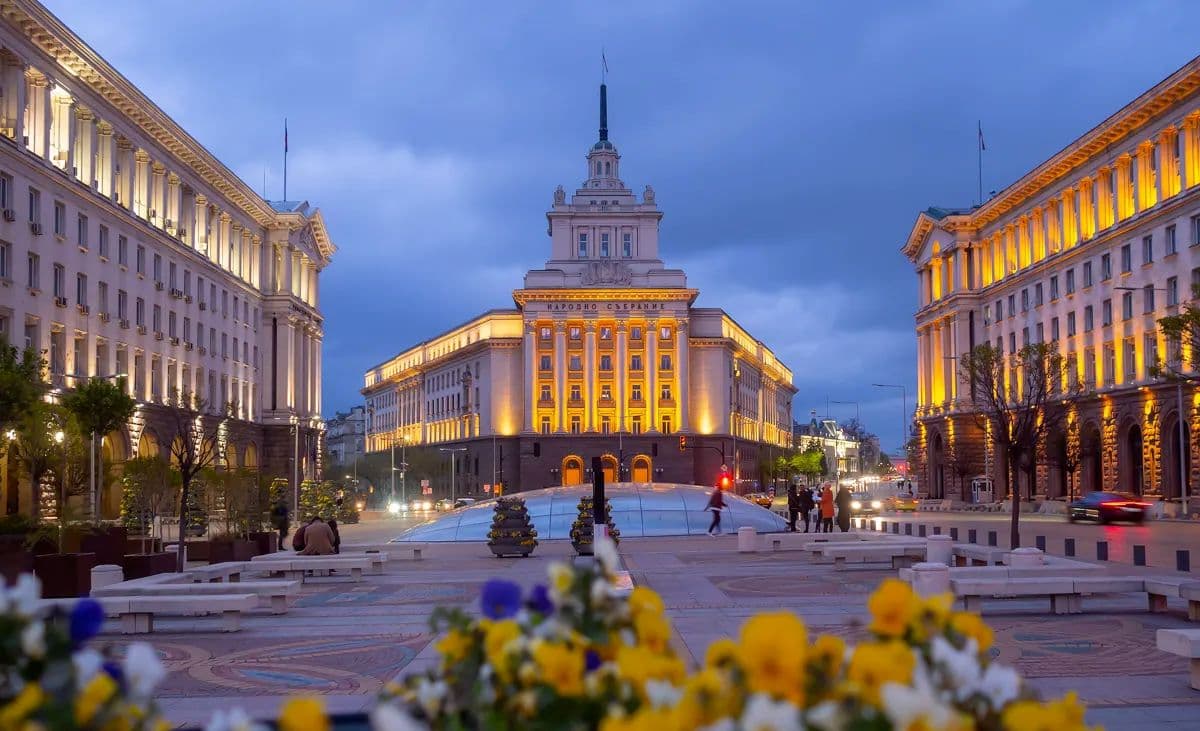
1. Alexander Nevsky Cathedral and the historic centre
The cathedral with its 45-metre gold dome is the symbol of Sofia, and entry is free. A short walk around it takes you past the 4th-century Rotunda of St George, the Roman remains of Serdica, the Banya Bashi Mosque and the Sofia Synagogue, opened in 1909 and one of the largest in Europe, with a Jewish museum inside.
Time needed: half a day on foot. Where: city centre. When: all year. Tip: the crypt, with its icon collection, has a separate ticket of a few euros.
2. Boyana Church
A small church at the foot of Vitosha whose walls are covered in frescoes from 1259, on the UNESCO World Heritage list since 1979. Visitors go in groups of up to 9 people for 10 minutes only, so do not expect a long visit. The ticket costs 10 euros.
Time needed: an hour including the ride. Distance: about 9 km from the centre, 15 to 20 minutes by taxi. When: all year, 9:30 to 18:00 in summer and 9:00 to 17:30 in winter. Getting there: taxi, and it combines well with Vitosha.
3. Vitosha and the Golden Bridges
The mountain above Sofia became the first nature park in the Balkans in 1934. The Golden Bridges are a river of giant boulders at about 1,400 metres, and trails lead from there to the summit of Cherni Vrah (2,290 metres).
Time needed: half a day. Distance: about 20 km, half an hour by car. When: May to October for walks, snow in winter. Getting there: taxi or car, or a day trip to Vitosha and the hot springs from 90 euros.
4. The Bells Park (Kambanite)
A 37-metre monument at the foot of Vitosha, built in 1979 for an international children's assembly held under UNESCO auspices. About a hundred bells sent from countries all over the world hang around it, and you may ring some of them. It is a quiet spot that children love.
Time needed: one to two hours. Distance: on the edge of the city, just south of the ring road. When: all year. Getting there: the park is free to enter, and a taxi from the centre gets you there.
5. Koprivshtitsa
A mountain town at 1,030 metres with hundreds of colourful 19th-century houses, where the first shot of the April Uprising was fired in 1876. You wander between house museums and small taverns, and roughly every five years it hosts the National Festival of Bulgarian Folklore.
Time needed: a day. Distance: about 110 km, an hour and a half. When: May to October. Getting there: rental car or private transfer.
The Rila and Pirin mountains
The southwest is the most mountainous part of Bulgaria, and it holds two of the most famous places in the country. In summer this is hiking country, in winter ski country.
6. Rila Monastery
The largest and most famous monastery in Bulgaria, founded in the 10th century and on the UNESCO list since 1983. The courtyard with its striped arcades, the painted church and the 14th-century Hrelyo Tower are worth the drive on their own. Entry to the grounds and the church is free, and a combined ticket for all the museums costs 12 euros. On the way you can stop at the Stob Pyramids, earth pillars up to 12 metres high.
Time needed: a day. Distance: about 120 km, about 2 hours. When: all year; the museums open 8:30 to 16:30, and until 19:30 from June to September. Getting there: there is no regular public transport, so drive or join a day trip to Rila Monastery from 95 euros. No shorts or tank tops, and no photos inside the church.
7. The Seven Rila Lakes
Seven glacial lakes stacked one above the other between 2,100 and 2,500 metres, and in our view the most beautiful hike in Bulgaria. A chairlift takes about 20 minutes (16 euros return for adults, 8 euros for ages 5 to 12, free under 5), and from the top a loop trail takes 3 to 5 hours.
Time needed: a full day. Distance: about 90 km, 1.5 to 2 hours to the lift. When: July to mid-September. The lakes freeze in October and only thaw in June, and the lift closes for maintenance periods in October and spring, and on the last Monday of every month. On other Mondays it opens only at 12:30, so avoid planning the hike for a Monday. Getting there: a guided trek from Sofia from 100 euros that ends with a dip in hot springs (the lift, 16 euros on the operator's official price list, and the springs are paid on the spot). Everything else is in our complete Seven Lakes guide.
8. Sapareva Banya
A small town at the foot of Rila with a hot-water geyser that burst out in 1957, where the water leaves the ground at 103 degrees. It has thermal pools and makes a particularly good stop after a day at the lakes or on a cold winter day.
Time needed: half a day. Distance: about 70 km, an hour and a quarter. When: all year, best in winter. Getting there: car or private transfer, or as part of the Seven Lakes trek.
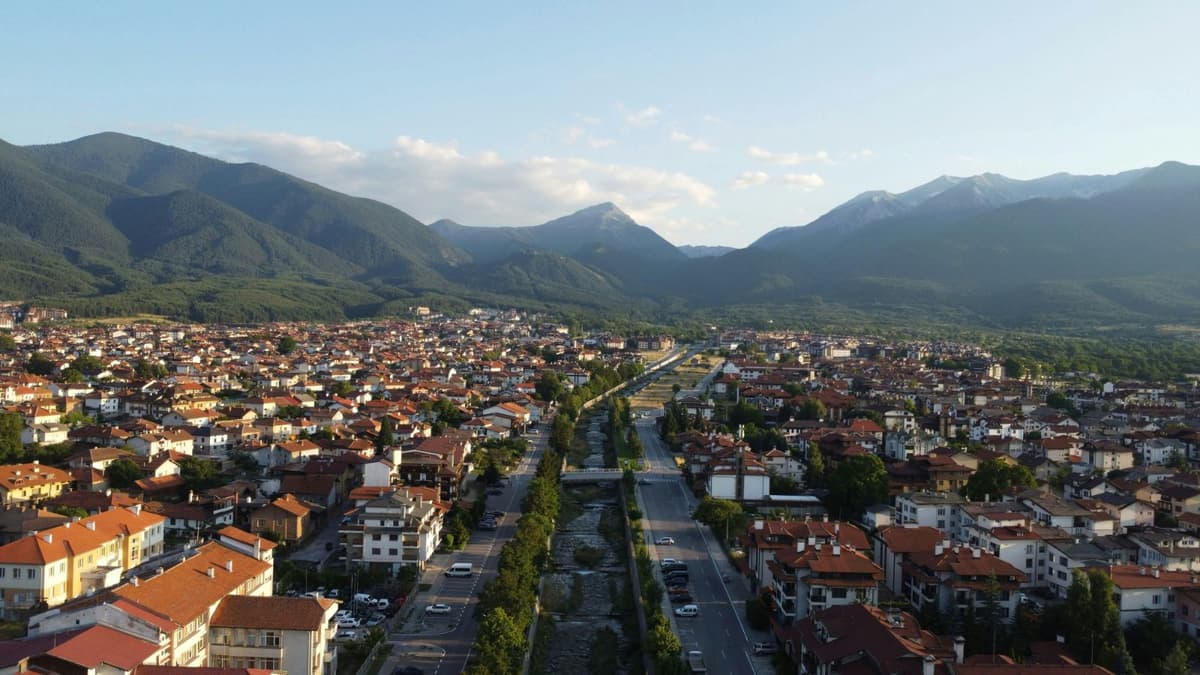
9. Bansko and the Pirin lakes
Bulgaria's best-known ski town, with an old quarter of stone houses and the Holy Trinity Church from 1835. In summer it is the base for Pirin National Park, a UNESCO site with 118 glacial lakes and Vihren peak at 2,914 metres.
Time needed: a day for the town, two or three with hikes. Distance: 160 km, about 2.5 hours. When: July to September for hiking, winter for skiing. Getting there: car or private transfer, then the Pirin three lakes hike from 45 euros, with pickup from your Bansko hotel.
10. Melnik and Rozhen Monastery
Bulgaria's smallest town, with fewer than 200 residents, surrounded by sand pyramids up to 100 metres tall and making wine since at least the 14th century. Six kilometres away stands Rozhen Monastery, the largest in the Pirin Mountains.
Time needed: a day. Distance: about 175 km, about 2.5 hours. When: spring and autumn, because summer there is hot. Getting there: rental car, or a day trip from Sofia to Melnik and Rupite from 90 euros, with a wine tasting in a historic cellar.
11. Rafting on the Struma
A two-and-a-half to three-hour rafting trip on the big river of the southwest, through rapids of different difficulty. In spring the water is high and you get a neoprene suit; in summer the water is pleasant enough to swim.
Time needed: half a day. Distance: about 2 hours from Sofia, on the road to Bansko and Melnik. When: spring to the end of summer. Getting there: by car or transfer, and Struma rafting runs every day from 40 euros.
Plovdiv and the Thracian Valley
Southeast of Sofia a wide, warm valley opens up, with the oldest city in the country, monasteries and the Rose Valley.
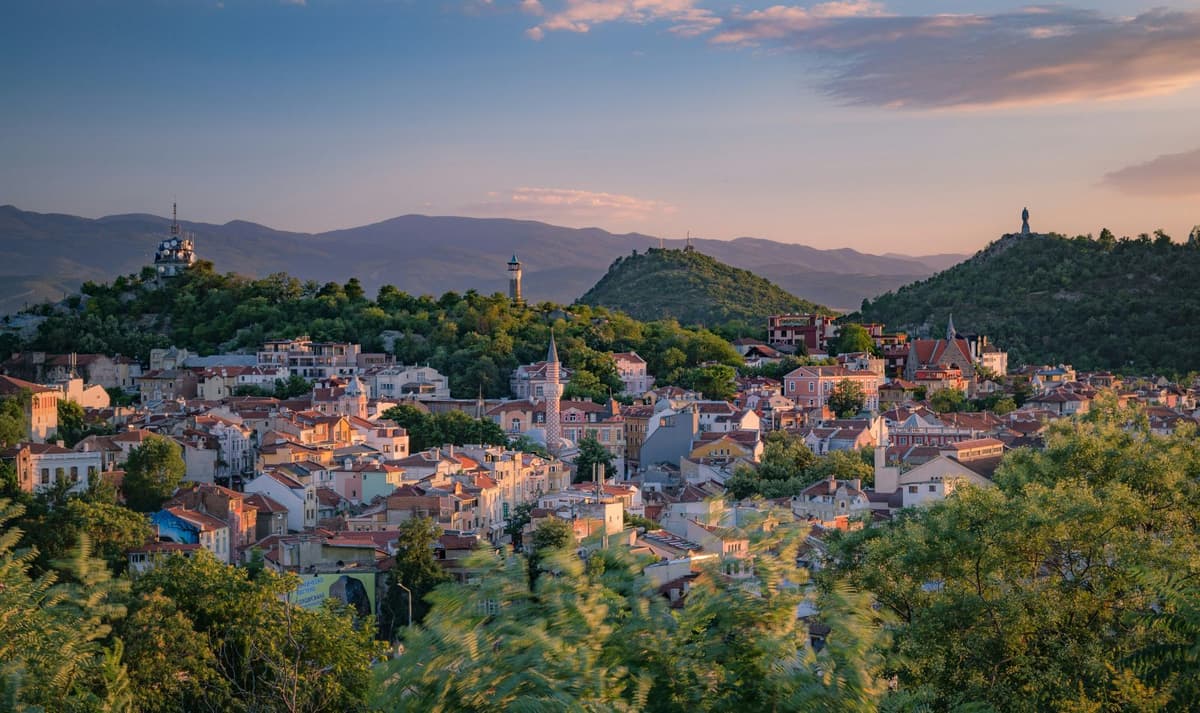
12. Plovdiv Old Town
Plovdiv is considered the oldest continuously inhabited city in Europe, settled since about 6,000 BCE. The 1st-century Roman theatre, uncovered only in the 1970s, still hosts summer performances, the end of the Roman stadium peeks out on the square of the main pedestrian street, and the Kapana quarter is full of galleries and cafes.
Time needed: a day, ideally staying the night. Distance: 145 km, 1.5 to 2 hours. When: all year. Getting there: a guided day trip to Plovdiv from 105 euros, or cheap trains and buses if you prefer going alone.
13. Bachkovo Monastery and Asen's Fortress
Bachkovo, founded in 1083, is the second-largest monastery in Bulgaria and keeps an early 14th-century icon that pilgrims travel to see. A few kilometres away, on a crag above the river, Asen's Fortress has a medieval church and a view over the valley.
Time needed: half a day. Distance: about 30 km from Plovdiv, 190 km from Sofia. When: all year. Getting there: rental car, or a bus from Plovdiv to Bachkovo. The fortress costs about 4 euros.
14. Kazanlak, the Rose Valley and Shipka
Bulgaria produces close to half of the world's rose oil, most of it from the Rose Valley, and the harvest runs through May and June. Kazanlak has a 4th-century BCE Thracian tomb on the UNESCO list (you visit an exact replica), and the Rose Festival takes place on the first weekend of June. On the way up to the mountains you will see the gold domes of the Shipka Memorial Church, and above the valley Buzludzha, a saucer-shaped communist monument that is closed inside.
Time needed: a day, better with a night. Distance: about 195 km, close to 3 hours. When: late May and June for the roses. Getting there: rental car.
The Rhodope Mountains
The Rhodopes in the south are rural, less touristy Bulgaria: stone villages, gorges and caves. They are too far for a day from Sofia, so sleep in the area or start from Plovdiv. There is much more in our Rhodopes guide.
15. Trigrad Gorge and the Devil's Throat Cave
A marble gorge with walls up to 300 metres high, with a narrow single-lane road running its whole length. At its end is the Devil's Throat Cave, where the river plunges into a 42-metre underground waterfall, the highest in the Balkans. You walk in through a tunnel and climb out on steep stairs.
Time needed: half a day. Distance: about 115 km from Plovdiv (2.5 hours), three and a half hours from Sofia. When: May to October; the cave is open all year, with entry on the hour. Getting there: rental car.
16. Yagodinska Cave
The fourth-longest cave in Bulgaria at 10.5 km, with a 1.1 km lit route past stalactites, stalagmites and cave pearls. The visit is guided, leaves every hour and works well for children.
Time needed: 45 to 60 minutes. Distance: about 20 km from Devin, close to Trigrad. When: all year, 6 degrees inside. Getting there: rental car, on the same day as Trigrad.
17. The Wonderful Bridges
Two giant rock arches formed when the ceiling of a cave collapsed. The larger bridge is 96 metres long and its highest arch rises 45 metres, with paths above and below it.
Time needed: 1.5 to 2 hours. Distance: about 75 km from Plovdiv, an hour and a half. When: May to October. Getting there: rental car, on an asphalt road to the site.
18. Stone villages: Shiroka Laka, Kovachevitsa and Leshten
Shiroka Laka is an architectural reserve with traditional Rhodope houses and a school of folk music, and on the first Sunday of March it holds a masked carnival. Kovachevitsa and Leshten, in the western Rhodopes, are stone villages that have barely changed; Kovachevitsa has fewer than 40 permanent residents today and has been the set of many films.
Time needed: a day. Distance: Shiroka Laka is about 95 km from Plovdiv, and Kovachevitsa is reached from Bansko. When: all year, prettiest in spring and autumn. Getting there: rental car, or a day trip from Bansko to Kovachevitsa and Leshten from 45 euros.
The north: caves, rocks and an old capital
Fewer travellers make it up here, and it may be the most surprising part of the list. The first two caves are an easy day trip from Sofia, while Belogradchik and Veliko Tarnovo deserve a night.
19. Prohodna Cave (the Eyes of God)
A natural rock tunnel about 260 metres long, with two eye-shaped holes in the ceiling that let the light in. It is one of the most photographed sights in Bulgaria, and the cave is open to everyone, with no ticket and no artificial lighting.
Time needed: one to two hours. Distance: about 110 km, an hour and a half, next to the village of Karlukovo. When: all year, prettiest in spring and autumn. Getting there: car, or a day trip from Sofia to the northern caves from 85 euros.
20. Saeva Dupka Cave
A stalactite cave with five halls and acoustics so good that choirs give concerts inside. It is 7 to 11 degrees inside. Entry is 6 euros for adults and 3 euros up to 18, and children under 7 go free.
Time needed: an hour. Distance: about 100 km, an hour and a half, near the village of Brestnitsa. When: all year, but in winter the road to the cave can be hard going. Getting there: car, and it combines with Prohodna on the same day.
21. Belogradchik Rocks and Kaleto Fortress
Reddish rock towers, some up to 200 metres tall, spread over about 50 square kilometres. The old fortress is built in among the rocks, and the sunset view from it is one of the best in the country. Magura Cave, 25 km away, has prehistoric rock paintings that you can only see on a guided visit.
Time needed: half a day, with a night in the area. Distance: about 3 hours from Sofia. When: April to October. The fortress costs 8 euros, or 15.50 euros for a family ticket. Getting there: rental car.
22. Veliko Tarnovo and Tsarevets Fortress
The capital of the Second Bulgarian Empire (1185 to 1393), built on cliffs above the loops of the Yantra River. On Tsarevets Hill stand the fortress walls and the Patriarchal Church, and on some evenings there is a sound and light show. Down below wait the craft street of Samovodska Charshia and the nearby village of Arbanasi.
Time needed: a day and a half, with a night. Distance: 220 km, about 3 hours. When: all year; the fortress opens 8:00 to 20:00 from April to September, 9:00 to 18:00 in October, and shorter hours in winter. Getting there: rental car or bus, about 3 hours.
23. Krushuna Falls and Devetashka Cave
Krushuna is a chain of waterfalls and pools on travertine terraces, with a path that climbs to the cave the river flows out of. Devetashka Cave is a huge hall 60 to 100 metres high with openings in the ceiling and home to about 30,000 bats, so parts of it close during the breeding season in early summer.
Time needed: a day. Distance: about 2 hours from Sofia to Devetashka Cave (15 km from Lovech) and about 2.5 hours to Krushuna (34 km from Lovech). When: spring and autumn. Getting there: rental car, and the two work as a detour on the way to Veliko Tarnovo.
The Black Sea
The coast is 4 to 5 hours from Sofia by road, so it is not a day trip but a holiday of its own, based in Burgas, Nessebar or Varna. The season runs from May to September, peaking in July and August.
24. Nessebar Old Town
A small peninsula joined to the mainland by a narrow strip, with the remains of around 40 churches from different eras, many of them ruins, and wooden and stone houses, on the UNESCO list since 1983. At midday in summer it gets crowded, so come in the morning or towards evening.
Time needed: half a day. Distance: 33 km from Burgas, about 400 km from Sofia. When: May to September. Getting there: bus from Burgas (every half hour) or taxi, and to end the day, a one-hour sunset cruise from Nessebar from 78 euros.
25. Sozopol
One of the oldest towns on the Bulgarian coast: Greeks from Miletus founded it in the 7th century BCE as Apollonia. The old town has traditional wooden houses and lanes facing the sea, and an arts festival takes place in early September.
Time needed: half a day to a day. Distance: 35 km south of Burgas, about 40 minutes. When: May to September. Getting there: car or taxi from Burgas.
26. Varna and the northern coast
The Varna Archaeological Museum displays gold from 4,600 to 4,200 BCE, considered the oldest gold treasure in the world. Around the city: the Stone Forest (Pobiti Kamani) 20 km to the west, the Aladzha rock monastery carved into a cliff near Golden Sands, the Queen of Romania's palace in Balchik with its large botanical garden, and Cape Kaliakra with 70-metre cliffs above the sea.
Time needed: one to two days. Distance: Varna is 440 km from Sofia; Balchik is 42 km from Varna and Kaliakra 60 km. When: May to September. Getting there: a domestic flight from Sofia or about five hours by road, then a rental car.
Day trip or overnight: how to plan
Here is what you need to know to avoid cramming. Our rule of thumb: up to two and a half hours each way is a day trip from Sofia, and beyond that it is better to sleep on the road.
- Day trips from Sofia: Rila Monastery, the Seven Lakes, Sapareva Banya, Plovdiv, Koprivshtitsa, Prohodna and Saeva Dupka, and at the limit Melnik and Bansko. All the options are in our guide to day trips from Sofia.
- Worth a night: Veliko Tarnovo, Belogradchik, Kazanlak, the Rhodopes and the Black Sea.
- Without a tour: a private transfer at a fixed price, or a rental car if you want full freedom. In winter the mountain roads are snowy, so make sure the car is equipped for winter.
- Money: since 1 January 2026 the currency in Bulgaria is the euro. Most entrance fees are 3 to 12 euros, and it is worth carrying some cash for small ticket desks and parking.
Frequently asked questions
What is the most famous attraction in Bulgaria?
Rila Monastery, founded in the 10th century and on the UNESCO list since 1983. Next come the Seven Rila Lakes and the Old Town of Plovdiv, and all three are day trips from Sofia.
What can you do in Bulgaria with kids?
The Bells Park and the Golden Bridges in Sofia, easy caves such as Saeva Dupka and Yagodinska, Belogradchik Fortress, and the Black Sea coast in summer. With small children, pick places within two hours of driving.
What are the must-see attractions in Sofia?
Alexander Nevsky Cathedral, the Serdica remains at the Largo, the Sofia Synagogue, Boyana Church and Vitosha mountain. A day or two in the city covers them all, and from there you head out on day trips.
Are the Seven Rila Lakes suitable for children?
Yes. With the chairlift, the walk to the first lakes is fairly easy, and children under 5 ride free. The full loop takes 3 to 5 hours above 2,000 metres, so with little ones do only part of it.
Which attractions stay open in winter?
Rila Monastery, Boyana Church, the hot springs and the Yagodinska, Devil's Throat and Saeva Dupka caves are open all year, some with shorter hours. The Seven Lakes and the Pirin hikes are for summer.
Do you need a car to see the attractions?
Not for day trips from Sofia: there are organised tours and private transfers. For the Rhodopes, the far north and the coast, a rental car gives you the most freedom.
How much do entrance fees cost?
Usually 3 to 12 euros: Boyana 10, the Rila Monastery museums 12, Belogradchik Fortress 8 and Saeva Dupka 6, as of September 2026. Many places are free, such as Alexander Nevsky, the Rila Monastery grounds and Prohodna.
What next
Honestly, a week in Bulgaria covers a big part of this list: three or four day trips from Sofia, plus two nights in Plovdiv or Veliko Tarnovo. Start with our day trips from Sofia, and if you would rather someone else did the driving, our private transfers come at a price fixed in advance.
Share this article with your friends: