
Bulgaria in Winter: What to Do from December to March
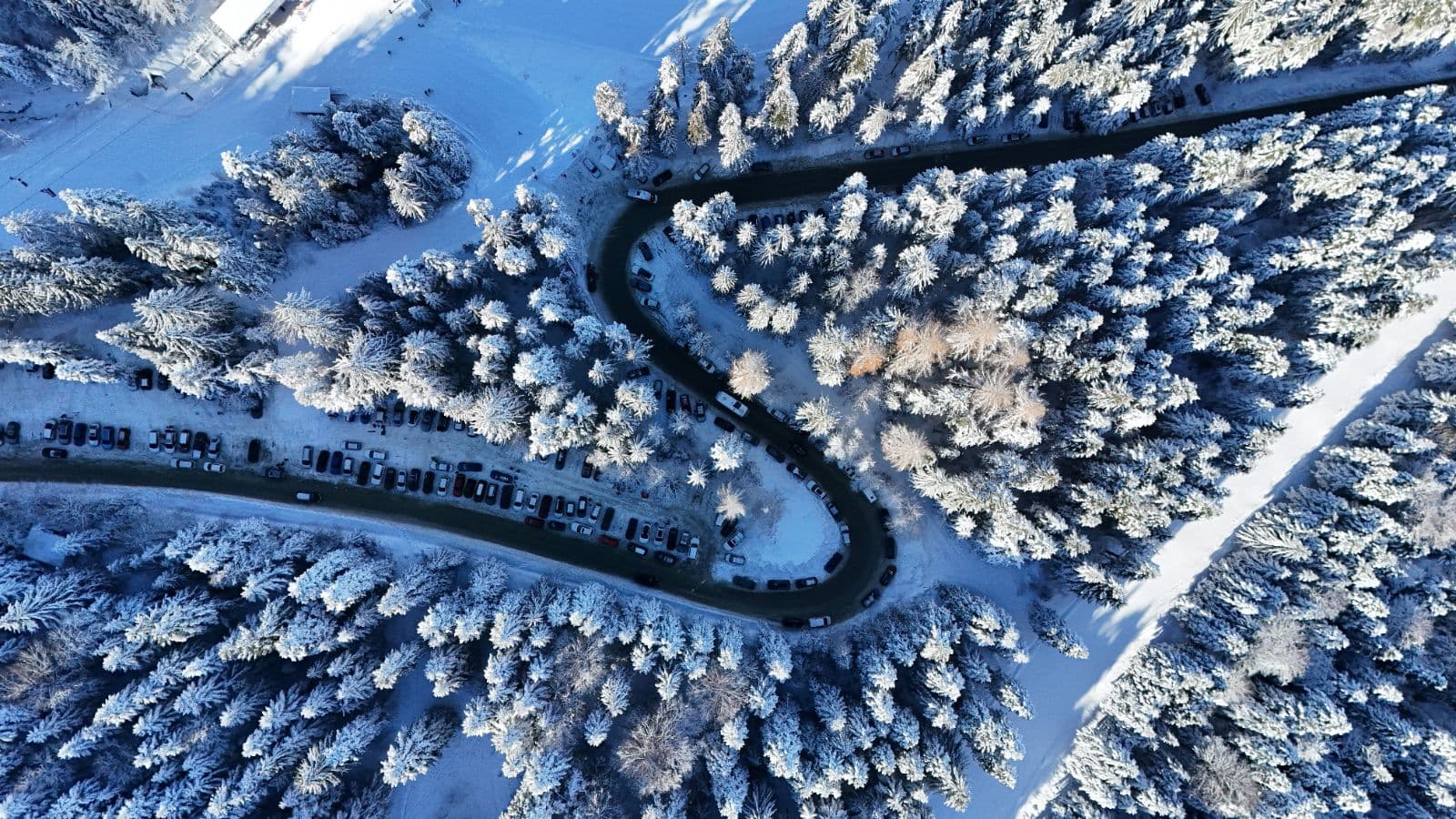
Bulgaria in winter, from December to March, is cold but not extreme. In Sofia, December and January days reach about 3 to 5°C, nights drop a few degrees below zero, and it gets dark by five. February and March are a little milder with longer days, and for reliable snow you need the mountains. Honestly, a winter holiday in Bulgaria is worth it even without skiing: Christmas markets in Sofia, hot thermal pools with snow all around, a snow day in Borovets, Bansko's old town, a snow-covered Rila Monastery and Plovdiv.
Two more pieces of good news: there is no time difference between Israel and Bulgaria (apart from about two days in late March), and on Kayak's averages January is the cheapest month to fly from Tel Aviv to Sofia. We live in Sofia, and this guide collects what actually works in winter, with dates, prices and warnings from the ground.
Contents
- Winter weather in Sofia and Bulgaria
- Bulgaria in December, January, February and March
- Sofia in winter: Christmas markets, lights and ice skating
- Hanukkah in Bulgaria: Sofia's Central Synagogue and the community
- Hot springs and spas in winter
- A snow day without skiing: Borovets or Vitosha
- Bansko in winter: the old town
- Rila Monastery in the snow
- Plovdiv in winter
- Winter prices and flights
- Driving in Bulgaria in winter: tires and chains
- What to pack for a Bulgarian winter
- Bulgaria in winter with kids
- A 5-day winter itinerary without skiing
- Frequently asked questions
- Where to go from here
Winter weather in Sofia and Bulgaria
Sofia lies more than 500 meters above sea level, so it is colder than Plovdiv or the coast. These are the long-term averages of Bulgaria's national meteorological institute (1991 to 2020), with daylight hours alongside:
| Month | Average daytime high | Average nighttime low | Days with snow per month | Daylight |
|---|---|---|---|---|
| December | 4.6°C | -2.4°C | 6.4 | About 9 hours (sunset around 16:55) |
| January | 3.5°C | -3.9°C | 7.5 | About 9.5 hours |
| February | 6.5°C | -2.4°C | 6.5 | About 10.5 hours |
| March | 11.4°C | 1.1°C | 5.2 | About 12 hours |
December is the grayest month, with about 69 hours of sunshine in the whole month compared with 169 in March. One more thing: on cold, still days Sofia sometimes has smog from wood and coal heating, and those are good days to head for the mountains. Because it gets dark early, start out-of-town trips early in the morning and save the evenings for markets, restaurants and the spa. Plovdiv is a few degrees warmer (in recent years its average January high has been about 7.5°C), while Borovets and the Aleko area on Vitosha, at 1,350 to 1,800 meters, are colder and have more reliable snow.
Bulgaria in December, January, February and March
Bulgaria in December
The most festive month: Sofia lights up, the markets are open, and in 2026 Hanukkah falls right in the middle of the season, from December 4 to 12. Just remember that in early December snow in the mountains is not guaranteed yet, so book a snow day only once you see the forecast. Bulgaria celebrates Christmas on December 25, December 24 to 26 are public holidays, and so is January 1. Some sites close on those days, including the Central Synagogue.
Bulgaria in January
The coldest month. On January 6, Epiphany, men in the town of Kalofer dance the horo in the icy water of the river. On the last weekend of January, Pernik, about 30 km from Sofia, hosts the Surva masquerade festival, built on the Pernik region's Surova custom that UNESCO inscribed in 2015: more than 12,000 participants in 2025, in monster costumes hung with bells.
Bulgaria in February and March
The days get longer (about 10.5 hours of daylight by mid-February), and there is still snow in the mountains. On February 1 (and in some villages on February 14) Bulgarians celebrate Trifon Zarezan, the winegrowers' day. On March 1 people wear a martenitsa, a red and white thread ornament that is given as a gift and taken off when you see a stork or a tree in blossom. March 3 is the national holiday, and on March 10 the Jewish community marks the rescue of Bulgaria's Jews in 1943.
Sofia in winter: Christmas markets, lights and ice skating
Sofia in winter is a city of evenings: dark by five, lit-up streets, mulled wine and stalls on every corner. Here is what the 2025 season looked like:
- The German Christmas market in the City Garden, opposite the National Theatre: the city's oldest market, held for the 15th time in 2025, when it ran from November 14 to December 21 (in 2024, from November 15 to December 22), with mulled wine, German sausages, holiday sweets and craft stalls.
- The Christmas festival in the park of the National Palace of Culture: in 2025 it ran from November 21 to December 28, with an ice rink, and in recent years a Ferris wheel and a carousel too.
- Alexander Nevsky Cathedral square: the city's main Christmas tree stood here in 2025, with more than 20,000 lights, lit on December 2. That season the square also hosted a market for the first time, which reportedly ran until January 6, 2026.
The 2026 dates and locations had not been published when we wrote this guide (September 2026), and in recent years they have only come out in November. One thing to note: in the last two years the German market closed on December 21 or 22, so between Christmas and New Year you will find fewer stalls.
Ice skating: the city's biggest rink is in Knyazheska Garden, between Eagles' Bridge and Sofia University. In the 2025/26 season it was open daily from 11:00 to 22:00, in two-hour sessions, until the end of February, and entry was about 10 euros, or about 11 with skate rental (about 13 at the National Palace of Culture rink).
Hanukkah in Bulgaria: Sofia's Central Synagogue and the community
Planning a Hanukkah trip to Bulgaria? Hanukkah 2026 begins on Friday evening, December 4 (the first candle is lit before Shabbat comes in), and ends on Saturday night, December 12. If this year is like last year, Sofia will already be decorated and the markets open: two holidays in one trip.
The first stop is the Central Sofia Synagogue, at 16 Ekzarh Yosif Street next to the Central Market Hall. It opened in 1909, it is the largest synagogue in Southeastern Europe and the third largest on the continent, and it is still active. Since February 2026 it has housed "The Niche", an exhibition on the heritage of Bulgarian Jews. According to the synagogue's website, visits are possible Sunday to Friday from 9:00 to 17:00, and entry costs 10 euros (8 for students and seniors), including the exhibition and an audio guide.
Two warnings: the synagogue is closed to visitors on Saturdays, on Bulgarian public holidays and on Jewish holidays, and if you want to attend a service, you must contact the office at least three days in advance. So for Hanukkah, write or call before you fly, and do not count on a public candle lighting unless you have seen an official announcement.
The best way to hear the community's story, the Holocaust years and the rescue is a tour of Sofia's Jewish quarter (2 to 4 hours, from 45 euros per person). The community is represented by Shalom, the Organization of the Jews in Bulgaria, and we collected restaurants, supermarket products and tips for Shabbat meals in our kosher food guide to Bulgaria.
Hot springs and spas in winter
Nothing beats sitting in hot water with everything around you white. The main options:
- Sapareva Banya: about an hour and a quarter from Sofia, at the foot of the Rila mountains. A geyser in the town center erupts at 103°C, and the thermal pools run at roughly 34 to 40°C, depending on the pool.
- Banya village: about 7 km (a 15-minute drive) from Bansko, with dozens of hot springs and spa hotels. Just what you need after a day in the old town or on the slopes.
- Velingrad: known as the "spa capital of the Balkans", with more than 90 mineral springs. Better for a few nights at a spa hotel than for a day trip.
- In Sofia: Victoria Spa and Hamam at the Ramada hotel, from 125 euros per person, without leaving the city.
We cover every spa town, price and hotel in our guide to hot springs in Bulgaria. Bring a swimsuit and flip-flops from home, and drink plenty of water: long soaks in hot water dehydrate you.
A snow day without skiing: Borovets or Vitosha
Borovets, Bulgaria's oldest winter resort (since 1896), lies at 1,350 meters, about 70 km from Sofia: an hour and a quarter by car, up to an hour and a half in snow. There is plenty to do without skis: walks through the snowy pine forest, hot coffee facing the slopes and a proper snowball fight. The easiest option is our Borovets snow day with thermal springs, a day trip from Sofia, from 85 euros per person (children 2 to 12: 45 euros). The price covers the guide and transport; pool entry, meals and activities are paid on site.
One caveat: snow in early December is not guaranteed. Last season, after an unusually warm December, Borovets only opened for skiing on December 27, and international ski sites expect the 2026/27 season there to open on December 19, after Hanukkah. Coming for Hanukkah? Check the snow a few days before you book a snow day.
Vitosha is Sofia's own mountain, right above the city. The Aleko area, at about 1,800 meters, is the closest ski area to the city, and the summit, Cherni Vrah, reaches 2,290 meters. Before you go up, check which lifts are running that day. No car, no hassle? There is a short tour combining central Sofia and Vitosha mountain, 4 to 6 hours, from 80 euros per person.
Tempted to try skiing after all? Bansko has two-hour ski lessons in Hebrew and English, from 145 euros.
Bansko in winter: the old town
Most Israelis know Bansko for skiing, but the old town is worth a visit without skis: cobbled lanes, old stone houses, the Holy Trinity Church that the townspeople built in 1835, and traditional taverns (mehanas) serving hearty, warming mountain food. The hot springs of Banya village are about 7 km away, a 15-minute drive.
Bansko is about 160 km from Sofia, two and a half hours by car and up to three in snow. That is the limit for a day trip, so either leave early or stay the night. The simplest option is a day trip to Bansko's old town and a thermal spa, with a guided walk, lunch at a mehana and a relaxing stop at the Pulse spa in Banya, from 110 euros per person. The price covers the guide and transport; spa entry and meals are paid on site. Note: Pulse admits only guests aged 14 and over, so with younger children the Borovets snow day is a better fit.
Coming to ski? The morning gondola queues are Bansko's best-known headache. How to get around them, and how to choose between Bansko, Borovets and Pamporovo, is in our guide to skiing in Bulgaria.
Rila Monastery in the snow
Rila Monastery, a UNESCO World Heritage Site since 1983, lies at about 1,150 meters, around 120 km and a two-hour drive from Sofia. In winter its roofs and domes are covered in snow, so bring a camera (photos are allowed in the courtyard). Here is what you need to know:
- The road: most of the way is highway, but the last stretch climbs into the mountains and can be slippery after snow. From November 15 to March 1 the law requires winter tires or at least 4 mm of tread, and if you have never driven on snow, this is not the place to start.
- Hours and entry: in winter the church is open roughly from 6:30 to 18:00 and the museums until 16:30. Entry to the courtyard and church is free, and the museum costs a few euros.
- Sunset: in December it gets dark before 17:00, so leave Sofia early in the morning.
- Rules: modest dress, no photos inside the church or the museum, silence, and men enter the church bareheaded, even in the cold.
Rather have someone else drive? We have a day trip from Sofia to Rila Monastery and the mountain views, from 95 euros per person (minimum age 7, leaves at 9:00 and returns around 17:00).
Plovdiv in winter
Plovdiv is about 145 km from Sofia and usually a few degrees warmer. The old town on the hills, the Roman theatre and the Kapana district with its cafés and galleries are fun in winter too, because everything is close and there is always somewhere to warm up. In the 2025 season the city's Christmas market opened on the central square on November 28, and if you are in the area on January 6, Kalofer, where men dance the horo in the icy river, is about an hour's drive away (about 67 km).
Rather not drive? There is a guided day trip from Sofia to Plovdiv, covering the old town and Kapana, from 105 euros per person.
Winter prices and flights
Flights: a direct flight from Tel Aviv to Sofia is scheduled at 2:35 to 2:55. As of September 2026 the airlines on the route include Wizz Air, El Al, Israir and Bulgaria Air, and Arkia ran it last winter (January to March 2026). Schedules change, so check before you book. On Kayak's averages, January is the cheapest month on the route, and July and August are the most expensive. Book early for Hanukkah and late December. All the details are in our guide to flights to Bulgaria.
Money: since January 1, 2026 Bulgaria's currency is the euro, and since February 1, 2026 the lev is no longer legal tender (the fixed rate was 1.95583 leva per euro). When an ATM or card terminal offers to charge you in your home currency (shekels, for Israeli cards), choose euros.
What things cost (as of September 2026):
| What | Price | Note |
|---|---|---|
| Private transfer, Sofia to Borovets | From 77 euros per vehicle | 1 hour 15 minutes to 1 hour 30 minutes |
| Private transfer, Sofia to Bansko | From 168 euros per vehicle | About 2.5 hours, up to 3 in snow |
| Borovets snow day and hot springs | From 85 euros per person (children 2 to 12: 45 euros) | Pool entry, meals and activities paid on site |
| Bansko old town and thermal spa | From 110 euros per person | Day trip from Sofia; spa entry and meals paid on site; spa ages 14 and up |
| Rila Monastery day trip | From 95 euros per person | Minimum age 7; entry to the monastery itself is free |
| Central Synagogue entry | 10 euros | 8 euros for students and seniors |
| Ice skating in Sofia | Roughly 10 to 13 euros | Per session, 2025/26 season, depending on the rink and skate rental |
Driving in Bulgaria in winter: tires and chains
- Tires: from November 15 to March 1 the law requires winter tires, or tires with at least 4 mm of tread. Studded tires are banned, and the fine for breaking the rule is about 25 euros.
- Chains: mandatory only when conditions require them, but some mountain roads have a sign that makes chains mandatory on at least two drive wheels. Ask for chains in the trunk and practice fitting them before you really need to.
- Rental cars: ask for written confirmation that the car has winter tires. The rest of our tips, from insurance to documenting the car's condition at pickup, are in our guide to renting a car in Bulgaria.
- Darkness: in December the sun sets just before five, and in mid-January around 17:20. Plan to finish mountain drives before dark.
- Rather not drive on snow? A fixed-price private transfer with a local driver who knows these roads in winter saves you all of the above.
What to pack for a Bulgarian winter
- Layers: a thermal top, a fleece and a windproof, waterproof jacket. Indoors is well heated, so layers beat one heavy coat.
- Waterproof shoes with a good grip: stone lanes, like those in Bansko and Plovdiv's old town, get very slippery with ice.
- Hat, gloves and scarf: on market evenings they make the difference between fun and misery.
- Swimsuit and flip-flops: for the thermal pools and the spa.
- Moisturizer and lip balm: the cold outside and the heating inside dry you out.
- Modest clothes for monasteries: covered shoulders and knees, which in winter happens anyway.
Bulgaria in winter with kids
Israeli schools break for Hanukkah, so many families come exactly then. What works with kids: a snow day in Borovets, an hour and a quarter from Sofia (on our day trip, children 2 to 12 pay 45 euros), Sofia's ice rinks, the markets and lights in the evening, and Plovdiv on a gray day, because everything is close and there is always somewhere to warm up.
Three things to remember: the Pulse spa in Banya admits only guests aged 14 and over, our Rila Monastery day trip has a minimum age of 7, and since it gets dark by five, short drives and getting back to the hotel before dark work best.
A 5-day winter itinerary without skiing
- Day 1, Sofia: land, then spend the evening at the markets and the city's main tree (in 2025 it stood by Alexander Nevsky) or at the ice rink.
- Day 2, Sofia: the Jewish quarter and the Central Synagogue in the morning (not on a Saturday; the synagogue is open to visitors Sunday to Friday), spa and hamam in the afternoon, and a hot Bulgarian dinner.
- Day 3, Borovets: a snow day followed by a soak in the hot springs (in early December, check there is snow first). Back in Sofia in the evening.
- Day 4, Rila Monastery or Plovdiv: on a clear day, snowy Rila. On a gray, cold day, Plovdiv, which is warmer and has more places to sit indoors.
- Day 5, Bansko (in winter, better with an overnight): the old town, lunch at a mehana and a relaxing stop at the thermal spa in Banya (ages 14 and up). Flying home that evening, or heavy snow? Swap this day for half a day on Vitosha and in central Sofia.
All the day trips in this plan leave from Sofia (Bansko works better with a night there), so you do not need a rental car.
Frequently asked questions
Is Bulgaria worth visiting in winter if you don't ski?
Yes. There are Christmas markets in Sofia, hot thermal pools surrounded by snow, a snow day in Borovets or on Vitosha, a snowy Rila Monastery and Plovdiv. You just need to prepare for the cold and the short days.
How cold is Sofia in December and January?
According to long-term averages, Sofia's daily high is about 4.6°C in December with lows around -2.4°C, and in January about 3.5°C by day and -3.9°C at night. The mountains are colder.
Does it snow in Sofia itself?
Sometimes. On average Sofia has 6 to 8 days with snow in each month from December to February, but snow that stays on the ground is not guaranteed. For more reliable snow, head to Vitosha, Borovets or Bansko, though even the mountains can be short of snow in early December.
When is the Sofia Christmas market open?
In 2025 the German market in the City Garden ran from November 14 to December 21, and the Christmas festival by the National Palace of Culture from November 21 to December 28. The 2026 dates are usually published in November.
When is Hanukkah 2026, and what can you do in Sofia?
Hanukkah 2026 starts on the evening of December 4 and runs until December 12. You can visit the Central Synagogue and its exhibition (not on a Saturday, and check ahead, since it is closed to visitors on holidays) and join a tour of the Jewish quarter.
What can you do in Bulgaria in winter with kids?
A snow day in Borovets, ice skating in Sofia, the markets in the evening and Plovdiv on a cold day. Note that the Pulse spa in Banya admits only guests aged 14 and over, and plan to be back before dark, which falls around five.
Can you drive a rental car in Bulgaria in winter?
Yes, but from November 15 to March 1 the law requires winter tires or at least 4 mm of tread, and some mountain roads have signs that make chains mandatory. If you have never driven on snow, a private transfer or an organized tour is the better choice.
Where to go from here
Winter in Bulgaria pays you back for planning early, especially for Hanukkah and late December. Still choosing a month? Our guide to the best time to visit Bulgaria compares every season. Already have dates? Book a fixed-price private transfer from the airport or to any destination in this guide, and we are here for anything that is still unclear.
Share this article with your friends: