
Sofia in 3 Days: A Practical Itinerary for 2026
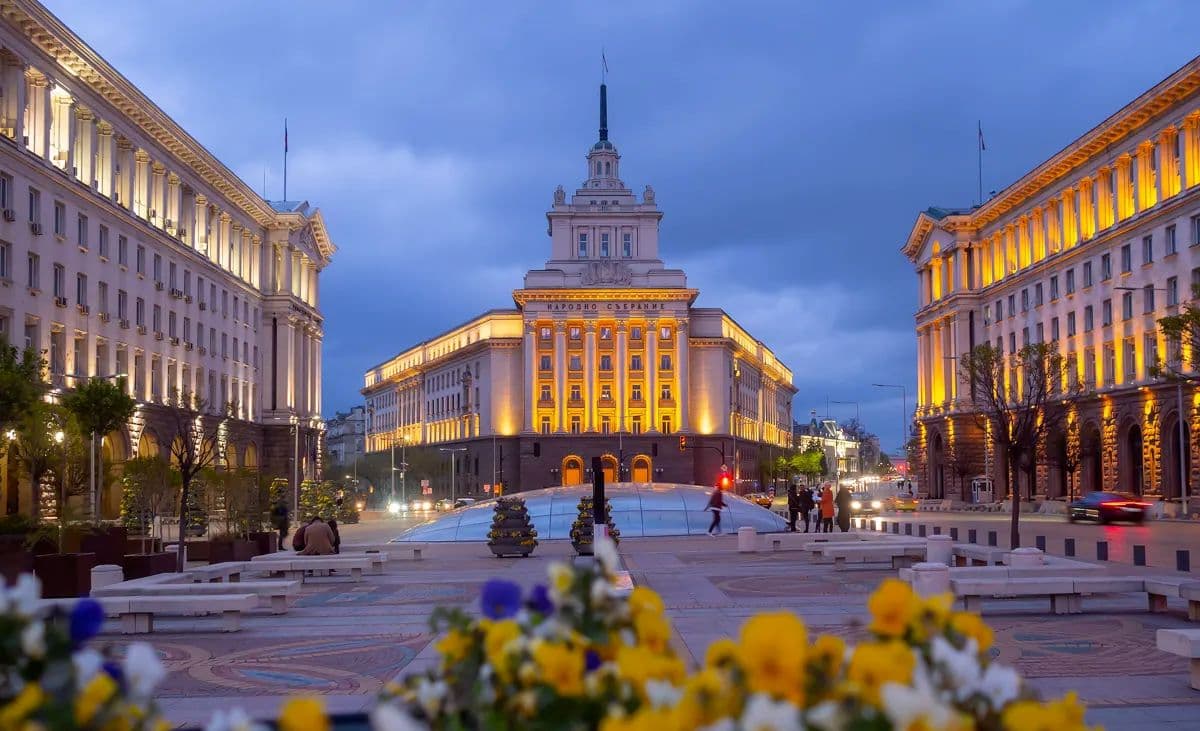
Three days in Sofia is just right: one day for the historic centre on foot, one for Vitosha mountain and Boyana Church (or a walking tour with a local), and the third for a day trip to Rila Monastery or Plovdiv. The day-one sights are close together, so you will walk about 4 km in total, roughly an hour of actual walking.
We built this Sofia itinerary the way we would for friends landing here: morning, afternoon and evening blocks for each day, real walking times between the sights, and prices for tickets, the metro and taxis as of September 2026. Further down you will also find what to do with an extra day, tweaks for families with kids, and everything travellers who keep Shabbat and kosher need to know.
Contents
- The itinerary at a glance
- Arriving and getting around
- Day 1: the historic centre on foot
- Day 2: Vitosha and Boyana, or Sofia with a local
- Day 3: Rila, Plovdiv or the Bells Park
- Got an extra day? Sofia in 4 days
- Where to stay in Sofia for three nights
- Shabbat, kosher food and Jewish heritage
- Sofia with kids: what to change
- Tips that save time and money
- Frequently asked questions
- Next steps
The itinerary at a glance
Here are the three days at a glance. Each day stands on its own, so you can swap the order around the weather and the days when some sights close (details below).
| Day | Morning | Midday and afternoon | Evening |
|---|---|---|---|
| Day 1 | Alexander Nevsky Cathedral, St Sofia Church, the Rotunda and the Serdica ruins | Banya Bashi Mosque, the Central Mineral Baths, the synagogue and Vitosha Boulevard | Dinner in the centre |
| Day 2 | Boyana Church, or a walking tour with a local | Vitosha mountain: the Golden Bridges or the Aleko area, or museums and a park | Bars, clubs or a quiet night |
| Day 3 | Early start for Rila Monastery or Plovdiv | Time on site and the drive back, or the Bells Park and a free afternoon | Farewell dinner |
Arriving and getting around
From the airport to the centre
Sofia Airport is about 10 km from the city centre, and there are three good ways in:
- Metro: line M4 leaves from Terminal 2 and runs to Serdika station, right in the centre, with no changes, in about 20 minutes. A ride costs 0.80 euros, and you can simply tap a bank card at the gate. Landed at Terminal 1? A free shuttle bus links the terminals around the clock, every 20 to 40 minutes.
- Taxi: the airport's official taxi partner is Yellow!, with desks in the arrivals halls of both terminals. On the meter, the ride to the centre comes to roughly 10 to 15 euros. Drivers who walk up to you at the exit offering a ride? Politely say no.
- Private transfer: landing late, with kids or with lots of luggage? Our transfer from Sofia Airport to the city centre costs from 30 euros per car, not per person, and the driver waits for you in the terminal with a sign.
Getting around: metro and taxis
Most of this itinerary is on foot. For the rest, Sofia has a four-line metro plus trams and buses. A ride costs 0.80 euros, a day card 2 euros and a 72-hour card (night lines included) 7.60 euros. You can pay by tapping a bank card at the metro gates and at the validators on board. The metro runs from roughly 5:30 in the morning until just before midnight.
As for taxis: Uber does not operate in Bulgaria, and in Sofia Bolt only offers scooters, e-bikes and deliveries. The safest option is to order a cab through a local company app such as Yellow!, OK Supertrans or TaxiMe. The city caps fares at 1.24 euros per km by day and 1.52 euros per km at night, and the rates are shown on a sticker on the windscreen. See a higher number on the sticker? Walk on to the next taxi.
Day 1: the historic centre on foot
This whole day stays within a radius of about a kilometre and a half. You start in the east at the cathedral and work your way west and south to Vitosha Boulevard: about 4 km of flat walking, with plenty of stops along the way.
Morning: a cathedral, churches and a Roman city (9:00 to 12:00)
Start at Alexander Nevsky Cathedral, the symbol of Sofia, built mostly between 1904 and 1912. Entry is free, and early in the day it is still quiet. The crypt below is the National Gallery's Museum of Christian Art, with a large collection of icons: open Tuesday to Sunday from 10:00 to 18:00, tickets cost 10 euros, and only 2 euros on Thursdays. Want the crypt too? Get to the cathedral just before 10:00.
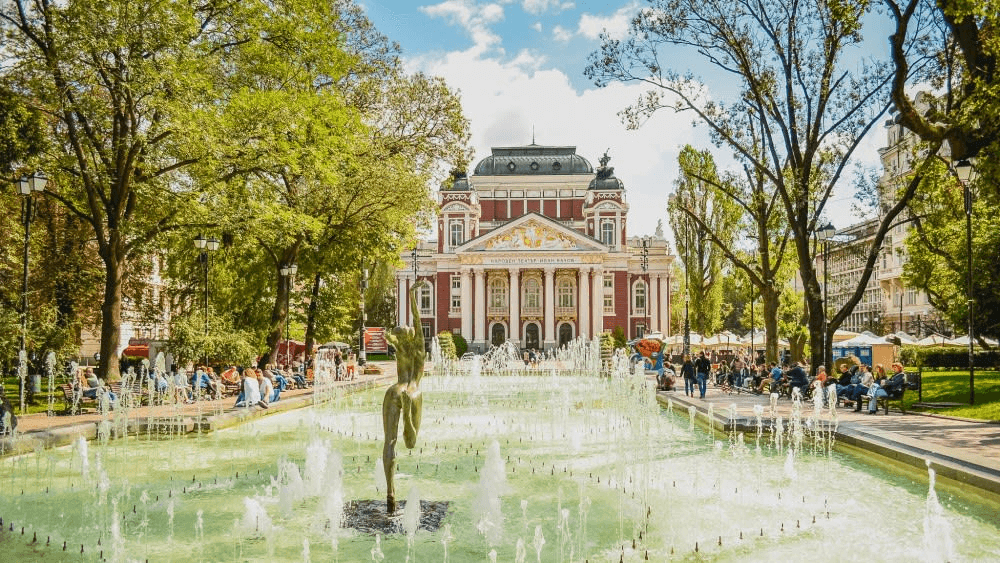
Four minutes' walk from the cathedral stands St Sofia Church, which gave the city its name. The basilica you see today dates from the sixth century and stands on the site of churches going back to the fourth. Three more minutes bring you to the Russian Church, and from there it is about 10 minutes, through the City Garden and past the National Theatre, to the Rotunda of St George in the inner courtyard by the Presidency. This red-brick building from the early fourth century is the oldest standing building in Sofia, with medieval frescoes inside. Entry is free here too.
Two minutes later you are standing above the ruins of Serdica, the Roman city unearthed around the metro station that bears its name: streets, the remains of baths and mosaics, in an open site you can wander for free.
Want the whole story with a guide? Stella's walking tour of central Sofia (2 to 4 hours, from 40 euros per person) covers the same layers of the city: Roman ruins, Ottoman mosques and medieval churches. Along the way it explains how the empires that passed through shaped the city.
Midday: a mosque, mineral water and the synagogue (12:00 to 15:00)
Just four minutes' walk from Serdica is the Banya Bashi Mosque, completed in 1566 and attributed to the Ottoman architect Mimar Sinan. It is a working mosque, so visit outside prayer times, take your shoes off, and women cover their hair.
Two minutes away is the colourful building of the Central Mineral Baths, opened in 1913 and home to the Sofia History Museum since 2015. Tickets cost 5 euros for adults and 10 euros for a family ticket (two adults and up to three children), and entry is free on the first Thursday of every month. Outside there are taps of warm mineral water, where you will see locals filling bottles.
From there it is a five-minute walk, past the covered market hall, to the Central Sofia Synagogue, inaugurated in 1909. It is the third-largest synagogue in Europe, and its chandelier weighs about 1.7 tonnes. It is open to visitors Sunday to Friday from 9:00 to 17:00 (closed on Saturdays and holidays), and the 10-euro ticket includes an exhibition on Bulgarian Jewish life and an audio guide. Aim to arrive by 16:00 so you are not rushed.
For the Jewish story in depth: the Jewish Sofia walking tour (2 to 4 hours, from 45 euros per person) moves between the markets and synagogues and tells the story of the antisemitic laws, the Holocaust years and the rescue of Bulgaria's Jews.
Afternoon: Vitosha Boulevard (15:00 to 18:00)
From the synagogue it is an eight-minute walk to St Nedelya Square, where Vitosha Boulevard, Sofia's main street, begins. Its pedestrian section runs from Alabin Street to Patriarch Evtimiy Boulevard, and you can carry on to the National Palace of Culture (NDK): about 1.4 km in total, roughly 20 minutes without stops. This is the place for coffee, ice cream and sitting with the mountain in view at the end of the street. From NDK the metro takes you back to your hotel.
Evening: dinner in the centre
You eat well in Sofia without breaking the bank. In our Sofia restaurant guide we picked 13 places, from traditional Bulgarian cooking to cafés, plus a section on kosher food. For a special night out you can reserve a table at Captain Cook, a beef and fish restaurant, through us from 10 euros per person. That covers the reservation and a one-way ride there, and you pay for the meal at the restaurant.
Day 2: Vitosha and Boyana, or Sofia with a local
Day two comes in two versions. Version A heads for the mountain you can see from every corner of the city, and version B stays in town and shows you Sofia from the inside. Pick by the weather.
Version A: Boyana Church and Vitosha mountain
Morning: go to Boyana Church, a small church at the foot of Vitosha, on the UNESCO World Heritage List since 1979 and famous for its frescoes from 1259. A taxi takes roughly 20 to 30 minutes from the centre; by public transport, take bus 64 or 107. Visiting hours are 9:30 to 18:00 from April to October and 9:00 to 17:30 from November to March. The ticket costs 10 euros (3 euros for students and children over 7, as of September 2026), and you only get about 10 minutes inside, at most nine people at a time, to protect the frescoes. About 2 km away is the National History Museum (9 euros, open daily) if you want to add another hour or two of history.
Midday and afternoon: head up the mountain. The easiest spot is the Golden Bridges, also known as the stone river: a long band of huge boulders in the forest. Bus 63 goes all the way there (and also passes through Boyana), and a taxi from the centre takes about 35 to 45 minutes. The other option is bus 66, which leaves from the zoo and climbs to the Aleko area, higher up. Watch the last bus down: 20:00 from April to October and 17:45 from November to March. The weather on Vitosha's upper slopes changes fast, so bring a warm layer even in summer.
Skip the logistics: a short tour of central Sofia and Vitosha mountain, bookable through us, combines the must-see sights in town with a trip up the mountain and a panoramic view of the city, in half a day (4 to 6 hours), from 80 euros per person.
Version B: Sofia like a local
Mountain not your thing? Spend the morning on Nissim's tour, Sofia from a local perspective: a walking tour guided in Hebrew, 2 to 4 hours, from 45 euros per person, taking in mosques, churches, markets and the city's Jewish history. It also passes some of the day-one sights, so if you already know you want a Hebrew-speaking guide, it is better to do it on day one. Raining? Head straight for the museums, such as the National History Museum or the Sofia History Museum at the baths, and Muzeiko if you have kids. On a dry day, the afternoon suits a walk in Borisova Gradina park, whose entrance by Eagles' Bridge is about 10 minutes on foot from the cathedral.
Evening: Sofia after dark
Sofia is a city of bars, clubs and dinner-show restaurants, at prices that surprise most visitors. You can reserve a table at a club or show restaurant through us, from 15 euros per person including a one-way ride there (food and drinks are paid at the venue, and entry is 18+). Just remember that the metro stops shortly before midnight, so the ride back is an app taxi at the night rate.
Day 3: Rila, Plovdiv or the Bells Park
On day three you leave the city. The two classic destinations are each up to about two hours' drive away, and if you prefer an easier day there is a closer option too. Want to drive yourselves? With a rental car you set the pace and can stop along the way. Just allow up to two hours' driving each way. In the evening, come back for a farewell dinner in the centre.
Option 1: Rila Monastery
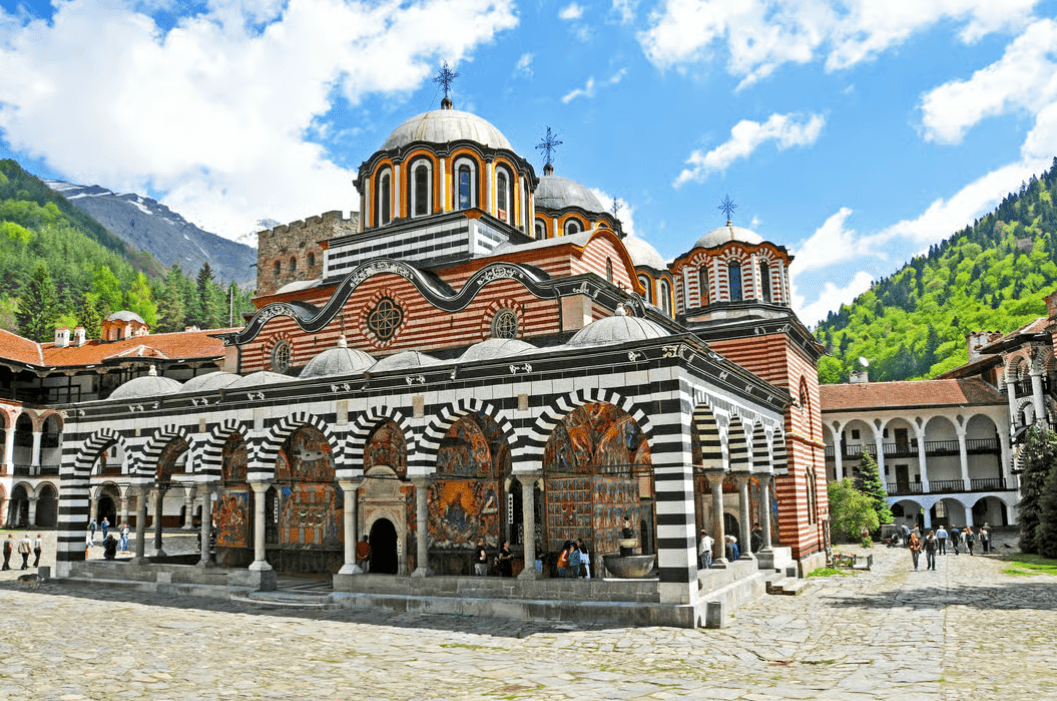
Rila Monastery was founded in the tenth century and has been on the UNESCO World Heritage List since 1983. It is probably the most recognisable image of Bulgaria: a church with striped arches and colourful frescoes, in a courtyard ringed by mountains. It lies about 120 km from Sofia, around two hours' drive each way. There is a bus, but it runs rarely and the whole day ends up built around it. Through us you can book a guided day trip to Rila Monastery that leaves from Sofia and pairs the monastery with mountain views, from 95 euros per person.
Option 2: Plovdiv
Plovdiv is about 145 km from Sofia, about an hour and a half to an hour and 45 minutes on the motorway, and is considered the oldest continuously inhabited city in Europe. One day is enough for the Old Town, the Roman theatre and the Kapana quarter with its galleries and cafés. You can also go by train or bus, which is cheap but makes for a longer day. Through us you can book a guided day trip to Plovdiv that includes a walking tour of the Old Town, a visit to Kapana and free time for lunch, from 105 euros per person.
Option 3: the Bells Park and an easy day
Not in the mood for four hours on the road? The Bells Park (Kambanite) sits on the south-eastern edge of the city at the foot of Vitosha, about 20 minutes' drive from the centre when traffic is light. It opened in 1979 for an international children's assembly called Banner of Peace, and at its heart is a monument hung with bells sent from countries around the world. You are allowed to ring some of them, and kids never skip that part. It is a public park, and you can get there on your own by taxi. Prefer a guide to tell you the story and a car to take you there? A Bells Park tour bookable through us lasts about two hours, from 105 euros per adult, and leaves you a free afternoon for last-minute shopping on Vitosha Boulevard.
Got an extra day? Sofia in 4 days
Four days in Sofia gives you room to breathe. Here is how we would use the extra day:
- The day trip you skipped: did Rila? Go to Plovdiv, and vice versa.
- The Seven Rila Lakes, in the warm season: a guided trek from Sofia, from 100 euros per person. On site you pay extra for the chairlift (20 euros) and for the hot springs at the end of the day (20 euros).
- A day of museums, spa and shopping: ideal for a rainy or cold day, and for the morning before your flight home.
Where to stay in Sofia for three nights
For a three- or four-day trip the rule is simple: a hotel no more than 15 minutes' walk from Serdika station or Vitosha Boulevard. That keeps day one entirely on foot and the airport metro close by.
- The centre, around St Nedelya and Vitosha Boulevard: the easiest choice for a first visit. Everything is walkable, restaurants are everywhere, and nights are a little noisier.
- Around the cathedral and Oborishte: quieter, prettier streets, about a quarter of an hour's walk from Vitosha Boulevard. Good for couples.
- Near NDK and Lozenets: at the southern end of Vitosha Boulevard, with a metro station close by and a shorter trip to the mountain.
Which hotel exactly? In our honest guide to Sofia hotels we go through the properties our community asks about most, with each one's distance from Vitosha Boulevard and its main drawback.
Shabbat, kosher food and Jewish heritage
Here is what you need to know if you keep Shabbat or kosher:
- Plan the synagogue for Sunday to Friday: it is closed to visitors on Saturdays and holidays. Want to attend a service? Contact the synagogue office at least three days in advance.
- Shabbat meals: Chabad in Sofia hosts Shabbat meals for tourists, with advance registration by Thursday at 12:00.
- A kosher restaurant: the King David restaurant at the Chabad house is mehadrin kosher. Check ahead that it is open on your dates.
- Kosher products: the synagogue sells kosher wine and grape juice, cheese, butter, chicken, beef and matzah.
- Shabbat in the itinerary: keeping Shabbat? Make it a relaxed walking day in the centre, with no tickets and no transport: the open-air Serdica ruins, Vitosha Boulevard and the parks. Save the day trip for Sunday.
Everything about restaurants, supermarkets and certified products is in our kosher food guide to Bulgaria.
Sofia with kids: what to change
The itinerary works with children too, with a few small changes:
- A shorter day 1: skip the crypt and leave time for ice cream on Vitosha Boulevard. If you do go into the museum at the baths, a family ticket costs 10 euros and children under 7 go free.
- Muzeiko: a hands-on children's museum where you are allowed to touch everything: 13 exhibition areas and more than 130 games. Open Tuesday to Sunday from 10:00 to 18:00, about 6 euros a ticket.
- Sofia Zoo: 5.11 euros per adult, 2.56 euros per child from age 3, and free under 3. A family ticket for two parents and two or more children costs 12.78 euros.
- The Golden Bridges: kids love hopping between the boulders. Keep an eye on them, as wet rocks are slippery.
- The Bells Park: open and calm, with bells they are allowed to ring. A great day-3 alternative with little ones, instead of two hours in the car each way.
Tips that save time and money
- Mondays are tricky for museums: the cathedral crypt and Muzeiko close on Mondays, and the museum at the baths closes on Mondays from November to April. If one of your days falls on a Monday, make it your day trip.
- Thursdays are cheap: at the National Gallery's branches, including the crypt, a ticket costs 2 euros on Thursdays, and on the first Thursday of every month the Sofia History Museum is free.
- Dress: cover shoulders and knees in the cathedral; in the mosque, take your shoes off, and women cover their hair.
- Money: since 1 January 2026 Bulgaria's currency is the euro, so there are no leva to deal with. If a card terminal or ATM offers to charge you in your home currency, always choose euros.
- Vitosha: check the time of the last bus down before you go up, not after.
Frequently asked questions
How many days do you need in Sofia?
Three days are enough for the city itself plus one day trip. With four days you can do both Rila and Plovdiv, or add a day on Vitosha mountain.
Can you do Sofia in a weekend?
Yes. In two days you can cover the historic centre on foot, plus Boyana Church and Vitosha. Just remember that the synagogue is closed to visitors on Saturdays, so see it on Friday morning or on Sunday.
How do you get from Sofia Airport to the city centre?
The cheapest way is metro line M4 from Terminal 2 to Serdika station, about 20 minutes for 0.80 euros. A taxi from the official desk comes to roughly 10 to 15 euros, and a private transfer booked in advance costs from 30 euros per car with us.
How much does public transport cost in Sofia?
As of September 2026, a ride costs 0.80 euros, a day card 2 euros and a 72-hour card 7.60 euros. You can pay by tapping a bank card at the metro gate or on the validator.
Can you visit Rila Monastery and come back the same day?
Yes, it is the classic day trip from Sofia. The drive is about two hours each way, so you leave in the morning and are back by early evening.
What can you do in Sofia on a rainy day?
Museums: the Central Mineral Baths, the cathedral crypt, the National History Museum, and Muzeiko if you have kids. On a day like that it is better to postpone Vitosha, because the weather on the mountain changes fast.
Is Sofia a good fit for travellers who keep Shabbat and kosher?
Yes, with a little planning. Chabad hosts Shabbat meals for tourists with registration by Thursday noon, and there is a mehadrin kosher restaurant. Visit the synagogue between Sunday and Friday.
Next steps
Sofia does not ask for much: a few days, comfortable shoes and a little planning. It is small, easy and affordable, with a mountain at the end of the street and excellent day trips all around. Want the fiddly parts sorted in advance? Start by booking a private airport transfer, pick your third day from our guide to day trips from Sofia, and do the rest on foot.
For the full picture of the city, what to eat, when to come and where to stay, see our complete Sofia guide. Got a question? Write to us, we are right here in Sofia.
Share this article with your friends: