
What Currency Does Bulgaria Use? Euro, Cards & Cash 2026
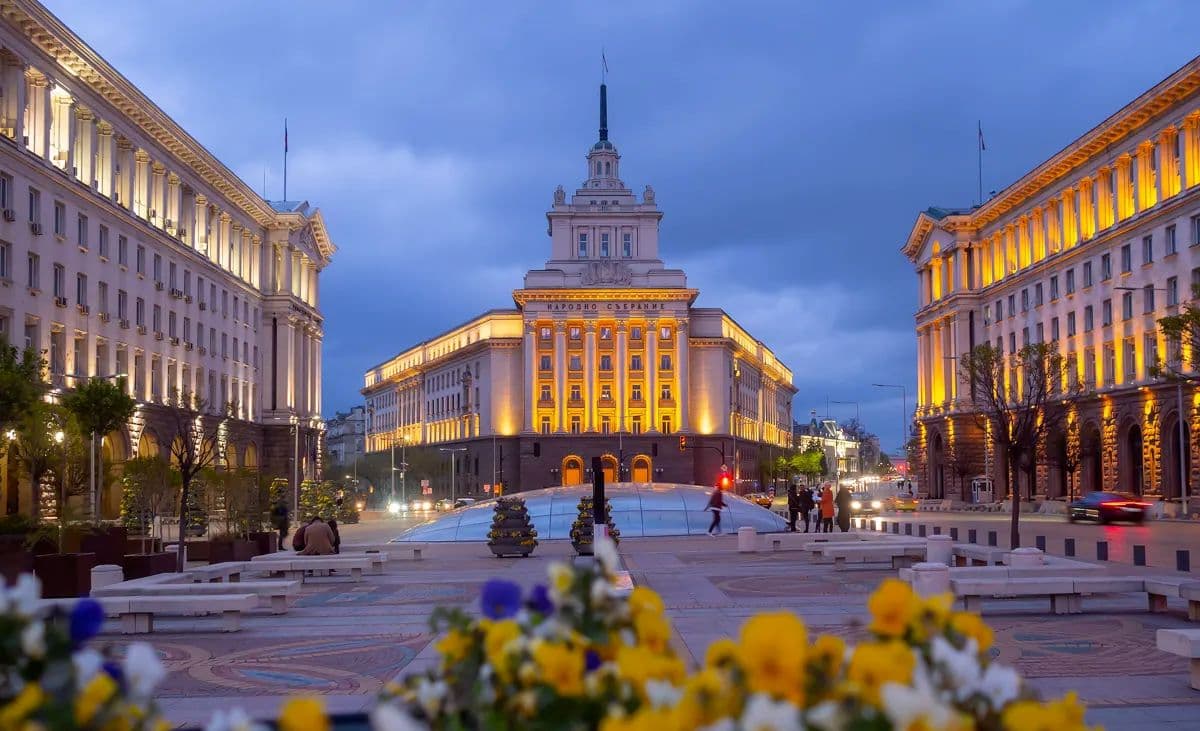
Bulgaria's currency is the euro. Bulgaria joined the euro area on 1 January 2026 at a fixed conversion rate of 1.95583 lev to the euro, and the Bulgarian lev stopped being legal tender on 1 February 2026. You pay in euros everywhere, from Sofia and Plovdiv to Bansko and the Black Sea coast, and in the cities you can pay by card almost anywhere.
Mind the “almost”, though. Villages, markets, some taxis and tips still call for cash, and the wrong ATM can quietly double your fees. We live in Sofia, so here is everything you need to know about money in Bulgaria as of September 2026: how to pay, how much cash to carry, which ATMs to use, how much to tip and what things cost today.
Contents
- Bulgaria's currency: the euro since January 2026
- Leftover Bulgarian lev banknotes?
- How to pay in Bulgaria: card or cash
- ATMs in Bulgaria: which machine to use
- Exchange money at home or withdraw in Bulgaria?
- How much to tip in Bulgaria
- Prices in Bulgaria in 2026: coffee, food, transport, taxis and skiing
- Money scams to know about
- Frequently asked questions
- Bottom line: what to do next
Bulgaria's currency: the euro since January 2026
Bulgaria is the 21st member of the euro area, and every stage of the changeover is now behind it:
- 1 January 2026: the euro became the official currency at a fixed rate that will not change: one euro equals 1.95583 lev.
- January 2026: a changeover month in which both currencies worked side by side. You could still pay in leva, but change was given in euros.
- 1 February 2026: the euro became the only legal tender, and leva can no longer be used to pay.
- 8 August 2026: the mandatory dual display of prices ended, so today the only binding price is the euro price.
What does that mean for you? Euros left over from a trip to Italy or Greece work here too. Bulgarian coins have their own national side (Saint Ivan of Rila, founder of the Rila Monastery, appears on the one euro coin, for example), but every euro coin from any euro area country is accepted everywhere.
And if you are wondering whether to bring euros or dollars: euros, full stop. Dollars and shekels are not accepted in shops and restaurants. You can exchange dollars at a bank, but that is one more conversion and one more margin, so there is no reason to bring them.
One more heads-up: prices have gone up over the past year. According to Bulgaria's National Statistical Institute, annual inflation was 5.1% in August 2026, driven mainly by transport and services, so do not rely on prices from old posts. The full story of the switch is in our guide to Bulgaria's switch to the euro.
Leftover Bulgarian lev banknotes?
Lev banknotes sitting in a drawer since your last visit can no longer be spent, but they are not worthless either:
- The Bulgarian National Bank, the country's central bank, exchanges lev banknotes and coins for euros at the official rate, free of charge and with no time limit. Its cash desks are at the head office on Knyaz Alexander I Square in central Sofia.
- Commercial banks and some post offices in Bulgaria exchanged leva for free until 30 June 2026. They will keep offering the service until at least 31 December 2026, but they are allowed to charge a fee.
- Outside Bulgaria there is no longer anywhere to go: the other euro area central banks exchanged lev banknotes only until 2 March 2026.
Honestly? If you have a serious amount and you are in Sofia anyway, pop into the Bulgarian National Bank and exchange it free of charge.
How to pay in Bulgaria: cards almost everywhere, cash for small places
In cities and resorts you can pay by card or phone almost anywhere: hotels, restaurants, supermarkets, chains, petrol stations and public transport. In Sofia you can simply tap a contactless bank card on the blue validator on buses and trams, or at the entry gate in the metro. A ride costs €0.80 and includes transfers within 30 minutes (tap again every time you board), and from your third ride of the day on the same card, the charge is capped at €2 for the day.
Now the part people talk about less: Bulgaria still likes cash. According to a Payments Europe survey of merchants published in September 2026, cash still makes up about 46% of the surveyed merchants' turnover, against about 37% for cards. The law does not force everyone either: the obligation to have a card terminal applies to categorized restaurants and entertainment venues with two or more stars, not to every business.
Where you still need cash:
- Villages, small cafés and neighbourhood bakeries
- Some small family-run guesthouses, especially outside the cities
- Markets and stalls selling fruit, vegetables and souvenirs
- Some taxis, especially independent drivers
- Monasteries and small sites (candles, donations and sometimes the entry fee)
- Paid public toilets and parking machines
- Tips, even when you pay the bill itself by card
How much cash should you carry? For a couple exploring a city, €50 to €100 in cash usually covers a few days. Heading to villages, mountains or trails? Top up before you leave town, because a small village will not always have an ATM. And carry small notes of €5, €10 and €20: a €100 note at a small stall can leave you stuck without change.
Renting a car? Pay for the rental itself by credit card rather than cash, even if you are offered a discount, because a card leaves you the option of disputing a charge. You will find rental options on our car rental in Bulgaria page, and everything to check before you sign in our Bulgaria car rental guide.
ATMs in Bulgaria: which machine to use and how not to pay twice
Bulgaria has two main types of ATM, and they look alike until the charge arrives:
- Bank ATMs, usually inside the branch or on its outside wall: the local fee is roughly €0 to €3 per withdrawal.
- Independent machines, mostly Euronet, found at airports, on tourist streets and in resorts: roughly €3.50 to €7.50 per withdrawal, sometimes plus a percentage of the amount, along with a “generous” offer to charge you in your home currency.
Here is the most important rule for any payment abroad: when an ATM or a restaurant card terminal offers to charge you in shekels (or dollars, or pounds) “at a guaranteed rate”, decline and choose to be charged in euros (EUR). This is dynamic currency conversion, and it costs a few percent more than the rate your own card issuer would give you. At an ATM, look for the option to continue without conversion.
What about fees on the Israeli side? Broadly:
- A regular Israeli credit card charges a foreign currency transaction fee of about 3% (usually between 2.5% and 3.5%) on every euro payment.
- Reduced-fee club cards, multi-currency wallet apps that hold a euro balance, and foreign currency bank accounts cost around 1%. Paying with Apple Pay or Google Pay costs exactly what the card behind it charges, so about 3% on a regular card.
- Withdrawing cash abroad costs about 3% to 3.5%, plus the local ATM fee. Note that the waived foreign currency fee some cards offer usually does not apply to cash withdrawals.
Travelling with a card from another country? The logic is the same, so check your own bank's foreign transaction and ATM fees before you fly. Either way, one larger withdrawal beats several small ones, because the local ATM fee is charged on every withdrawal. Withdraw during the day from an ATM inside a bank branch or a mall, and cover the keypad as you type your PIN.
Exchange money at home or withdraw in Bulgaria?
The euro changed the maths: in the lev days, anyone who brought euros from Israel had to exchange them again into leva, and today there is only one conversion, from shekels to euros. The only question is where you get the best deal.
| Option | Pros | Cons |
|---|---|---|
| Buy euros in Israel before you fly | One conversion, a rate you know in advance, no ATM fees and no conversion traps. Whatever is left over works on your next trip to Europe. | You carry cash, and banks usually take a wide margin on cash. Compare a few exchange offices or check Israel Post. |
| Withdraw from an ATM in Bulgaria | You take only what you need, when you need it, with no planning. | An Israeli withdrawal fee of about 3% or more, a local ATM fee, and the risk of landing on an expensive machine or on dynamic conversion. |
| Pay by card for most expenses | Convenient and safe, and relatively cheap with a reduced-fee card. | About 3% per transaction on a regular card, and not every place takes cards. |
So what do we recommend? A mix of all three: bring a starter amount in euros for the first days and for cash-only places, pay by card for most expenses (in euros, of course), and withdraw from a bank ATM only if you run out. For a couple coming for a week, €150 to €250 in cash is a sensible starting point, more if you plan lots of villages and mountains.
How much to tip in Bulgaria
Tipping in Bulgaria is not compulsory, but it is customary and appreciated. Here is how it works:
- Restaurants: about 10% for good service and up to 15% for excellent service. Before adding a tip, check that a service charge has not already been added to the bill.
- Cafés and bars: round up or leave the change.
- Taxis: round up to the nearest euro, and on a longer ride such as from the airport, or when the driver helped with your bags, add about another euro.
- Tour guides: about 10% of the tour price. When there is both a guide and a driver, they share it.
- Private transfer drivers: optional. If you like, round up or add a few euros, especially if the driver helped with bags or waited for a delayed flight.
Two tips about tipping: leave it in cash even when you pay by card, because not every terminal lets you add a tip. And when you pay in cash, simply tell the waiter the total you are paying, tip included, and you will get your change accordingly.
Want to see the city with a guide? Our small-group walking tour of Sofia starts at €18 per person, and you will find all our day trips from Sofia in one place, with the price known upfront.
Prices in Bulgaria in 2026: coffee, food, transport, taxis and skiing
These prices are correct as of September 2026 and are based on official price lists and current averages in Sofia. Other cities and resorts can differ.
| Item | Approximate price |
|---|---|
| Espresso in a café | €1.50 to €2.50 |
| Cappuccino | €2.50 to €3.50 |
| Local draught beer, half a litre | €2.50 to €3.50 |
| Meal at a simple local restaurant | €10 to €20 per person (about €15 on average) |
| Three-course dinner for two at a mid-range restaurant, drinks not included | about €60 |
| Sofia public transport ride (30 minutes, transfers included) | €0.80 |
| Daily cap on Sofia public transport when paying by card | €2 |
| Sofia taxi, day rate (6:00 to 22:00) | €1.50 to start plus €0.75 per km |
| Sofia taxi, night rate (22:00 to 6:00) | €1.70 to start plus €0.85 per km |
| Sofia taxi, waiting time and traffic | €0.25 per minute |
| Ordering a taxi by phone or app | €0.60 call-out fee |
| Adult day ski pass in peak season (2025/26 season, 2026/27 prices not yet published) | Bansko €59, Borovets €54 |
A taxi ride of about 5 km within Sofia comes to roughly €5 to €7, depending on the time of day and traffic. These are the rates of OK Supertrans, one of Sofia's large licensed taxi companies, and most licensed Sofia taxis charge in the same range, so you can tell at once when a driver is trying his luck.
Going skiing? We compare Bansko, Borovets and Pamporovo, prices included, in our guide to skiing in Bulgaria.
In the mood for a special night out? Through us you can book a table at Captain Cook, the beef and fish restaurant in Sofia, with one-way transport, from €10 per person. That price covers the booking and the ride, not the meal. You will find ideas for every budget in our Sofia restaurant guide.
Money scams to know about, and how to avoid them
Most scams in Bulgaria are not dramatic. They are mainly small fees and bad rates that add up to real money:
- Exchange offices with “0% commission” signs: on tourist streets and at the airport, they make their money on a poor rate. Now that the currency is the euro, there is hardly any reason to change money at all. If you must, do it at a bank, ask upfront exactly how many euros you will get in hand, and ask for a receipt. And never change money with people on the street.
- Taxis without a meter: drivers waiting at the terminal exit and offering a “good price” without a meter can ask several times the real fare. At the airport, take a taxi only from the Yellow office in Arrivals at Terminal 1 or Terminal 2, or from the official taxi rank, as Sofia Airport recommends, and make sure the meter runs from the start. In town, order from a known company by phone or app and compare with the rates in the table. All the ways to get from the airport into town including the metro and bus, are in our Sofia Airport transfer guide.
Rather not deal with taxis and cash after landing? A private transfer at a fixed price, booked in advance, takes the haggling out of it, from the airport to your hotel or from Sofia to Bansko, Borovets or Plovdiv. Heading straight for the mountains? We also cover the road from Sofia to Bansko.
Frequently asked questions
What is the currency in Bulgaria and in Sofia?
The euro, across the whole country including Sofia. Bulgaria switched to the euro on 1 January 2026 at a fixed rate of 1.95583 lev to the euro, and the lev has not been legal tender since 1 February 2026.
When did Bulgaria switch to the euro?
On 1 January 2026. You could still pay in leva during January, and since 1 February 2026 the euro has been the only legal tender.
Does Bulgaria use euros or dollars?
Euros only. Dollars are not accepted as payment in shops and restaurants, and you can only exchange them at a bank. It is best to arrive with euros and a card.
Can I pay with an Israeli credit card in Bulgaria?
Yes. Visa and Mastercard are accepted by most businesses in cities and resorts. Always choose to be charged in euros rather than shekels, and check your card's foreign currency fee before you go.
How much cash should I take to Bulgaria?
For a couple in a city, €50 to €100 for a few days usually covers tips and places that do not take cards. For a full week, €150 to €250 is a sensible starting point, more if you spend a lot of time in villages and mountains.
Which ATMs are best in Bulgaria?
Bank ATMs, ideally inside a branch. Independent machines in tourist areas charge higher fees, and at any machine you should decline conversion into your home currency.
What can I do with leftover Bulgarian leva?
You can exchange them free of charge and with no time limit at the Bulgarian National Bank, the central bank, in Sofia. Commercial banks and some post offices continue the service until at least the end of 2026, but may charge a fee.
How much should I tip at a restaurant in Bulgaria?
About 10% for good service and up to 15% for excellent service, preferably in cash. If the bill already includes a service charge, there is no need to add more.
Bottom line: what to do next
Money in Bulgaria is much simpler than it used to be. Pay by card and always choose euros, keep a little cash for small places and tips, and steer clear of independent ATMs and “0% commission” exchange offices. Where to go from here:
- Planning from scratch? Start with our complete Bulgaria travel guide.
- Time difference, power plugs and the other small details are in our before-you-fly Bulgaria FAQ.
- Want to land without haggling? Book a private transfer at a fixed price from the airport or between cities.
Share this article with your friends: