Seven Rila Lakes 2026: The Complete Guide to Bulgaria's Most Beautiful Hike
Bulgaria's most spectacular trek: 7 glacial lakes at 2,500 m, 90 minutes from Sofia. The full guide to getting there, when to visit and what to expect on the trail.
The Seven Rila Lakes are Bulgaria's most photographed place, and not by accident. Seven glacial lakes cascading down a mountain between 2,000 and 2,500 meters, surrounded by peaks that look like they came out of a movie. The most beautiful scene you can reach in 90 minutes from Sofia. This is the place you have to see once in your life, and it's why everyone who's been returns with the same Instagram shot.
In this guide12 sections
Here's the complete guide: what it is, how to get there, when to come, and whether a guided tour is worth it or you can go solo.
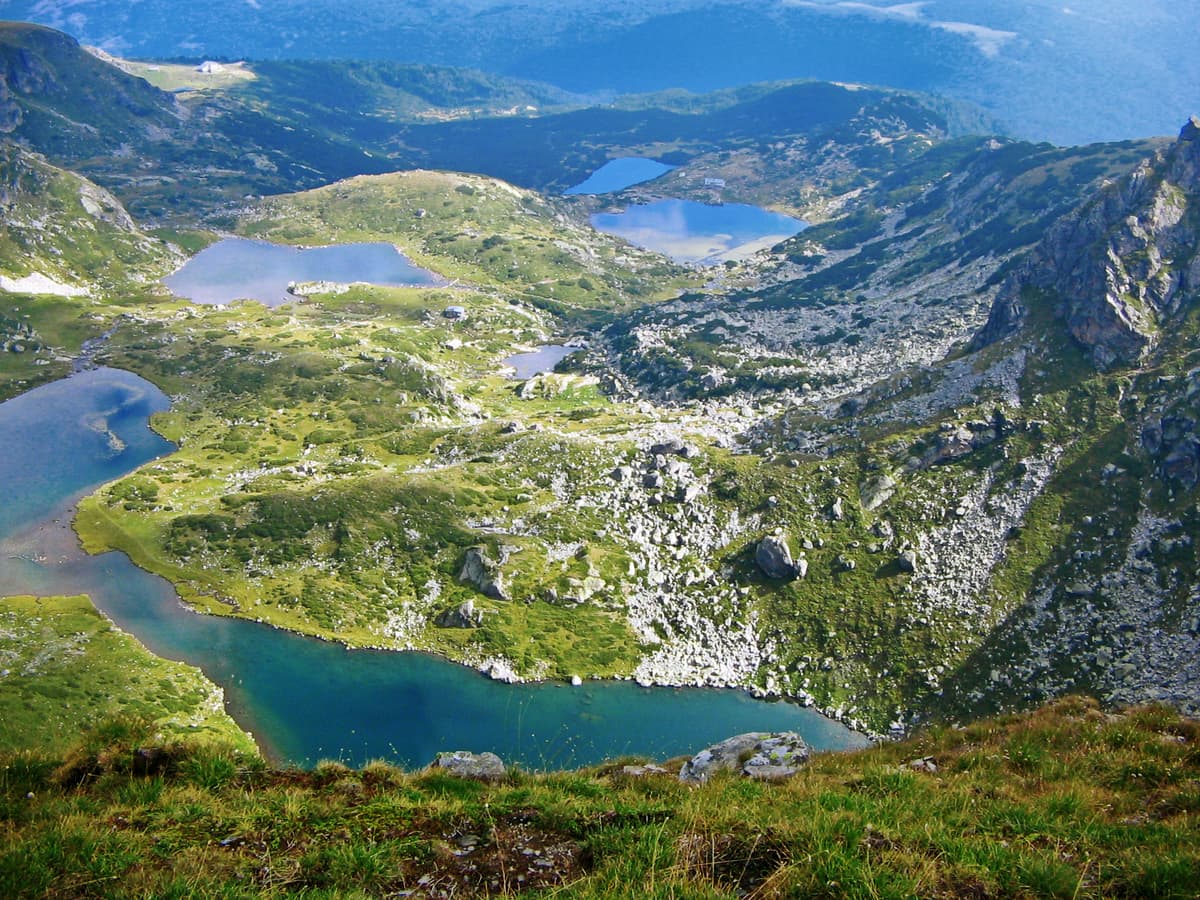
Table of Contents
- What Are the Seven Rila Lakes
- The 7 Lakes and Their Names
- When to Go
- How to Get There from Sofia
- The Hike Itself: What to Expect
- The Peak That Sees All Seven
- Guided Tour or Solo?
- Combine with Rila Monastery?
- What to Bring
- Frequently Asked Questions
What Are the Seven Rila Lakes
Seven glacial lakes in the northwestern Rila Mountains, carved thousands of years ago by glaciers that shaped this entire range. The lakes are arranged like a staircase, from the highest (Salzata, The Tear, at 2,535 meters) down to the lowest (Dolnoto, The Lower, at 2,095 meters). Small streams connect them, creating tiny waterfalls between the pools before forming the Germanska River at the bottom.
This is Bulgaria's most visited natural site. On a beautiful August weekend you'll find 2,000 to 3,000 hikers here. That's the price of a famous place. The solution: a weekday or a quieter month.
The 7 Lakes and Their Names
Each lake is named after its shape or character:
- Salzata (The Tear): The highest, smallest, and clearest. At 2,535 meters. Sometimes still shows ice fragments into mid-July.
- Okoto (The Eye): Eye-shaped. The deepest glacial lake in Bulgaria, 37.5 meters deep. The color is unreal: deep blue, almost painted-looking.
- Babreka (The Kidney): Kidney-shaped. Steep banks, so it is not easy to reach the water's edge.
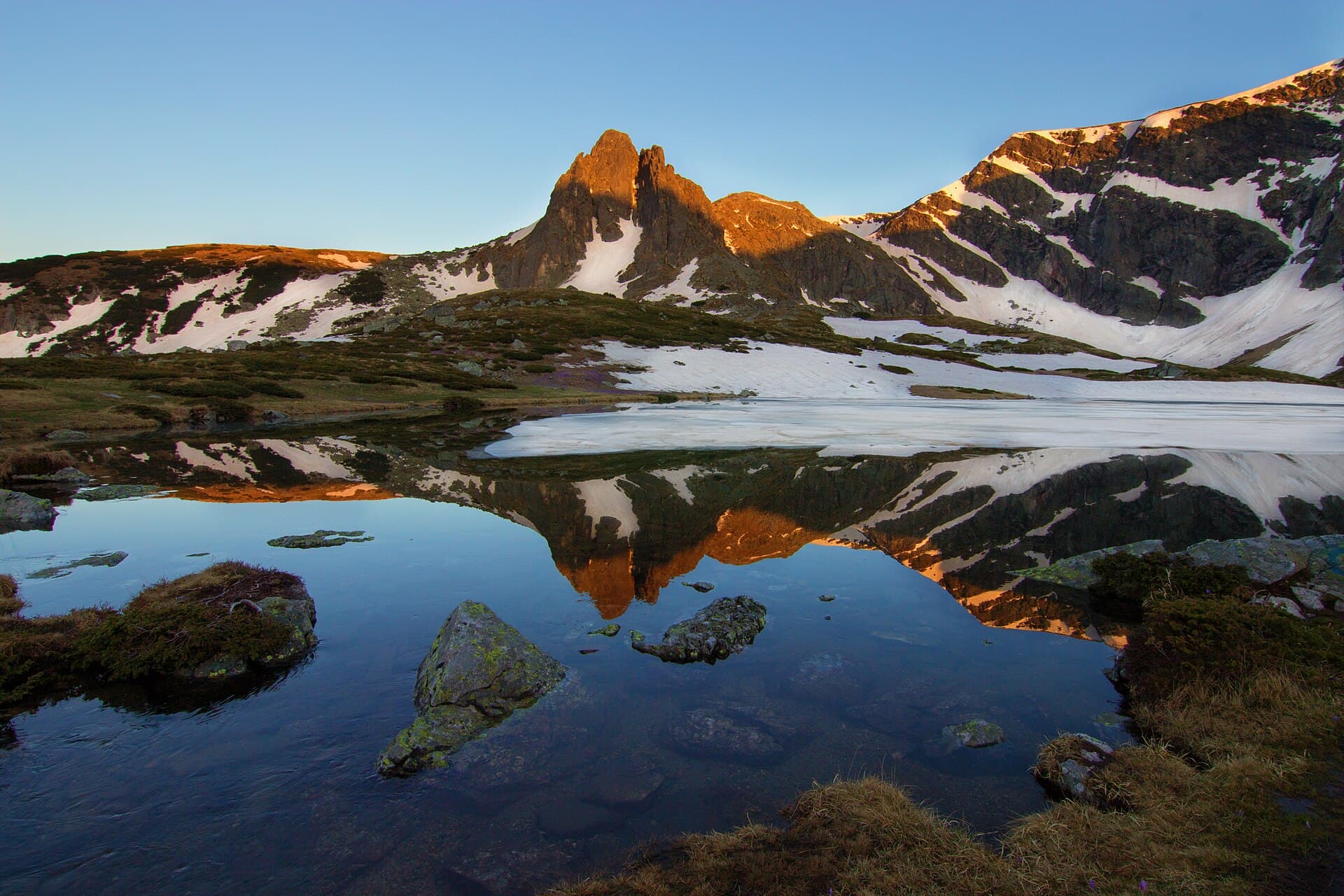
- Bliznaka (The Twin): The largest by surface area. In calm morning light it shows perfect reflections of the surrounding peaks, and this is the shot you'll see on every Bulgaria tourism poster.
- Trelistnika (The Trefoil): Irregularly shaped with three "leaves." Low banks, a comfortable place to stop.
- Ribnoto (The Fish): The shallowest. Next to the "Seven Lakes Hut" where you can buy coffee and rest.
- Dolnoto (The Lower): The lowest. The Germanska River starts here and flows down to join the Struma.
When to Go
Short version: July to September is the safe window. Warm, trails open, lakes ice-free.
The details:
- June: Snow is still possible at altitude, especially after a long winter. Without a guide and proper gear, not recommended.
- July and August: Peak season. Great weather (10 to 20°C at altitude), but crowded. August weekends bring 2,000+ hikers.
- September: The sweet spot. Still warm, clearer skies, fewer tourists.
- October: Already cool (nights can drop below freezing), but on a good day, a golden-hour autumn walk. Risk of rain or early snow.
- November to May: Impossible without winter gear. Lakes freeze over, snow is deep, the chairlift is closed.
Which day of the week?
Any day that isn't a weekend. Monday through Thursday are the quietest. If you have to go on a weekend, start early (first chairlift at 8:30 AM).
How to Get There from Sofia
Sofia to the starting point (Panichishte chairlift): about 90 minutes driving, 100 km south.
Three options
- Guided tour: The simplest path. We operate a guided full-day Seven Rila Lakes trek: from €100 per person (minimum 2 guests), a full day with a walk of about 3 to 4 hours and views of 5 of the 7 lakes, led by a guide who knows the trails. The chairlift and the optional hot springs are paid on site. No route responsibility, no surprises: just enjoy the day.
- Public transport: Bus from Sofia's "Ovcha Kupel" station to Dupnitsa (~1.5 hours, €8), then a minibus service to the chairlift (departs when full, no fixed schedule). Possible, but you'll burn 1.5 to 2 hours each way on logistics.
- Rental car: The road to Panichishte is good. Free parking at the chairlift. Works if you like control. Less ideal if you don't know Bulgaria: secondary roads aren't always well-signed, and GPS sometimes routes you onto dirt tracks.
The Chairlift (Panichishte Lift)
The lift takes you from 1,500 meters up to around 2,100 meters in about 30 minutes, saving you 1.5 to 2 hours of uphill hiking. It's not included in any guided tour, so you pay separately. A return ticket is €16 for adults and €8 for children aged 5 to 12; under 5 ride free. Cards are normally accepted, but bring some euros in cash in case the card machine is down. Don't try to skip it: hiking up from the base first will burn energy you need for the actual trek around the lakes.
The Hike Itself: What to Expect
After you get off the chairlift (upper station, 2,100 meters), you reach the "Rila Lakes Hut." That's where the trek begins.
- Length: About 10 km total (including return).
- Elevation gain: 350 meters.
- Time: 3 to 5 hours depending on pace. Average is 4 hours.
- Difficulty: Moderate. Not technical, but not "a walk in the park" either: the altitude (thin air) makes itself felt.
The standard route
An initial climb takes you past the first lake you'll see (Trelistnika), then onto a plateau where three lakes come into view at once. You continue upward, each lake beautiful in its own shape. Fatigue kicks in mainly on the climb to The Eye, which is the perfect place for a long break (with incredible views below).
Those with energy who want the legendary single-frame shot of all seven lakes continue 45 to 60 minutes more uphill to one of the nearby peaks. More on that next.
 Book it with us · TourBreathtaking guided trek in the Seven Rila LakesFrom€100€100$113£84Book
The Peak That Sees All Seven
If you're in decent shape and want the "photo of a lifetime", climb one of the peaks that overlook all seven lakes from above:
- Haramiyata (2,490 m): The easiest. 15 minutes up from the highest lake. Recommended.
- Malak Kabul (2,506 m): Another 20 to 30 minutes of climbing.
- Otovishki Vrah (2,696 m): The highest, hardest, most spectacular. An additional hour of climbing. Not for beginners.
Our guided trek is a loop of about 3 to 4 hours with views of 5 of the 7 lakes and does not include these peaks, so save the view of all seven for a visit on your own.
Guided Tour or Solo?
The simple rule: Solo if it's your second visit, guided if it's your first.
Why? Because the trek itself isn't hard, but the logistics around it are brutal:
- Rental cars and GPS that doesn't know the small roads
- Public transport with connections that don't always sync
- Weather that can shift in 15 minutes (guides recognize the signs)
- Trails that aren't always clearly marked, and in fog it's easy to lose direction
- No cell coverage on most of the trail
In an emergency: call 112 and ask for mountain rescue, or call the Mountain Rescue Service directly on 02 963 2000.
Guided tour through us: a guide stays with you throughout a walk of about 3 to 4 hours with views of 5 of the 7 lakes, the chairlift ticket (€16 return for adults) and the optional hot springs are paid separately on site, and you're back in Sofia between 7 and 8 PM. Full tour, from €100 per person.
Combine with Rila Monastery?
The question everyone asks: "I have one day: which is better, the lakes or the monastery?"
The answer: Both, but not on the same day. Here's why:
- The Seven Lakes take a full day of about 10 hours door to door, with a walk of about 3 to 4 hours.
- Rila Monastery (UNESCO site, a 7-hour tour from €95 per person) also needs at least half a day.
- Combining both in one day is possible in theory, not in practice. You'll come back exhausted and enjoy neither.
Our recommendation: If you have two days, spend one on the lakes and one on the monastery. If you only have one, choose by personality. Hikers = lakes. History and culture = monastery. Both are within 1 to 2 hours from Sofia.
What to Bring
- Good hiking shoes. Not sandals, not platform sneakers. Trekking shoes with real grip, because sections of the trail are slippery, especially after rain.
- Layered clothing. Even in July, at 2,500 meters you can expect 10°C in the morning. Strong sun by midday. Layers are the answer.
- Water: at least 1.5 liters per person. No water fountains on the trail. You can buy water at the hut, but expensive.
- Food: Sandwiches, energy bars, fruit. Don't eat a heavy meal before the climb, or you'll regret it.
- SPF 50+ and a hat. High-altitude sun is 5x stronger than regular. A burn in 30 minutes is realistic.
- Cash: some euros for the chairlift (€16 return for adults) and food at the hut. Cards normally work at the lift, but the machines can fail on the mountain.
- Rain jacket: Even if no rain is forecast. Mountain weather changes in 30 minutes.
- Camera or charged phone. This may be the most beautiful landscape you'll ever photograph, so be ready.
Frequently Asked Questions
Is the trek suitable for kids?
Age 8+ with hiking parents: yes. Ages 6 to 7, with the chairlift up and a stop near the first lakes (skipping the full trek): possible. Under 6 is not recommended, because altitude and fatigue are hard on young kids.
Can I swim in the lakes?
No. The Seven Rila Lakes are inside Rila National Park, a protected nature reserve, and swimming is strictly prohibited to preserve the fragile alpine ecosystem. You can dip your hands or feet briefly, but no full swimming.
What if the chairlift is closed?
Two scenarios: (1) Daily closure due to high wind: wait 30 minutes, check the official Rila Lakes site for conditions. (2) Seasonal closure (the lift usually operates roughly May through October, exact dates vary each year based on weather and maintenance, so check the official site before planning). If the lift is closed, the climb from the base adds 1.5 to 2 hours and 515m of elevation on top of the trek. Not recommended for a day trip.
Can I stay overnight up there?
Yes, two options at the lakes. Rilski Ezera Hut (Rila Lakes Chalet) at the top of the chairlift offers €20 per person in a dormitory room or €60 for a double room, plus a €12 reservation fee. It has a restaurant and private rooms available. The smaller Sedemte Ezera Hut offers a more traditional mountain-hut vibe with shared rooms (book by phone: +359 882 506 060, fills up fast). Sunrise over the lakes is stunning, and worth the night if you have time.
Is it worth going on a rainy day?
No. In rain the trails become muddy and dangerous, the chairlift may close, and the views get covered in fog. If rain is forecast, reschedule the day, visit Rila Monastery (less weather-dependent) or Sofia's museums.
The Bottom Line
The Seven Rila Lakes are exactly why you're flying to Bulgaria. You won't find scenery like this anywhere else in Europe at this price, this close to a capital, with nature this accessible. 90 minutes of driving, 30 minutes on the lift, 4 hours of hiking, and the photos you bring home will embarrass every friend who spent twice as much flying to Greece.
At MakeYourTravel we operate the guided Seven Rila Lakes trek: from €100 per person (minimum 2 guests), a full day with a walk of about 3 to 4 hours and views of 5 of the 7 lakes, English-speaking guide; the chairlift and the optional hot springs are paid on site. Get in touch for available dates. And for those who want to combine, the Rila Monastery tour is available for a second day.
Asked in our group
What members of our Facebook group ask about this, with our answer.
Is the Seven Rila Lakes chairlift running in October?
Not always. The chairlift usually runs from May to October, but in October it has a maintenance break of about two weeks, and it is closed on the last Monday of every month. October is also cold up there, sometimes below zero at night, with a risk of rain and early snow. From November to May it is closed, and the safe season is July to September.
Can I get to the Seven Rila Lakes without a car?
Yes. The simplest way is our guided trek from Sofia, with an English-speaking guide; the lift is paid separately on the spot. By public transport it can be done: a bus from Ovcha Kupel to Dupnitsa, about an hour and a half, then a minibus to the lift that leaves when it fills up, not on a timetable. Expect an extra hour to an hour and a half of logistics each way.
Share this guide