Hot Springs in Bulgaria: 7 Spa Towns, Thermal Pools and Prices
Sapareva Banya's 103°C geyser, Velingrad, Sandanski, Hisarya and Banya near Bansko: where to soak in Bulgaria, what a spa stay costs and when to go.
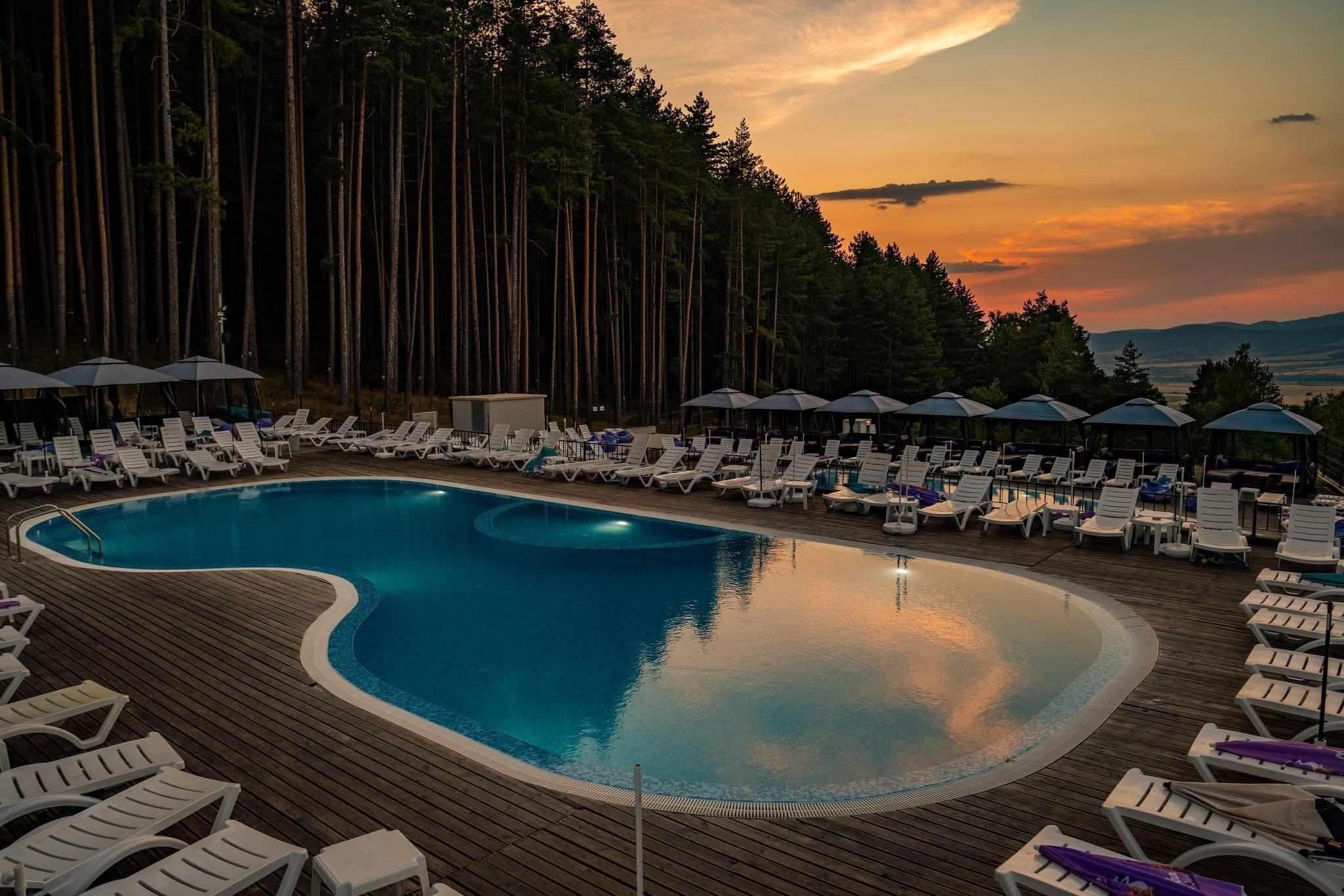

Bulgaria is one of Europe's best-kept wellness secrets. The country has more than 700 natural mineral and thermal springs (second only to Iceland in Europe), with water that's been flowing since Thracian and Roman times. You can sit in an outdoor thermal pool with snow on the surrounding Pirin mountains, then walk past the ruins of a 3rd-century Roman bathhouse on your way back to the hotel. All for a fraction of what you'd pay in Budapest, Baden-Baden, or the Blue Lagoon.
In this guide9 sections
This guide covers every spa town worth your time in Bulgaria, what makes each one different, how much it actually costs, and when to go. Whether you're planning a wellness-focused trip or tacking on a few spa days after skiing in Bansko, here's everything you need to know.
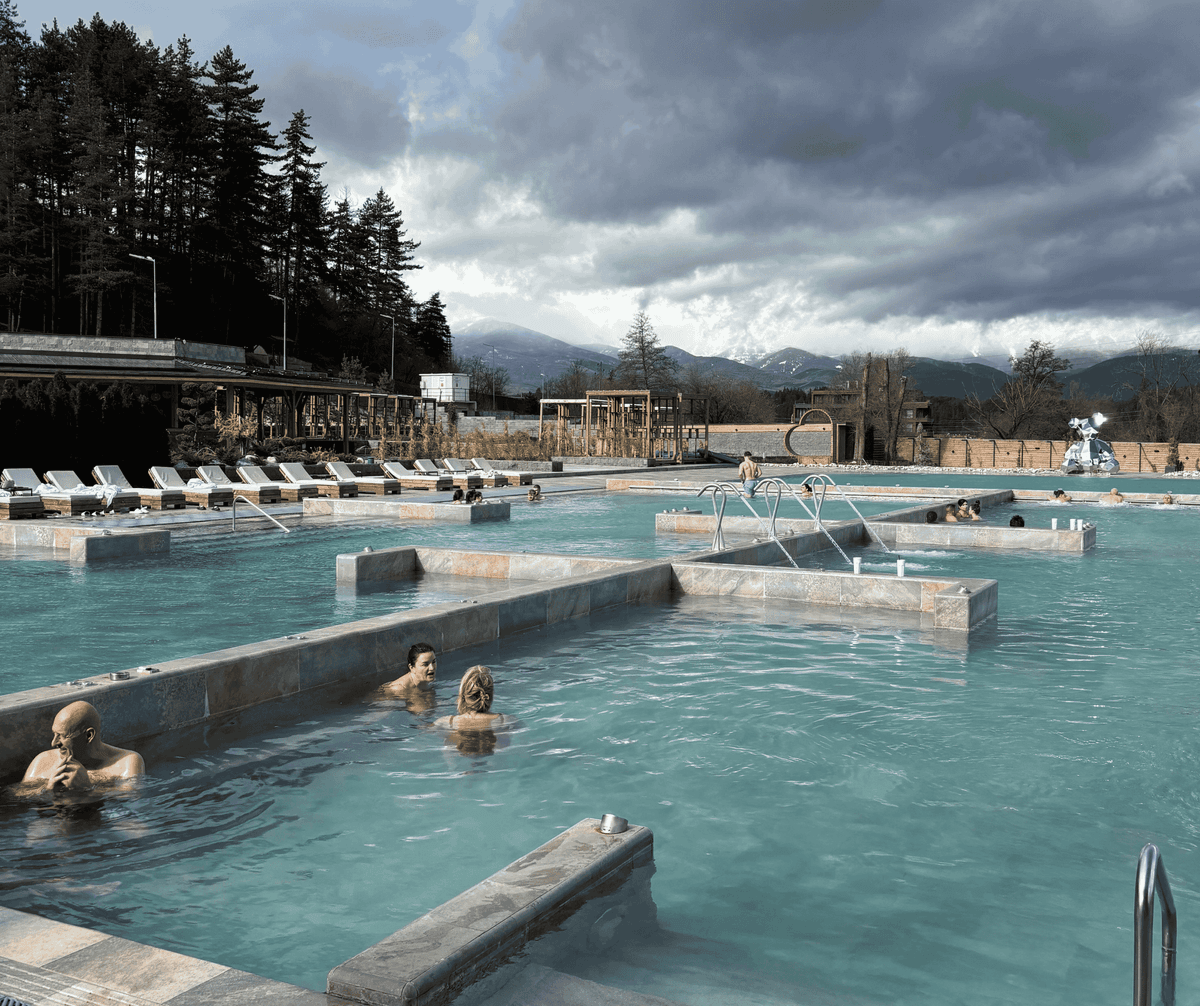
Table of Contents
- Why Bulgaria's hot springs are worth the trip
- The main hot spring towns in Bulgaria
- When to visit Bulgaria's hot springs
- What it actually costs
- Getting to Bulgaria's spa towns
- Practical tips before you go
- Frequently asked questions
- Final thoughts
Why Bulgaria's hot springs are worth the trip
Let's be honest about why this matters. You can find thermal spas across Europe. What makes Bulgaria different:
- Price. A night at a 4-star spa hotel with half-board and treatments starts around €70 to €120 for a couple. Compare that to similar quality in Austria, Germany, or Italy where you'd pay three to four times as much.
- Genuine geothermal water. Not water heated in tanks, but water that comes out of the ground scalding hot. Several Bulgarian springs exceed 80°C, and Sapareva Banya reaches 103°C, the hottest in continental Europe.
- Real mountain scenery. Most Bulgarian spa towns sit inside actual mountain ranges: Pirin, Rila, Rhodope. You're not in a strip-mall wellness center. You're soaking in a pool while staring at snow-capped peaks.
- Thousands of years of history. Thracians, Romans, and Ottomans all built around these springs. In several spa towns, you can literally bathe above or beside 3rd-century Roman ruins.
- Medical-grade balneotherapy. Most Bulgarian spa hotels have an on-site doctor who prescribes specific treatments. It's not just indulgence, it's a genuine medical tradition for respiratory conditions, joint problems, and skin issues.
- Still undiscovered. Budapest gets millions of tourists. Bulgaria's spa scene is where Central Europeans and locals go. You'll share thermal pools with Bulgarians, not crowds of international tourists.
Now let's get into the specific towns.
The main hot spring towns in Bulgaria
Sandanski: the sunniest spa town in the Balkans
Sandanski sits in southwestern Bulgaria, about 160 km south of Sofia and just 20 km from the Greek border. Locals claim it has 2,700 hours of sunshine per year (one of the sunniest spots in the Balkans), with a Mediterranean-like climate and 80 mineral springs within the town itself.
Water temperatures range from 42°C to 81°C. Sandanski specializes in respiratory treatments (asthma, bronchitis, chronic lung conditions) thanks to its unique microclimate and mineralized waters. The flagship hotel is Interhotel Sandanski, home to one of Bulgaria's largest balneotherapy centers. The town park has 500-year-old plane trees, and you can see 5th-century mosaic floors at the Early Christian Complex in the town center.
Best for: Couples, older travelers, anyone seeking genuine medical wellness rather than just pampering, and travelers who want to combine thermal waters with good weather year-round.
Banya: spa village next to Bansko ski resort
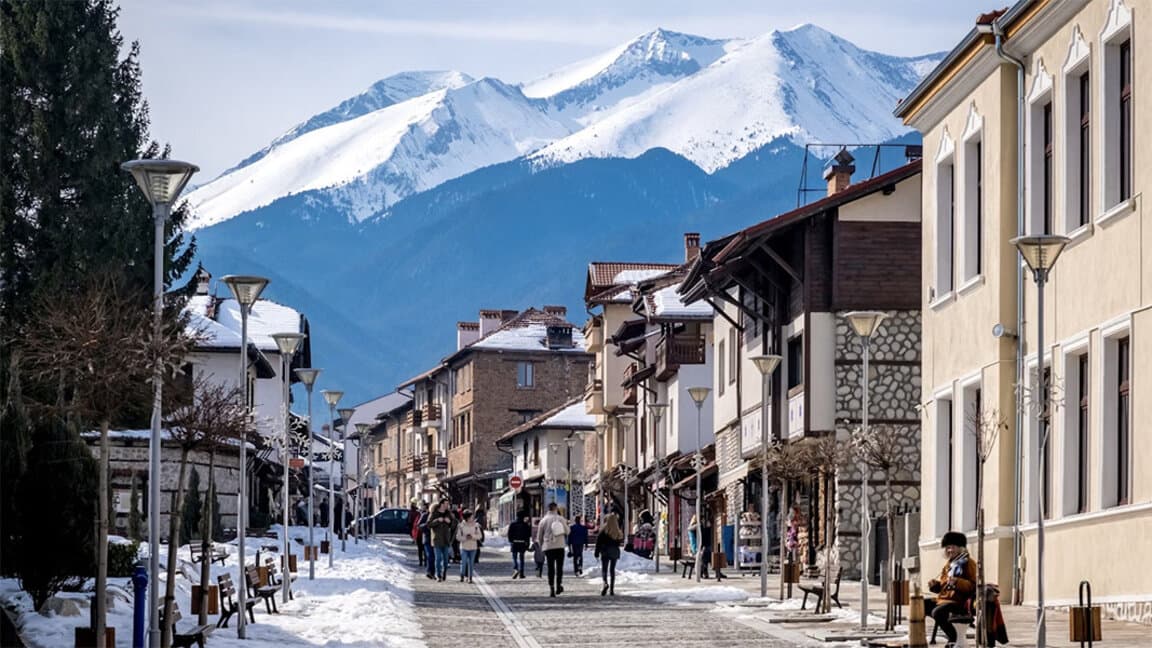
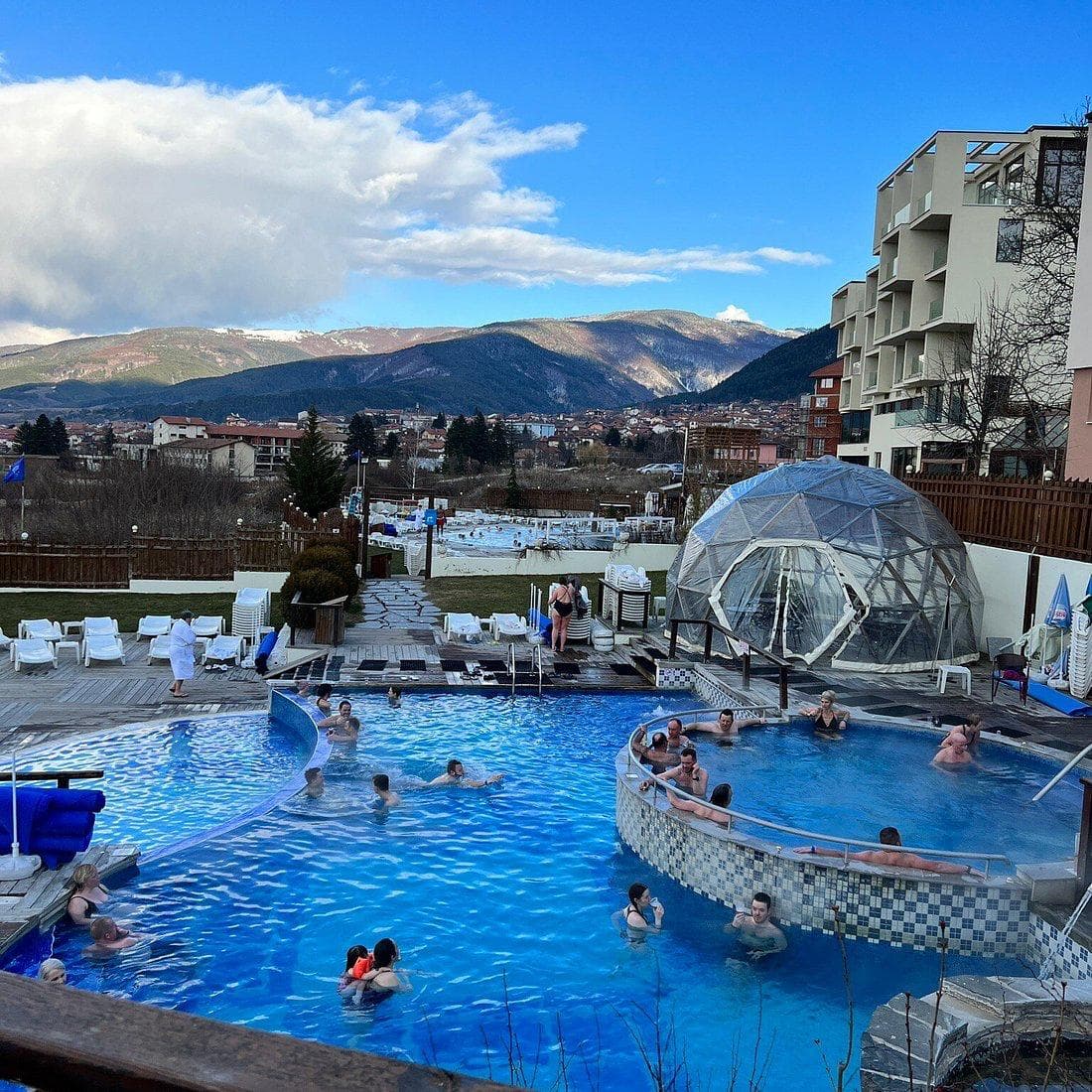
The village of Banya sits just 5 km from Bansko, Bulgaria's main ski resort. This makes it one of the best ski-and-spa combinations in Europe: morning on the slopes, afternoon in a thermal pool. Banya has 37 hot springs with water temperatures between 37°C and 60°C. Some springs flow from public fountains in the village itself, completely free to drink.
Banya is less polished than Sandanski or Velingrad, but that's precisely its charm. Smaller hotels, affordable rates, postcard views of the Pirin range, and quick access to Bansko's slopes, restaurants, and nightlife. The notable complexes include Seven Springs (intimate and family-run), Regnum Banya Thermal (modern and larger), and Saint Spas Balneocomplex (more traditional treatments). The whole area is quiet, authentic, and unlike anything in Western European spa tourism.
Best for: Skiers looking for post-slope recovery, families, couples wanting mountain scenery without paying Alpine prices, and anyone combining Bansko with wellness.
Velingrad: the official spa capital of the Balkans
Velingrad isn't just marketing itself: it holds the official title of "Spa Capital of the Balkans." The town has over 80 hot springs with temperatures from 25°C to 97°C, and more 5-star spa hotels than anywhere else in Bulgaria. It sits at 750m elevation in the Rhodope Mountains, where the combination of altitude, clean air, and mineral waters creates what Bulgarians call a natural healing climate.
Velingrad is where Bulgarian locals go for serious wellness retreats, which is a good sign. You'll also find the Kleptuza, the largest karst spring in Bulgaria, located in a peaceful park setting. The town is reachable by a charming narrow-gauge railway from Septemvri station, one of the last of its kind in the Balkans.
Best for: Couples seeking upscale wellness, travelers who want the most developed spa infrastructure, anyone wanting to experience where Bulgarians themselves vacation.
Hisarya: the ancient Roman spa town
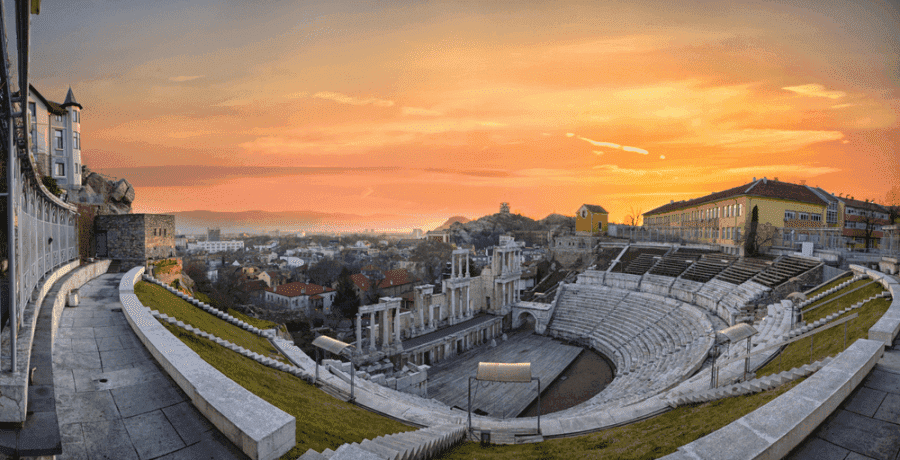
Hisarya (sometimes spelled Hissar) is 40 km north of Plovdiv and ranks at the top of anyone's list who wants to combine wellness with serious history. The town has 22 hot springs with temperatures between 41°C and 52°C, surrounded by the ruins of Roman thermal baths dating back to the 3rd century AD.
You're bathing in the same mineral waters Roman soldiers used nearly 1,800 years ago. The town features an archaeological museum, well-preserved Roman fortress walls, an amphitheater, and the striking "Camel Gate." The waters are particularly recommended for liver, gallbladder, stomach, and skin conditions. It pairs beautifully with a day trip to Plovdiv, Europe's oldest continuously inhabited city.
Best for: History enthusiasts, travelers combining Plovdiv with wellness, couples seeking authenticity over modern luxury.
Sapareva Banya: home to Europe's hottest geyser
Sapareva Banya is the most dramatic spa destination in Bulgaria. The main spring is a geyser fountain that erupted during drilling in 1957 and pumps out water at 103°C, the hottest in Bulgaria (Bulgarian sources call it the hottest in Europe). The town sits on the slopes of the Rila Mountains, about 35 minutes from Borovets ski resort.
If you're skiing in Borovets during winter, this is the essential day trip. Imagine sitting in an outdoor thermal pool surrounded by snow, with white mountain peaks on the horizon: there's really nothing else like it in Europe. The town also has modern spa facilities and several hotels built around the thermal waters.
Best for: Borovets skiers looking for a recovery day, adventurous travelers, photographers (the active geyser is a striking subject).
Kyustendil and Pavel Banya: the hidden gems
Kyustendil is 90 km southwest of Sofia, at the foot of Osogovo Mountain. It has 40 hot springs, some reaching 74°C, among the hottest in the country. The town has Roman-era ruins including the Pautalia thermal bath, one of the most important archaeological monuments from Roman Bulgaria.
Pavel Banya sits in the Valley of Roses in central Bulgaria and specializes in treating musculoskeletal and orthopedic conditions. Water temperatures hover around 50°C. The area also contains Thracian tombs, connecting wellness with ancient archaeology.
Both towns see fewer international tourists than the bigger-name spa destinations, meaning less crowded pools, lower prices, and a more authentic experience.
Best for: Budget-conscious travelers, anyone wanting to avoid tourist crowds, travelers interested in authentic local experiences.
When to visit Bulgaria's hot springs
Winter (December to March): The most magical season. Sitting in thermal water while snow falls around you is a bucket-list experience. The ski-plus-spa combination (Bansko + Banya, or Borovets + Sapareva Banya) is especially popular. Book hotels well in advance, because this is peak season.
Spring (April to May): Mild temperatures (15 to 22°C), everything is in bloom, excellent for hiking around spa towns, and less crowded. Ideal for Velingrad, Hisarya, and Sandanski.
Summer (June to August): Bulgarian summers are milder than Mediterranean ones (25 to 30°C). Many spa complexes have outdoor cold pools to balance the thermal ones. Sandanski gets the most sunshine and is especially pleasant.
Autumn (September to November): Arguably the most beautiful season. Rhodope and Pirin forests turn gold, fewer tourists are around, and hotels often offer shoulder-season discounts. Potentially the best value time to visit.
 Book it with us · TourFrom Sofia: Bansko Old Town & Thermal SpaFrom€110€110$124£92Book
What it actually costs
Bulgaria officially adopted the Euro on January 1, 2026, so all prices are in euros. Credit cards are widely accepted in hotels and city restaurants, though it's wise to keep some cash for smaller villages and public thermal pools.
- 3-star spa hotel, per night for a couple with breakfast: €40 to €70
- 4-star spa hotel, per night for a couple with half-board: €70 to €120
- 5-star spa hotel in Velingrad/Sandanski, per night with half-board: €130 to €220
- One-hour Swedish massage: €20 to €35
- Mineral mud treatment: €15 to €25
- Public thermal pool entry: €5 to €15
- Dinner at a good local restaurant: €12 to €20 per person
For context: a full week at a 4-star Bulgarian spa hotel, including flights from most European cities, typically runs €600 to €900 per couple. That's roughly what a long weekend in a Western European spa town would cost.
Getting to Bulgaria's spa towns
Most international flights arrive in Sofia. From there, the main spa destinations are a manageable drive:
- Sofia to Sandanski: 2.5 hours by car
- Sofia to Velingrad: 1.5 hours
- Sofia to Hisarya: Around 2 hours (or fly into Plovdiv and drive 40 minutes)
- Sofia to Banya/Bansko: 2 to 2.5 hours
- Sofia to Sapareva Banya: about 1 hour 15 minutes (often combined with Borovets)
Public transport in Bulgaria exists but isn't always convenient if you're traveling with luggage or family. For most international visitors, the simplest option is a private transfer from Sofia directly to your hotel: one fixed price, door-to-door service, no navigating unfamiliar bus schedules.
Practical tips before you go
- Book in advance. Peak season (winter and spring) fills up fast, especially for the best-reviewed hotels.
- Pack swimwear. Required not just for hotel pools but also for public thermal baths.
- Bring flip-flops and a robe. Most hotels provide robes, but flip-flops are often not included.
- Hydrate. Thermal soaking is dehydrating, so always carry a large water bottle.
- Use the on-site doctor. Serious Bulgarian spa hotels have a physician who prescribes appropriate treatments based on your health. Most guests don't realize this service is included or heavily subsidized.
- Language. English works well at major international hotels. In villages and local restaurants, less so. Google Translate handles most situations.
- Pregnancy and health conditions. Not all treatments are suitable for pregnant travelers or those with certain medical conditions. Always consult with the hotel's doctor before booking treatment packages.
- Tipping. 10% is standard at restaurants and spa services if not already included in the bill.
Frequently asked questions
Are Bulgaria's hot springs really therapeutic?
Yes. Studies support the effectiveness of geothermal mineral waters for skin conditions, joint problems, respiratory issues, peripheral nervous system disorders, and digestive concerns. That said, it's not a miracle cure. The major spa hotels employ on-site physicians who prescribe treatments based on individual health assessments. This medical balneotherapy tradition is one of Bulgaria's genuine specialties.
When is the best time to visit Bulgarian hot springs?
Winter (December through March) is the most atmospheric: soaking in thermal water surrounded by snow is unforgettable, and it pairs perfectly with skiing. For serious medical treatments, spring and autumn are ideal because temperatures are mild and hotels are less crowded. Summer works well too, especially in Sandanski where sunshine is plentiful.
How many days should I spend at a Bulgarian spa hotel?
For a relaxing weekend getaway, 3 to 4 nights is enough. For genuine medical treatment of chronic conditions, Bulgarian doctors typically recommend 10 to 14 days. If you're booking a structured treatment program with an on-site physician, less than a week isn't worth the investment.
Are Bulgarian hot springs family-friendly?
Yes, though it depends on the hotel and your children's ages. Most larger hotels have dedicated children's thermal pools at lower temperatures (34 to 36°C). Some treatments, like intensive massages or mud therapy, aren't appropriate for young children. Always ask the hotel about family facilities before booking.
Which spa town is best for first-time visitors to Bulgaria?
Velingrad and Sandanski are the safest choices: they're the most developed for international tourism, offer hotels at international standards, and English is widely spoken. Hisarya is ideal for history lovers, and Banya works perfectly for anyone combining spa with skiing in Bansko.
Do I need to rent a car for a spa holiday in Bulgaria?
Not necessarily. Most spa travelers take a private transfer from the airport and stay at the hotel for the duration. If you want to explore the surrounding region (hiking, neighboring villages, Plovdiv), a rental car helps. Within spa towns themselves, a car is unnecessary.
Can I combine skiing and spa in the same Bulgarian trip?
Absolutely. It's one of Bulgaria's most popular holiday combinations. The natural pairings are Bansko with Banya village (just 5 km apart) or Borovets with Sapareva Banya (a 35-minute drive). Ski mornings, thermal pool afternoons.
Final thoughts
Bulgaria's hot springs aren't just another European spa destination. They're a combination of authentic geothermal waters, real mountain scenery, thousands of years of wellness tradition, and prices that feel almost unfair compared to what you'd pay in Western Europe. If you've been to Budapest's thermal baths or Iceland's Blue Lagoon, Bulgaria offers something those destinations can't: genuine untouristed character and medical-grade treatments at a fraction of the cost.
At MakeYourTravel, we specialize in building custom itineraries across Bulgaria, including wellness-focused trips combining spa towns, mountain villages, and historic cities. If you have questions about which spa region suits your specific needs, or want help putting together a full Bulgarian wellness itinerary, get in touch. We'll build something tailored to exactly what you're looking for.
Want to read more about Bulgaria before planning your trip? Our full travel guides cover every major destination, from Sofia to Plovdiv to Bansko.
Asked in our group
What members of our Facebook group ask about this, with our answer.
Are there hot springs close to Sofia?
Yes. Sapareva Banya, about an hour and a quarter from Sofia, has a 103°C geyser and thermal pools, and in winter you sit in the hot water with snow all around. Velingrad, the spa capital of the Balkans, has more than 80 hot springs and suits a night or two. No time to leave the city? Inside Sofia there's the Victoria Spa & Hammam at the Ramada hotel.