Bulgarian Food: What to Order, Folklore Dinners, Gluten Free
Bulgarian food explained: the dishes to try, how a mehana works, a folklore dinner in Sofia, plus vegetarian and gluten free eating tips.


Bulgarian food is built around the mehana, the traditional tavern: a shopska salad and a small glass of rakia to start, then something from the grill or a clay pot stew, with bread ordered separately. Breakfast is banitsa, a flaky cheese pastry, and in summer people drink tarator, a cold yoghurt and cucumber soup. For an evening with live music and folk dancing you book a table at a mehana with a folklore programme, and if you eat gluten free you can eat well in Bulgaria, as long as you know what to order and what to ask. This guide covers the dishes worth trying, what Bulgarians eat at each time of day, how a mehana works, folklore dinners, vegetarian food and gluten free eating.
In this guide9 sections
We checked the practical details on 31 October 2026: the show times on the restaurant's official website, the current state of Sofia's Central Market Hall, and the prices of our own tours as they appear on the site today. Bulgaria has paid in euro since 1 January 2026.
Traditional Bulgarian food: the dishes to try
You do not need fifty names. These are the dishes you will see on almost every menu, with the Cyrillic so you can spot them:
| Dish | On the menu | What it is |
|---|---|---|
| Shopska salad | Шопска салата | Tomato, cucumber, pepper and onion under a snowfall of grated salty white cheese (sirene). It opens almost every meal. |
| Tarator | Таратор | Cold soup of yoghurt, cucumber, dill, garlic and walnuts. A summer staple. |
| Banitsa | Баница | Layers of thin pastry with white cheese and egg. The classic breakfast. |
| Kavarma | Кавърма | Meat and vegetable stew served in a small clay pot. |
| Gyuvech | Гювеч | Vegetables, sometimes with meat, baked in earthenware. |
| Sirene po shopski | Сирене по шопски | White cheese baked in a clay pot with tomato, pepper and an egg. |
| Kebapche and kyufte | Кебапче, кюфте | Grilled minced meat: a long kebab and a flat patty, ordered by the piece. |
| Lyutenitsa | Лютеница | Relish of roasted red peppers and tomatoes, spread on bread or eaten with meat. |
| Sarmi | Сарми | Pickled cabbage or vine leaves stuffed with rice, with or without meat. |
| Bulgarian yoghurt | Кисело мляко | Thick and tangy; for pudding, with honey and walnuts. |
| Mekitsi | Мекици | Fried dough with icing sugar, jam or white cheese. |
The yoghurt comes with a story: the bacterium behind its taste was first isolated in 1905 by a Bulgarian medical student, Stamen Grigorov, and still carries the name Lactobacillus bulgaricus. Rakia, a plum or grape brandy, is part of the meal itself: Bulgarians sip it with the salad, before the main course, not after dinner. For wine regions, grapes and pairings, see our guide to Bulgarian wineries.
Bulgarian breakfast, lunch and dinner: what to eat when
Breakfast: banitsa, ayran and boza
Bulgarians buy breakfast at the neighbourhood bakery, the one with the "закуски" sign: a slice of banitsa with ayran, a thin salted yoghurt drink, or boza, a thick, sweetish fermented grain drink. Mekitsi are the other option. Hotels tend to serve an international buffet, so the real banitsa is out on the street.
Lunch: soup and the daily menu
On weekdays many restaurants offer an "обедно меню", a fixed daily lunch menu that costs less than ordering from the main card. Lunch means soup: tarator in summer, bean soup in winter, and for the brave, shkembe chorba, tripe soup with garlic and vinegar, which Bulgarians swear by the morning after.
Dinner: salad, rakia, then the grill
Dinner is unhurried. You start with salad and rakia, move on to the grill (kebapche, kyufte, skewers) or a clay pot, and finish with yoghurt and honey, palachinki, the Bulgarian pancakes, or tikvenik, a pumpkin pastry you will mostly find in autumn and winter.
How a mehana works
A mehana is the traditional Bulgarian restaurant: wood, stone, sometimes an open fire, and a long menu of home cooking. A few things to know before you sit down:
- Salads come first. The kitchen sends out salads and starters straight away and the mains follow once you have finished. If you want everything at once, because of children or a train to catch, say so when you order.
- Bread is not always included. In most places bread, a baked flatbread (pitka) or garlic bread is a separate item on the bill. If you do not order it, it will not arrive.
- Weights are on the menu. Most dishes list their weight in grams, and grilled items such as kebapche are sold by the piece. One salad usually does for two.
- Order for the table. Two salads, a dip, bread and two mains make a full meal for four.
- The bill. Ask for "сметката, моля" (smetkata, molya). Around 10 percent is the usual tip for good service. Check the bill before you pay; dishes you never ordered and odd extras are covered in our guide to tourist scams in Bulgaria.
- Cash. Cards work almost everywhere in Sofia. In village mehanas and small towns, carry some euros in cash.
Prefer a skyline to a cellar with a fireplace? That is a different guide: restaurants with a view in Sofia.
Folklore dinner in Sofia: a meal with a show
A folklore dinner is a mehana with a programme: a live band, a folk singer and dancers in traditional costume performing the horo, the Bulgarian circle dance, and at the end the audience is often pulled into the line. Most places add a fixed per person charge for the show to the bill, and the music usually starts around 8pm.
In Sofia we checked Chevermeto (Чевермето), a Bulgarian restaurant in the National Palace of Culture (NDK) building at 1 Bulgaria Square. According to its official website, as of 31 October 2026 the programme runs every evening: a folk singer at 20:00, the dance show at 20:30 and more singing from 21:00. The show charge is about 5 euros per person (the site quotes both 4.50 and 4.90 euros), and the restaurant is open daily from 12:00 to midnight. Book ahead for weekends and December. For more traditional restaurants in the city, some with live music, see where to eat in Sofia.
In Bansko almost every mehana in the old town has live music during the ski season. Which ones are worth it and what to order, including kapama, the local slow cooked dish of sauerkraut and mixed meats, is in our guide to Bansko restaurants. If you would rather eat in the forest than in a restaurant, there is a forest picnic near Bansko cooked on hot stones: meat, fish and vegetables cooked on stones over a fire, salads, fruit, homemade wine and rakia, with pick up from your Bansko hotel, 3 to 4 hours, 45 euros per person. It needs at least 6 people, and live folk music can be added for an extra fee.
Book it with us · AttractionForest picnic in nature: Cooking on hot stonesFrom€45€45$50£38BookGluten free in Bulgaria: what is safe and what to watch
The good news: much of Bulgarian cooking is built on vegetables, cheese, yoghurt and grilled meat rather than pastry. The less good news: awareness of coeliac disease in traditional restaurants is still low, bread sits on every table, and grills and pans are shared. If you react to traces, treat every dish as low gluten, not gluten free.
- Usually gluten free: shopska and most salads, tarator, yoghurt, meat skewers, sirene po shopski, and jarred lyutenitsa (read the label).
- Ask first: kebapche, kavarma and gyuvech (some kitchens thicken with flour), soups, many of which are thickened with flour, egg and yoghurt, and any sauce.
- Avoid: banitsa, mekitsi, bread and flatbread, kyufte, which usually contains bread or breadcrumbs, anything breaded, Bulgarian moussaka, whose topping usually includes flour, and boza, which is made from grain, usually wheat.
One rule works in your favour: Bulgaria is in the EU, and EU law requires restaurants to give allergen information for the food they serve, with cereals containing gluten on the list. Ask without embarrassment. Here is a gluten free card in Bulgarian; screenshot it and show it to your waiter:
Имам цьолиакия и не мога да ям глутен: пшеница, ръж, ечемик, овес. Моля, без брашно, хляб и галета.
It means: I have coeliac disease and cannot eat gluten, that is wheat, rye, barley and oats; please, no flour, bread or breadcrumbs. The big supermarket chains usually have a gluten free shelf marked "без глутен", handy for breakfast bread.
Vegetarian and vegan Bulgarian food
Vegetarians do fairly well: salads, dips, sirene po shopski, mish mash (eggs scrambled with peppers, tomatoes and white cheese), chushki byurek (cheese stuffed peppers fried in batter), vegetable gyuvech and banitsa. For vegans the word to learn is "постно" (postno): a fasting dish with no meat, dairy or eggs, from the Orthodox fasting tradition. Postni sarmi are stuffed with rice, and bean soup is usually cooked without meat. Postno dishes are easier to find during fasting periods, including the Nativity fast from 15 November to 24 December. A soup that looks vegetarian may still use meat stock, and cheese and yoghurt turn up in almost everything, so ask.
Bulgarian street food and Sofia's Central Market Hall
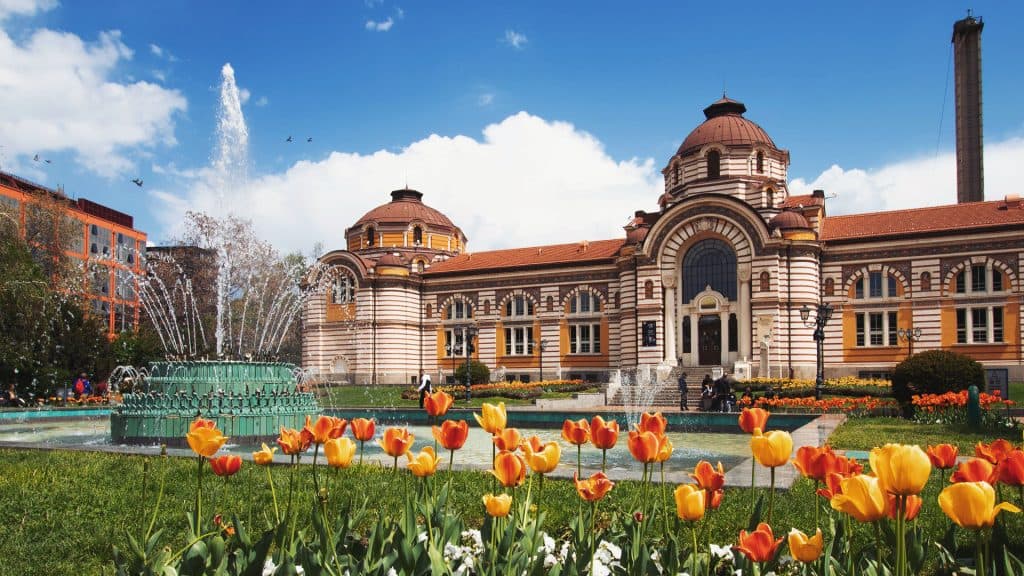
Some of the most Bulgarian food is also the cheapest: a hot slice of banitsa from a bakery window, mekitsi and a cup of ayran. In Sofia it is worth knowing what has happened to the Central Market Hall (Tsentralni Hali) on Maria Luiza Boulevard, because many guides still describe it as it used to be. The building closed for renovation in July 2022 and reopened on 23 May 2024. It is now run by the supermarket chain Kaufland: a covered market on the ground floor with stalls and produce, mostly from Bulgarian producers, restaurants and a patisserie on the upper terrace, and remains of ancient Serdica in the basement. Opening hours of 7:00 to 23:00 daily were announced at the reopening; check before you go.
We do not sell an English language food tour in Sofia yet. If you want an introduction to the city centre first, our small group walking tour of Sofia runs for up to two hours in English and costs 18 euros per person; it includes no tastings, so plan the banitsa stop yourself. You pay 20% online when you book and the rest to the host at the end of the tour.
Bulgarian dishes for Christmas Eve and New Year
On Christmas Eve, 24 December, Bulgarian families set a table of meat free fasting dishes in an odd number, usually seven or nine: sarmi, beans, peppers, pumpkin banitsa and a dried fruit compote. In the middle sits a round loaf with a coin baked inside, and whoever finds it is said to bring the household luck for the year. On 1 January families bake a banitsa with "kasmeti", little slips of paper with good wishes, sometimes a coin or a small twig: the tray is turned and everyone takes the piece in front of them. On New Year's Eve many restaurants switch to a set menu with a show; what to know before you book is in our guide to New Year's Eve in Sofia and Bansko.
Bulgarian food on the road: Rila Monastery and Melnik
Next to Rila Monastery there are stalls selling mekitsi and yoghurt, the stop Bulgarians make before the drive home. Without a car, you can join our day trip from Sofia to Rila Monastery, from about 09:00 to 17:00, 95 euros per adult. In the south, the day trip from Bansko to Melnik and Rozhen Monastery includes a wine tasting at a winery, 60 euros per person with a minimum of 3 people (smaller groups for an extra fee); lunch at a restaurant in town is not included and is paid on the spot.