
Bulgarian Wineries: The Complete Guide to Wine Regions and Indigenous Grapes
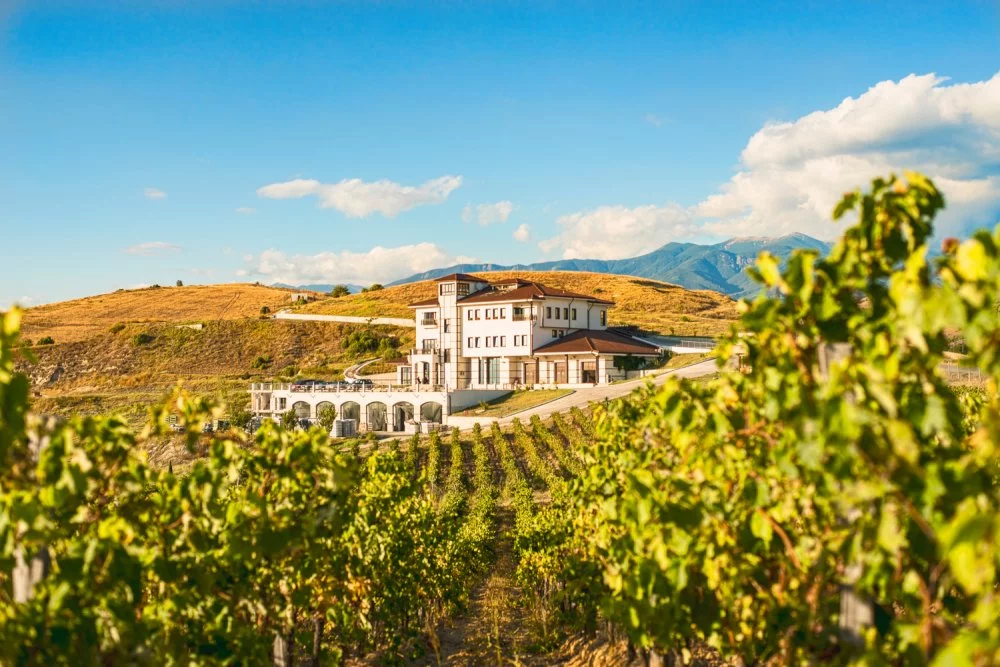
Bulgaria has been making wine for 6,000 years. That's not marketing — archaeologists have found Thracian winery remains from 4,000 BC, and Homer himself mentioned Thracian wines in the Iliad. In the 1980s, Bulgaria was the world's second-largest bottled wine exporter, behind only France. But the communist era focused on volume over quality. Today — after 30 quiet years of rebuilding — Bulgaria produces boutique wines that justify the trip. And for most international travelers, it's still a well-kept secret.
Important note: As of January 1, 2026, Bulgaria has officially adopted the Euro. All winery and tasting prices are now in EUR. In smaller villages and rural mehanas (taverns), keep some cash handy. Credit cards are accepted at every major winery.
Table of Contents
- Why Bulgarian Wine Is Worth Your Time
- Indigenous Grapes You Should Know
- The 5 Wine Regions of Bulgaria
- Thracian Valley — Heart of Bulgarian Wine
- Struma Valley and Melnik
- Black Sea Coast Wineries
- Planning a Wine Trip: Practical Guide
- Pairing Wine with Bulgarian Food
- FAQ
Pre-harvest grape clusters — summer in the vineyards is prime time for a winery visit.
Why Bulgarian Wine Is Worth Your Time
Three honest reasons:
1. Real history, not marketing spin. The Thracians — the ancient civilization that lived on Bulgarian land — made wine in 4,000 BC. This isn't a folklore legend. It's backed by archaeology. Excavations in Plovdiv, Varna, and Perperikon uncovered ceramic vessels specifically designed for wine. Homer wrote about them. Philip II of Macedon drank them. This is a serious tradition.
2. Grapes you won't find anywhere else in the world. Bulgaria is home to 44 officially registered indigenous varieties — many growing only here. Mavrud (the national grape), Shiroka Melnishka Loza, Rubin, Gamza, Dimyat, Red Misket. Bulgarian wine isn't just another Cabernet or Chardonnay — it's an experience you can't replicate in Italy, France, or California.
3. Prices that make sense. A tasting at a quality boutique winery: €15–35. A bottle of excellent wine at the cellar door: €15–40. The equivalent bottle at a specialty shop in London, New York, or Tel Aviv: $80–200. Anyone serious about wine will recoup the cost of their flight in a single afternoon of cellar shopping.
Indigenous Grapes You Should Know
Before you go — it's worth knowing what you're drinking. If you don't ask about the indigenous varieties at a tasting, you've missed the point.
Reds
- Mavrud — the king of Bulgarian grapes. Deep red, full-bodied, with dark fruit, chocolate, and spice notes. Ages beautifully up to 15 years. If you love Argentine Malbec or Italian Aglianico, you'll love Mavrud. Grown primarily around Plovdiv and Asenovgrad.
- Shiroka Melnishka Loza (Broad-leaved Melnik) — grown only in the Struma Valley, nowhere else in the world. Spicy red with cherry, strawberry, black pepper, and dried herb notes. Legend has it Winston Churchill ordered 500 liters of this wine every year.
- Rubin — a Bulgarian cross from 1944 between Italian Nebbiolo and French Syrah. Rich red with plum, herbal, and spice notes. Has earned its place among Bulgaria's modern classics.
- Gamza — lighter red, similar to Pinot Noir. Sour cherry notes. Perfect for summer with lighter food.
- Pamid — an everyday, inexpensive red. Not particularly exciting, but dominates the shelves of Bulgarian supermarkets.
Whites
- Dimyat (also spelled Dimiat) — Bulgaria's most popular white. Crisp, acidic, with apple and herbal notes, sometimes a hint of salinity. Genetically related to Chardonnay.
- Red Misket — deceptively named: it's a white wine, but the grape has pink skin. Aromatic, similar to dry Muscat. Notes of tangerine, rose water, lime, and Thai basil.
- Tamyanka — an aromatic wine from the Rose Valley. Similar to Muscat, with rose petal and citrus notes.
The 5 Wine Regions of Bulgaria
Bulgaria is officially divided into five wine regions. Most travelers will see only two or three on a single trip — and that's enough. Each region is its own world.
- Thracian Valley — Southern Bulgaria, around Plovdiv. Produces 35% of Bulgaria's wine. Heavy reds, Mavrud, and Rubin. Closest to Sofia and the top recommendation for first-time visitors.
- Struma Valley — Southwest, near the Greek border. Hot climate, unique Melnik reds. Home to the "Melnik sisters" rock formations and sand pyramids.
- Black Sea Coast — Varna and Burgas. Maritime climate, crisp and clean whites. Perfect for summer.
- Danube / North — Along the Danube River. 30% of production. Wide variety, less tourist traffic.
- Rose Valley — Central Bulgaria. Smaller wine production but famous for roses. Limited output but deeply aromatic.
Thracian Valley — Heart of Bulgarian Wine
If you have one day for wineries in Bulgaria: Thracian Valley. It's the closest region to Sofia (90 minutes by car), produces the highest-quality wines, and pairs beautifully with a visit to Plovdiv — Europe's Wine Capital 2025.
Wineries Worth Knowing
Villa Yustina — a family-owned winery about 26 km south of Plovdiv. Award-winning, with panoramic views of the Rhodope Mountains. Intimate atmosphere and excellent English-speaking staff. Tastings: €13–20. Book ahead on weekends.
Midalidare Estate — not just a winery, but a full wine-and-spa resort. Perfect for couples looking for a luxury weekend. Tastings: €20–35. The place to combine wine with relaxation.
Bessa Valley — a winery with French heritage, founded by Karl Hauptmann (partner of Stephan von Neipperg from Bordeaux). Produces Enira, one of Bulgaria's most respected wines. Near Pazardzhik, about an hour from Plovdiv.
Castra Rubra / Dragomir / Zagreus — additional boutique wineries worth checking out if you're planning a 2–3 day wine itinerary. Zagreus specializes in organic, old-vine Mavrud — ideal for natural wine lovers.
The Young Wine Festival
Last weekend of November — Plovdiv's Young Wine Festival. Regional wineries showcase the year's new wines in the Old Town. If you're in Bulgaria around this time, don't miss it. Great atmosphere, low prices, and direct access to the winemakers themselves.
Struma Valley and Melnik
If Thracian Valley is the beating heart of Bulgarian wine, the Struma Valley is its best-kept secret. Located in the country's southwestern corner near the Greek border, it's unlike any other region in Bulgaria — an almost Mediterranean climate, hotter, drier, and characterized by distinctive white sandy soils.
The town of Melnik itself is Bulgaria's smallest town — officially 325 residents. But it plays a massive role on the wine map: this is where the region's signature grape, Shiroka Melnishka Loza, grows. The ancient cellars of Melnik, some dating to the 18th century, are still used for wine storage today.
Wineries Worth Knowing
Villa Melnik — a family-owned, gravity-fed winery built into a hillside (wine flows between stages without pumps). The tour explains how the sandy soil and the "Melnik sand pyramids" — a unique geological formation — influence the vines. Tastings: €15–30.
Orbelus — 100% organic, a pioneer of Bulgaria's organic wine movement. Clean wines with sharp, focused flavors. Great for travelers who care about sustainability.
Kordopulova House — not a traditional winery but a historic site in Melnik itself. An 18th-century house (built 1754) with one of the region's largest underground cellars. Worth a visit for the history of wine in the region.
Getting There
Melnik is about 2.5 hours south of Sofia by car. To do the region justice, plan an overnight in Melnik or nearby (comfortable guesthouses run €40–80 per night). We can help arrange a private transfer or build a custom itinerary for the Struma Valley wineries.
Black Sea Coast Wineries
If you're spending time on the Black Sea coast in summer, consider dedicating one day to the local wineries. The region's maritime climate — hot summers with sea breezes, mild winters — produces crisp, balanced white wines.
Euxinograd — a winery on the grounds of a former royal summer residence near Varna. Produces some of Bulgaria's most prestigious whites and brandies. The tour combines Bulgarian royal history with elegant tastings. A must for lovers of "Old World" style.
Staro Oryahovo — a small family-run winery south of Varna. Limited production but high quality. Ideal for travelers looking for intimate, off-the-beaten-path experiences.
Black Sea coastal whites pair perfectly with fresh fish. The ideal evening: a bottle of local Dimyat and grilled fish at a marina restaurant in Varna or Sozopol.
Planning a Wine Trip: Practical Guide
Here's the honest truth: Bulgaria is not yet developed for wine tourism at the level of Tuscany or Napa. That has downsides — and upsides.
The Downsides
- Limited public transport. Buses rarely go directly to winery gates. You'll need a rental car or a driver.
- Some wineries require advance booking. Especially on weekends, and especially in the Plovdiv region. Don't show up unannounced.
- Some smaller wineries only speak Bulgarian. The bigger ones are fine. Boutique operations can be hit or miss.
- Fewer packaged tours. Bulgaria doesn't have a ready-made "Napa Valley wine trail." You'll need to plan.
The Upsides
- No tourist crowds. Most wineries host 10–20 visitors a day, not 500. You get personal attention.
- Prices are roughly half of what you'd pay in Western Europe or California.
- Winemakers themselves often pour the tastings. Not hospitality staff — the actual people who made the wine.
Practical Planning Tips
How many wineries per day: Maximum 2–3. No more. Bulgarian tastings are generous, and driving between wineries takes time. 2 wineries + a good meal = a winning day.
Don't drink and drive. Half a glass is already over the Bulgarian legal limit. Hire a driver, take a taxi, or book a private transfer with us. The cost of a driver is less than the cost of a couple of bottles — and it will save you a serious problem with Bulgarian police.
Cash: Some boutique wineries still prefer cash. Bring €100–200 per tasting day.
What to pack: Comfortable walking shoes (vineyards aren't paved), a hat (summer is hot), and protective packaging for bottles (because you will buy bottles).
Organized Wine Tours?
As of this guide's publication, MakeYourTravel does not yet offer a dedicated organized wine tour. We plan to add one in the future. In the meantime, your best options are:
- Combine wineries with a Plovdiv tour — our guided Plovdiv day trip can be extended to include a winery visit (ask us in advance).
- Private transfer + independent winery visit — book a private transfer from Sofia or your hotel, and arrange the tasting directly with the winery.
- Request a custom itinerary — contact us and we'll design a 1–3 day wine route tailored to your taste.
Pairing Wine with Bulgarian Food
Bulgaria produces food that pairs beautifully with its local wines — that's not accidental, it's centuries of co-evolution.
- Kavarma (meat stew) + Mavrud or Shiroka Melnishka — a classic pairing. The wine's structure balances the fat of the meat.
- Shopska salad + Dimyat or local Sauvignon Blanc — the crisp white cuts through the cheese.
- Banitsa (phyllo with cheese) + Red Misket — great for brunch or afternoon.
- Black Sea fish + Dimyat from the Varna coast — maritime aromatics that naturally match seafood.
- Grilled meats + Rubin — Rubin's spice notes complement charcoal grilling.
- Rakia before the meal — a local tip: Bulgarians drink rakia (distilled grape or fruit spirit) before dinner, not after. "Nazdrave!" (Cheers, in Bulgarian).
Frequently Asked Questions
Can I export Bulgarian wine back home?
Yes. For EU visitors there are no customs limits beyond standard EU rules. For US, UK, Israeli, and other non-EU travelers, duty-free limits apply — typically 2 liters (roughly 2–3 bottles) per person without declaration. Check your home country's customs rules before packing heavy. Wines bought at the cellar door are typically 3–5 times cheaper than equivalent bottles at specialty shops back home, so the math works even with customs duties.
Are there kosher wineries in Bulgaria?
No commercial kosher wineries currently operate in Bulgaria. The Jewish community in Sofia produces homemade Passover wine for local use only — not for commercial sale. Travelers who observe strict kashrut can taste (with a mashgiach's approval for sealed bottles) or stick to rakia (considered kosher under most certifications, since it's distilled from whole fruit). Read our full kosher travel guide to Bulgaria.
Can I buy Bulgarian wine at supermarkets?
Absolutely. Any large supermarket in Sofia will have 20–50 local wines on the shelf. Kaufland, Billa, and Fantastico are the best chains for this. Everyday wine: €5–10. Quality wine: €15–30. It's a great way to buy gifts for friends back home.
When is the best time of year for a wine trip?
May–June: Vines are green, weather is pleasant, outdoor tastings in the vineyards. September–early October: Harvest season — at some family wineries, you can even help with the picking. November: Young Wine Festival in Plovdiv. August is very hot; March–April is still too cold.
Is this suitable for beginners or only serious wine enthusiasts?
Both. For beginners, Bulgarian indigenous varieties are a fascinating entry point to wine without the snobbery of "prophet" discourse. For serious enthusiasts, it's a rare chance to taste grapes that don't exist anywhere else in the world. Either way: don't be shy about asking questions. Bulgarian winemakers love to explain.
How long should I dedicate to a wine trip?
Minimum: one day (Thracian Valley from Sofia). Ideal: 2–3 days, with an overnight in Plovdiv and 1–2 wineries per day. Truly ideal: a full week combining 2–3 wine regions with food and relaxation. For a tailored itinerary, contact us.
The Bottom Line
Bulgarian wine is a secret worth uncovering. 6,000 years of history, 44 indigenous grape varieties, and prices you won't find in Western Europe. But it's also a destination that requires planning — wineries aren't open like at large commercial chains, and public transport is limited. Those willing to invest two hours in planning are rewarded with a wine experience unlike any other.
Need help planning? Contact us and we'll build a custom wine itinerary for you. Need a private transfer, or want to combine wine with a Plovdiv visit — we're here.
Споделете тази статия с вашите приятели: